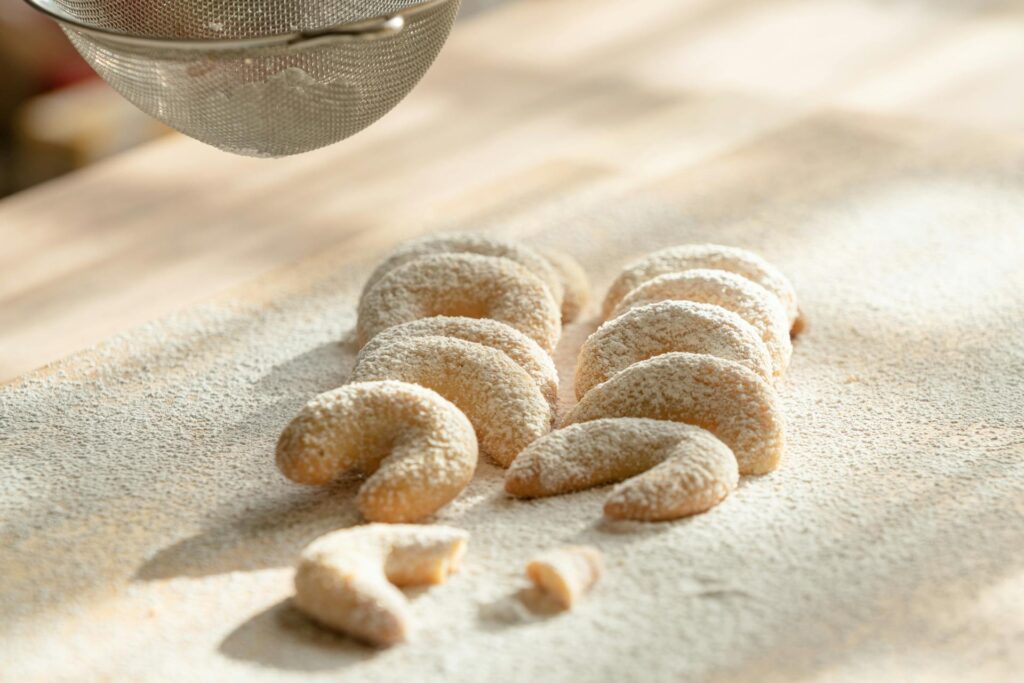
Almond crescent cookies feel like a warm hug on a cold day. They’re the cookies everyone reaches for during the holidays, and honestly, who can blame them?
Each bite is buttery, nutty, and so soft it practically melts before you finish chewing.
They look fancy, but don’t let that fool you because these cookies come together with simple ingredients and a few easy steps.
If you’ve got butter, almonds, and a little patience, you’re halfway there.
Why You’ll Love This Recipe
Soft, buttery texture
These cookies practically dissolve on your tongue. Creamy butter and a tender crumb team up to give that melt-in-your-mouth feeling.
It’s not cakey. It’s not crunchy. It’s a delicate balance. A few simple steps and gentle handling keep them soft every time.
Rich almond flavor
Almond extract and finely ground almonds bring true nutty depth. It’s not just a hint, but it’s a warm almond handshake in every bite. If you like plain sugar cookies, this one lifts you up a notch.
Add a touch more extract if you want the flavor to sing louder.
No chill time required (if applicable)
No waiting around means less fuss and more cookies now. You can mix, shape, and bake in a single afternoon. Perfect for last-minute hosting or surprising someone with fresh treats.
Less planning, same delicious payoff.
Simple ingredients you already have
Butter, flour, sugar, almonds, and a bit of salt — that’s the list. No strange spices. No hard-to-find syrups. If your pantry is mildly competent, you’re ready.
Simple ingredients keep the flavor honest and the process stress-free.
Perfect for gifting or holiday cookie trays
They look elegant without trying too hard. Powdered sugar gives a snow-dusted, picture-perfect finish. Stack them in a tin, add a ribbon, and you’ve got a crowd-pleasing gift.
They travel well and stay tender, which is ideal for cookie swaps and festive trays.
Ingredient Checklist
- Butter
Adds richness and creates that soft, melt-in-your-mouth texture. - Granulated sugar / powdered sugar
Sweetens the dough and helps keep the cookies tender, depending on which one you use. - Almond extract
Delivers the bold, nutty flavor that makes these cookies stand out. - Vanilla extract (optional)
Adds warmth and rounds out the almond flavor without overpowering it. - All-purpose flour
Provides structure while keeping the cookies light and delicate. - Almond flour or finely ground almonds
Boosts the nutty flavor and adds a soft, crumbly texture. - Salt
Balances the sweetness and enhances the flavors. - Powdered sugar for coating
Gives the cookies their classic snowy finish and adds just the right amount of sweetness.
Ingredient Substitutions & Variations
- Using only all-purpose flour (no almond flour)
If you’re out of almond flour, no problem — just replace it with the same amount of all-purpose flour. The cookies will still be soft and buttery, though slightly less nutty. - Switching almond extract for vanilla
Not a fan of strong almond flavor? Swap the almond extract for vanilla. The cookies will taste more like buttery sugar cookies but still keep that classic crescent charm. - Adding citrus zest
A little orange or lemon zest brightens the flavor instantly. It adds a fresh, zippy note that pairs beautifully with the buttery base. - Gluten-free version
Use a good 1:1 gluten-free baking flour. You may need an extra spoonful or two to help the dough hold its shape, but the cookies will bake up just as tender. - Dipping ends in chocolate
Melt some dark or white chocolate and dip the tips once the cookies cool. It adds a bit of elegance and a rich, sweet contrast to the almond flavor.
Step-by-Step Instructions
1. Cream butter and sugar
Start with room-temperature butter. Beat it until it’s pale and fluffy — about 2–3 minutes. Add sugar and continue until the mixture looks light.
This traps air and gives the cookies a tender crumb. Don’t overbeat; you want light, not greasy.
2. Mix in extracts
Stir in the almond extract first. Add vanilla if you’re using it. Mix just until combined. A little goes a long way, so measure carefully. Smell it. If it reminds you of marzipan, you’re on the right track.
3. Add dry ingredients
Sift or whisk the flour, almond flour, and salt together. Fold the dry mix into the butter mixture gently. Use a spatula and short strokes.
Stop when the dough holds together. Too much mixing makes the cookies tough.
4. Shape dough into crescents
Take small pieces of dough — about a teaspoon to tablespoon size, depending on preference. Roll each piece into a short log. Gently bend the log into a crescent shape.
Work quickly if your kitchen is warm; the butter softens fast. Keep the sizes even so they bake the same.
5. Bake until lightly golden
Preheat the oven to 350°F (175°C). Place crescents on a lined baking sheet with space between them. Bake 10–12 minutes, or until edges are just set and bottoms are faintly golden.
They’ll look pale on top, and that’s good. Watch closely in the last few minutes. Ovens vary.
6. Roll warm cookies in powdered sugar
As soon as the cookies come out, roll them in powdered sugar while still warm. The heat helps the sugar stick and melt into a thin glaze.
Place them on a rack after the first coating. This creates the classic snowy look.
7. Cool completely and dust again
Let the cookies cool fully on a rack. This takes 20–30 minutes. Once cooled, dust them again with powdered sugar for a bright finish.
This second dusting gives contrast and keeps them looking fresh. Store in an airtight tin once fully cooled.
Expert Tips for Perfect Almond Crescent Cookies
How to shape crescents evenly
Use a teaspoon or small cookie scoop for consistent dough portions. Roll each portion between your palms into a short log.
Make the center slightly thicker than the ends, as that helps the classic crescent look. Bend gently; don’t twist or pinch.
If pieces vary, rotate the pan mid-bake so sizes brown more evenly. Even shapes mean even baking and no sad, overcooked edges.
Preventing cookies from cracking
Keep your butter at true room temperature — soft, not melted. Too-cold butter can crack the dough when you bend it. Too-warm butter makes the dough greasy and fragile.
Handle the dough gently and avoid overworking it. If cracks appear, press them closed with a fingertip before baking.
Chill briefly (5–10 minutes) only if the dough feels too soft; avoid long chill times that dry it out.
Why rolling while warm matters
Hot cookies soak up powdered sugar like a sponge. Rolling warm dough lets the sugar melt slightly and stick better. That first coating becomes a thin glaze, not just a dusting.
If you wait until they cool, the sugar won’t adhere as well. Do a second dusting after they’re fully cool to keep them looking snowy and fresh.
Getting the ideal melt-in-your-mouth texture
Measure flour carefully using the spoon-and-level method. Too much flour = dry, crumbly cookies. Cream butter and sugar just until light; overbeating changes texture.
Use almond flour for tenderness; it adds fat and a finer crumb. Don’t overbake; pull them when edges set, but centers stay pale. Store in an airtight tin with a slice of bread to keep them soft.
Little hacks like these are the difference between “meh” and “magic.”
Serving Suggestions
Dust the crescents with an extra sift of powdered sugar right before serving for a snowy, bakery-fresh look that also softens any sharp edges.
Use a fine-mesh sieve and tap gently for an even, delicate coating. For drinks, think warm and cozy because they shine next to hot chocolate (extra marshmallows, please), cut-through coffee, or a fragrant cup of tea.
Their buttery texture balances rich drinks, and the almond notes play nicely with cocoa and citrusy teas.
If you’re packing them for cookie boxes, stack in a single layer with parchment between rows, tuck a piece of crumpled parchment or tissue at the top to prevent jostling, and finish with a ribbon.
They travel well but avoid tight stacking because that squashes the crescents.
Storage & Freezing Instructions
Store cooled almond crescents in an airtight tin at room temperature for 3–5 days; they stay tender and ready-to-eat without fuss.
If you need longer, freeze both the dough and the baked cookies.
Freeze well, but choose based on how you like to work: freeze shaped dough balls on a tray until firm, then transfer to a zip-top bag for up to 3 months so you can bake fresh batches on demand.
Baked cookies can be frozen too; lay them flat in a single layer with parchment between rows and freeze up to 2 months.
To thaw baked cookies, move them to the counter for 30–60 minutes or warm them in a low oven (about 150°C / 300°F) for 5–7 minutes to revive that just-baked texture.
If you thaw the dough, place frozen crescents on a lined baking sheet and add a couple of extra minutes to the bake time.
After thawing, powdered sugar often looks tired, so give it a fresh dusting; for best adhesion, dust once immediately after warming while they’re still slightly warm, then cool and dust again if you want that snowy double-coat.
Label your bags, tuck a slice of bread in the tin to keep cookies soft if storing long-term, and treat frozen batches like little time capsules of holiday cheer.
Troubleshooting Guide
Why did my cookies spread?
Spreading usually means the butter was too warm or the dough was overmixed. Soft, melty butter loses structure fast, so make sure it’s just at room temperature and not glossy or mushy.
Too little flour can also cause spreading, so double-check your measurements. If the dough feels overly soft, a quick 5–10 minute chill helps firm things up without drying them out.
Why are they crumbly?
Crumbly dough often comes from too much flour or not enough mixing when combining the dry ingredients. Spoon and level your flour instead of scooping because it makes a big difference.
If the dough still feels sandy, press it together with your hands for a few seconds; the warmth helps it come together. Overbaked cookies can crumble too, so pull them out as soon as the edges set.
Why did they crack while shaping?
Cold or overly dry dough is the usual suspect. Butter that’s too firm doesn’t bend well, so let the dough sit on the counter for a few minutes before shaping.
If you see tiny cracks, you can smooth them with a fingertip. Avoid long chilling times, which make the dough stiff. And shape gently — think “soft bend,” not “pretzel twist.”
Why don’t they taste almondy enough?
Almond flavor varies by brand, so some extracts are naturally milder. Add an extra ¼ teaspoon if you want more punch.
Make sure you’re using almond flour or finely ground almonds, too, because they add subtle flavor beyond the extract.
And don’t skip the powdered sugar coating; it helps round out the almond notes instead of overshadowing them.
FAQs
Can I make these without almond flour?
Yes, you can. Just replace the almond flour with the same amount of all-purpose flour. The cookies will still be soft and buttery, though they’ll lose a bit of that signature nutty depth.
Can I replace butter with margarine?
Technically, yes, but the flavor and texture won’t be the same. Butter gives these cookies their rich taste and melt-in-your-mouth feel.
Margarine can make them softer and slightly greasy. If possible, stick with real butter.
Can I make them ahead of time?
Absolutely. You can mix the dough 1–2 days in advance and keep it covered in the fridge.
You can also bake the cookies and store them in an airtight tin for several days, or freeze them for longer. They’re great make-ahead cookies for busy holiday weeks.
Can I double the recipe?
Yes! This recipe doubles easily. Just be sure to mix gently so you don’t overwork the dough. If your mixer bowl is small, mix in two batches to avoid compacting the dough.
Can I use a different nut flour?
You sure can. Hazelnut flour, pecan flour, or even pistachio flour all work well. Each will slightly change the flavor but still produce a soft, tender cookie. Just swap the nut flour in equal amounts.
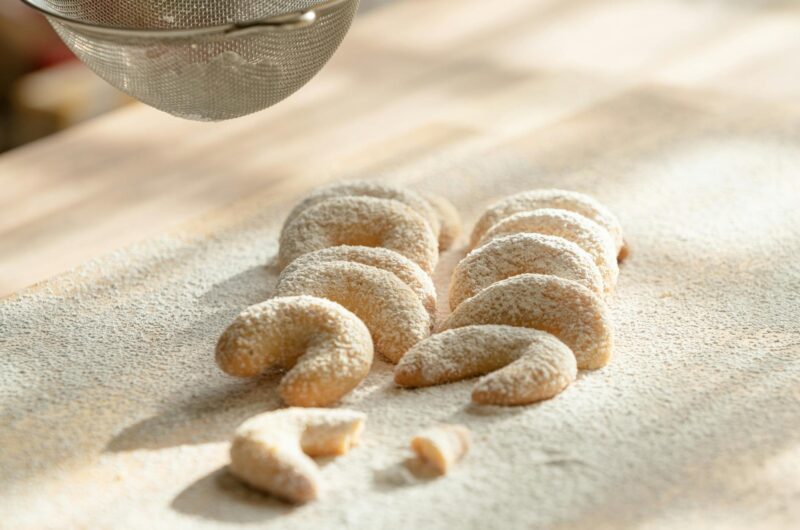
Classic Almond Crescent Cookies (Buttery & Melt-in-Your-Mouth!)
Difficulty: Easy24
Cookies15
minutes12
minutes27
minutesSoft, buttery almond crescent cookies that melt in your mouth and come together with simple ingredients.
Ingredients
1 cup unsalted butter, softened
1/2 cup granulated sugar or powdered sugar
1 tsp almond extract
1/2 tsp vanilla extract (optional)
1 1/2 cups all-purpose flour
1 cup almond flour or finely ground almonds
1/4 tsp salt
Powdered sugar, for coating
Directions
- Preheat oven to 350°F (175°C) and line a baking sheet with parchment.
- Cream the softened butter and sugar until light and fluffy.
- Mix in almond extract and vanilla.
- Add flour, almond flour, and salt; fold gently until a soft dough forms.
- Scoop small portions, roll into logs, and shape into crescents.
- Bake 10–12 minutes or until the bottoms are lightly golden.
- Roll the warm cookies in powdered sugar, cool completely, then dust again.
Notes
- If the dough feels too soft to shape, chill for 5–10 minutes only.
- For a stronger almond flavor, add an extra 1/4 teaspoon of almond extract.
- Store in an airtight tin for 3–5 days or freeze for up to 2 months.

Hi, I’m Sorenna Blythe, the baker and writer behind Mix Whisk Bake. I share simple, reliable recipes and honest kitchen moments to help home bakers bake with confidence and joy. When I’m not testing new treats, you’ll find me sipping coffee and dreaming up my next bake.