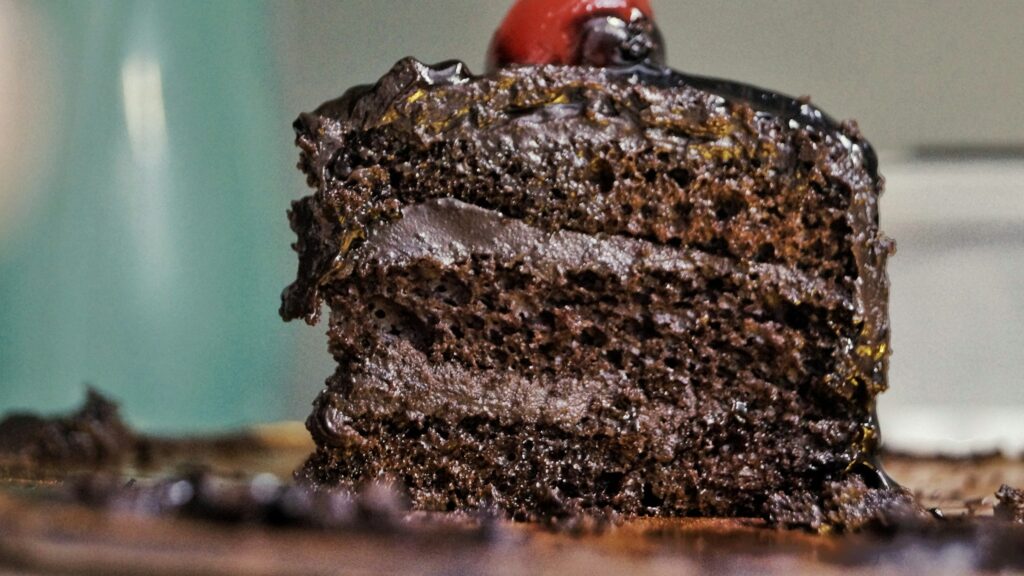
Dry chocolate cake? Been there. It’s the heartbreak no baker deserves.
The good news? You can leave crumbly, disappointing slices in the past. With the right ingredients, a few clever tricks, and a little science, rich and moist chocolate cake becomes your new normal.
This post breaks it all down — the why, the how, and the what to use — so you can bake a perfect chocolate cake every single time. Let’s fix the dry cake dilemma for good!
The Science of Moisture: Why Cakes Dry Out
Let’s get straight to it: a dry chocolate cake usually means something went sideways. And most of the time? It’s not your fault, but it’s the process.
Overbaking: The #1 Moisture Killer
This one’s the usual suspect. Even five extra minutes in the oven can turn a moist cake into a dusty disappointment.
Chocolate cake, in particular, is sensitive because it can look set on top while still baking inside. If you wait for the toothpick to come out completely clean, you’ve likely gone too far.
Aim for a few moist crumbs clinging to it. Always use a timer and an oven thermometer because your oven might be lying to you.
Ingredient Imbalance: When Ratios Go Rogue
Too much flour = dry. Too little fat or liquid = drier. It’s all about balance.
Flour is thirsty. If there’s too much of it compared to your wet ingredients (like eggs, oil, buttermilk), the cake soaks up all the moisture before it even hits the oven. The result? A crumbly, tough bite instead of a rich, tender one.
Stick to tried-and-tested recipes, and measure carefully, especially with flour. Spoon it into your measuring cup and level it off with a knife.
Don’t scoop it straight out of the bag like you’re digging for treasure.
Overmixing: The Silent Saboteur
Once you add flour to your wet ingredients, go easy on the stirring.
Overmixing activates the gluten in flour, which is great for bread… not cake. Too much mixing makes your cake dense and chewy, not light and moist.
Mix just until the dry bits disappear. If you’re folding in chocolate chips or nuts, do it gently at the end.
Cooling Mistakes: Moisture Can Escape Fast
Even a perfectly baked cake can dry out if cooled carelessly. Leaving it in the pan too long can overcook the edges. But flipping it out too early? That risks breaking the whole thing.
Here’s the move: let it sit in the pan for about 10–15 minutes. Then turn it out onto a cooling rack.
Want to lock in even more moisture? Wrap it in plastic wrap while it’s still slightly warm. That traps steam, and steam is your friend.
Must‑Have Moisturizing Ingredients
When it comes to baking a moist chocolate cake, your ingredients do the heavy lifting. Each one plays a unique role in keeping that crumb soft, rich, and luscious. Here’s what makes the biggest difference:
- Buttermilk – adds tang and tender crumb
Buttermilk brings a subtle tang and an extra dose of acidity that tenderizes the cake. It reacts with baking soda to create lift and a melt‑in‑your‑mouth texture that’s never dry or heavy. - Oil (vs butter) – keeps it softer longer
Butter adds flavor, but oil adds staying power. It coats the flour proteins more evenly, locking in moisture and keeping your cake soft for days, even after refrigeration. - Brown sugar – holds moisture better than white sugar
Thanks to its molasses content, brown sugar naturally retains water. It not only deepens the flavor with caramel notes but also helps your cake stay moist from the first bite to the last crumb. - Sour cream or yogurt – rich, creamy texture booster
These dairy heroes add fat, flavor, and a silky density that makes every forkful luxurious. Sour cream gives richness, while yogurt adds a gentle tang and a fluffier crumb. - Boiling water or coffee – blooms cocoa and adds moisture
A splash of hot liquid intensifies chocolate flavor and helps dissolve cocoa particles for a smoother batter. Coffee, in particular, enhances the chocolate’s depth without tasting like java.
The Perfect Ratio: Moisture vs Structure
When it comes to cake, it’s all about balance because too much moisture and it turns gummy, too little and it’s dry as dust.
The magic happens in the wet-to-dry ratio, which simply means how much liquid (like milk, oil, eggs) is used compared to dry ingredients (like flour, cocoa powder, sugar).
A well-balanced chocolate cake batter should be pourable, not stiff like cookie dough, and not runny like soup.
Eggs help bridge the gap between wet and dry because they add structure from the proteins, but also contribute fat and moisture from the yolks.
Flour gives the cake its form, but too much of it can overpower the delicate crumb.
Leaveners like baking soda and baking powder play a behind-the-scenes role too: they react with acidic liquids (like buttermilk) to create lift, helping the cake rise while locking in moisture pockets.
That’s where oil and buttermilk shine together because oil brings a silky, long-lasting softness, and buttermilk keeps things tender and light while activating the leavening agents.
Together, they’re the dream team. The trick is using just enough of everything so the cake holds its shape, but stays rich, moist, and utterly irresistible from top to bottom.
The Role of Mixing Techniques
Moist cake isn’t just about what goes in, but it’s about how you mix it. Technique matters. One of the easiest ways to accidentally ruin a chocolate cake? Overmixing once the flour goes in.
The moment flour meets liquid, gluten starts forming. That’s great for chewy bread, but not for cake.
Too much mixing means tough texture and a tight, dry crumb. Mix just until everything is combined — stop as soon as you no longer see streaks of flour.
Sifting dry ingredients might seem old-school, but it’s worth the extra minute. Sifting aerates the flour, breaks up clumps, and evenly distributes cocoa powder, baking soda, and salt.
This gives you a smoother batter and a fluffier, more uniform cake. It also helps prevent random dry pockets in your final bake because no one wants a surprise lump of unsweetened cocoa in their slice.
For those ready to level up, there’s the reverse creaming method. Instead of creaming butter and sugar first, you start by mixing the dry ingredients with the fat (butter or oil) until it looks like wet sand.
Then you add the wet ingredients. This coats the flour in fat before liquid gets involved, which slows down gluten development and leads to an extra-tender cake.
It’s not essential for a great chocolate cake, but if you’re a baking nerd looking to experiment, it’s a fun technique to try.
Oven Temp, Pan Prep & Bake Time
Getting the bake just right is half the battle in making a moist chocolate cake. Start with the right oven temp — 325°F or 350°F is the sweet spot.
Any hotter and the edges can dry out before the center sets, leaving you with a cake that’s scorched on the outside and sad in the middle.
But here’s the catch: ovens lie. Always use an oven thermometer to double-check the actual temp inside because your dial might say 350°F, but it could be running hot or cold by 20 degrees.
Next up: don’t skip greasing your pans and lining the bottom with parchment paper. It might feel like overkill, but it’s the best insurance policy against sticking, tearing, and cursing.
When it comes to checking for doneness, resist the urge to jab at the cake too soon. Opening the oven door early drops the temperature fast and can make the cake sink.
Wait until the top looks set and springs back lightly when touched. Then do the toothpick test — you want a few moist crumbs on it, not a dry, clean pick.
Moisture‑Locking Tips Post‑Bake
Let the Cake Cool in the Pan (But Not Too Long)
Once your cake comes out of the oven, let it rest in the pan for about 10–15 minutes. This allows it to firm up slightly so it doesn’t fall apart when you turn it out.
Leaving it in too long, though, can overcook the edges and steal precious moisture.
Wrap the Cake While It’s Still Warm
For an ultra-moist crumb, wrap the cake in plastic wrap while it’s still warm (not piping hot). This traps the steam inside, creating a self-hydrating environment.
Brush with Simple Syrup or Ganache
If you want to go the extra mile (or fix a cake that feels a little dry), brush the layers with simple syrup. It’s just sugar and water, but it works magic.
For chocolate cakes, a thin coat of warm ganache adds moisture and depth without overpowering the flavor.
Freeze Before Frosting (Optional Pro Move)
Want next-level results? Once the cake has cooled, wrap it tightly and freeze it for a few hours or overnight. Freezing traps moisture and firms up the crumb, making it easier to frost without tearing.
When thawed, the texture is unbelievably tender, like bakery-quality moist.
Bonus Flavor Upgrades (Without Drying It Out)
Chocolate Chips, Espresso Powder, or Liqueurs
If you want to boost the flavor without messing with moisture, these are your best bets. Fold chocolate chips into the batter for little pockets of melt-in-your-mouth goodness.
They add richness without affecting texture. A spoonful of espresso powder deepens the cocoa flavor, but it won’t taste like coffee, just more chocolatey.
And if you’re baking for adults? A splash of coffee liqueur, Baileys, or even dark rum adds a fun kick and extra moisture. Just keep it to a tablespoon or two, or your batter might turn too thin.
Fresh Berries or Jam Layers
Want to impress without drying things out? Add a layer of raspberry jam, cherry preserves, or even sliced strawberries between your cake layers.
They bring in brightness, moisture, and a little tart contrast to all that rich chocolate. Just make sure your berries are patted dry and not too juicy, or things can get soggy instead of moist.
Jams are a safer bet and way easier to control.
Chocolate Fudge Frosting vs Whipped Ganache
Your frosting plays a huge role in locking in moisture and adding that finishing flavor punch. A thick chocolate fudge frosting is classic because it’s rich, sweet, and comforting.
But if you want something smoother and less sweet, go for a whipped ganache. It’s airy, elegant, and melts right into the cake, making each bite feel like velvet.
Both options add decadence without drying anything out, but just make sure to frost your cake fully so no edges are left exposed.
Troubleshooting Common Issues
Cake Sinks in the Middle
If your cake looks perfect on the outside but collapses like a sad soufflé in the center, it likely wasn’t fully baked. Underbaking is the usual culprit because the middle stays raw and can’t hold its shape.
It could also be from opening the oven door too early or using too much leavening, which makes the cake rise fast, then crash hard.
Always check doneness with the bounce-back test or a toothpick, and don’t peek until it’s close to the finish line.
Top Cracks or Dries Out
Cracks on top usually mean the oven temp was too high. The edges set too quickly, while the middle keeps rising, pushing the surface until it splits.
It might look dramatic, but it’s still totally edible — just trim and frost. To avoid it next time, use an oven thermometer to verify the temp and bake on the middle rack.
And don’t skip the moisture-boosting ingredients or pan prep — dry edges often start in a too-hot oven or an under-greased pan.
Sticks to the Pan
There’s nothing worse than flipping your cake and leaving half of it behind. This usually comes down to a lack of prep.
Always grease your pans generously and line the bottoms with parchment paper, especially with chocolate cakes, which tend to be stickier.
Letting the cake cool for 10–15 minutes in the pan before turning it out also helps. If all else fails, turn those broken pieces into cake pops or trifle because no one will know.
Not Chocolatey Enough
A bland chocolate cake is a crime against dessert. If your cake tastes weak, it might need better cocoa powder, so use unsweetened Dutch-processed or natural cocoa, not a drink mix.
A bit of espresso powder enhances the chocolate flavor without making it taste like coffee.
And if the recipe calls for boiling water, don’t skip it because it helps “bloom” the cocoa and bring out its richness.
More chocolate chips or a ganache topping can also rescue the flavor without changing the texture.
Final Words
Moist chocolate cake isn’t luck, but it’s all about the right moves. Use the best ingredients, nail your ratios, mix gently, and bake with care.
Lock in that steam, treat your cake kindly, and don’t be afraid to flavor things up.
Stick to the basics, then make it your own. Experiment, taste, tweak, repeat!
FAQs
Can I use butter instead of oil?
You can, but expect a slightly denser cake. Butter adds flavor, while oil gives you that long-lasting moisture. If you swap, consider using half butter and half oil for the best of both worlds.
What’s the best flour for chocolate cake?
All-purpose flour works great for most chocolate cake recipes. For a lighter, softer crumb, you can use cake flour, but just reduce the amount slightly.
Avoid bread flour; it’s too high in protein and makes cakes tough.
How do I store leftovers so they stay moist?
Wrap the cake tightly in plastic wrap or store it in an airtight container.
Keep it at room temperature for up to 2 days, or refrigerate for up to 5. For longer storage, freeze slices and thaw when cravings strike.
Can I make it dairy-free but still moist?
Absolutely. Use plant-based milk like almond or oat, and swap sour cream or yogurt with dairy-free alternatives.
Oil keeps it moist without needing butter. Just double-check that your chocolate or cocoa is dairy-free too.

Hi, I’m Sorenna Blythe, the baker and writer behind Mix Whisk Bake. I share simple, reliable recipes and honest kitchen moments to help home bakers bake with confidence and joy. When I’m not testing new treats, you’ll find me sipping coffee and dreaming up my next bake.