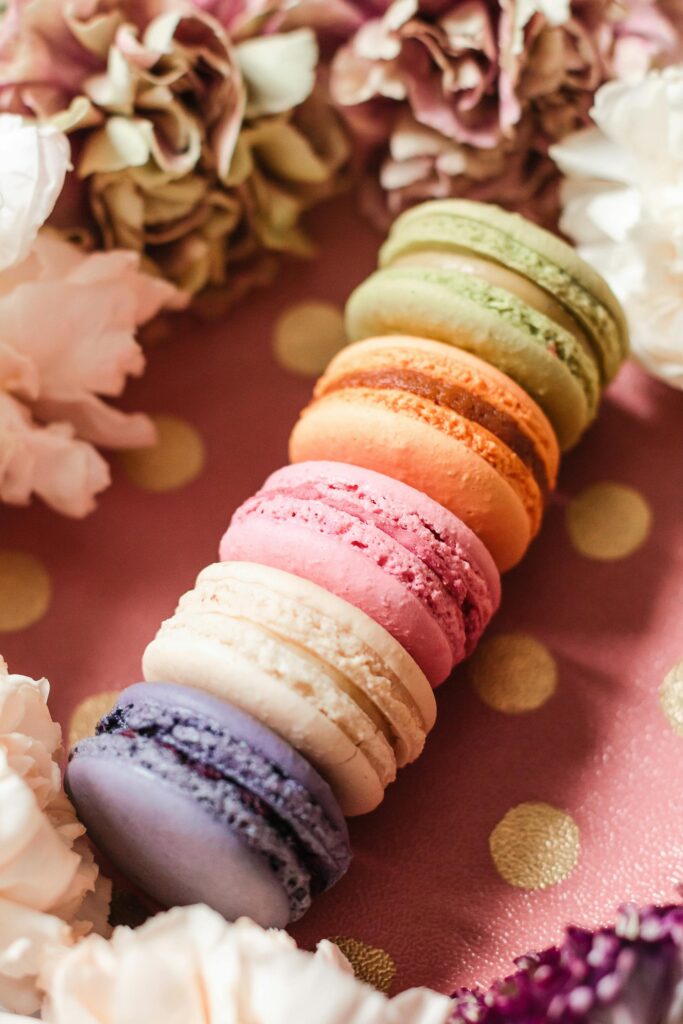
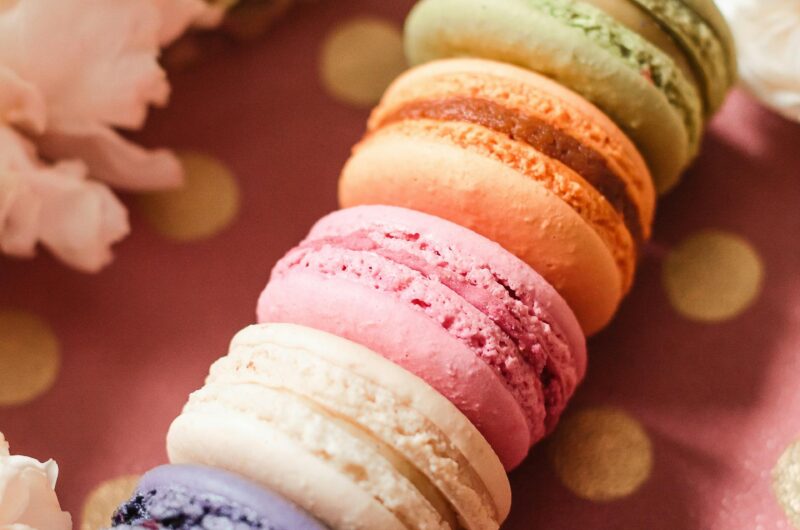
French macarons look delicate and elegant, almost too pretty to touch. They sit there like tiny pastel jewels, daring you to take a bite. And yes, they have a reputation for being a little fussy.
One wrong fold and poof, the shells go flat. But here’s the secret no one tells you: they’re absolutely doable at home.
Think of this guide as a friendly coach in your kitchen. I’ll walk you through the techniques, show you what to watch for, and help you avoid the classic macaron mishaps.
By the end, you’ll have a foolproof recipe, plenty of confidence, and maybe even a new dessert party trick up your sleeve.
What Are French Macarons?
French macarons are small almond-based sandwich cookies — delicate shells made from almond flour, powdered sugar, and whipped egg whites, sandwiched around a creamy filling.
They came to be in France (think Parisian patisseries and afternoons with tea), but their charm is global.
Bite one, and you’ll notice three things: a glossy, crisp outer shell; a soft, slightly chewy interior; and a lush, flavorful filling that ties it all together.
The texture is the whole point because it’s a contrast party in your mouth. Making them is a bit of a ballet: precision matters, but it’s not rocket science.
There are three common ways to make the meringue, and each changes the game slightly.
The classic French method uses whipped egg whites folded with the dry mix — simple and a little temperamental, great for home bakers once you get the rhythm.
The Italian method cooks a hot sugar syrup and pours it into the whites while whipping, which gives a firmer, more reliable meringue that loves humid days and long shipping.
The Swiss method warms the whites and sugar over a pan before whipping, producing a glossy, stable meringue that sits between the two.
Pick a method that fits your patience and weather, and you’ll be halfway to success.
Ingredients You’ll Need
- Almond flour — The heart of every macaron. It gives the shells their signature nutty flavor and smooth, tender texture.
- Powdered sugar — Helps create a fine, delicate shell and keeps the batter silky.
- Egg whites — Whipped into meringue for structure, lift, and that shiny macaron finish.
- Granulated sugar — Stabilizes the egg whites as they whip and helps the shells form properly.
- Gel food coloring (optional) — Adds color without watering down the batter. A little goes a long way.
- Filling options (buttercream, ganache, or jam) — The flavor stars. Choose creamy, rich, or fruity depending on the macaron vibe you’re going for.
Essential Tools for Perfect Macarons
- Kitchen scale — Accuracy is everything with macarons. A scale removes the guesswork and keeps your ratios spot-on.
- Fine-mesh sifter — Ensures your almond flour and powdered sugar are lump-free, giving you smooth, flawless shells.
- Electric mixer — Whips your egg whites into a stable meringue without tiring your arms. Hand mixers and stand mixers both work.
- Piping bags + round tip — Helps you pipe evenly sized circles so your macarons match up like perfect little pairs.
- Silicone baking mat or parchment — Prevents sticking and promotes even baking. Silicone mats also help control spreading.
- Oven thermometer — Ovens lie. This tiny tool tells the truth and keeps your temperature consistent, which macarons desperately need.
- Baking sheets — Sturdy, flat pans that heat evenly to help the shells rise properly and form those classic “feet.”
The Classic French Macaron Method (Step-by-Step)
1. Sift the Dry Ingredients
Sift the almond flour and powdered sugar together at least once, ideally twice. This removes lumps and aerates the mix, so the shells come out smooth.
If you skip sifting, you’ll risk bumpy tops and uneven texture. Take your time; a few extra minutes here saves heartbreak later.
2. Make the French Meringue
Whip room-temperature egg whites until they form soft peaks. Gradually add granulated sugar while whipping to reach glossy, stiff peaks. The meringue should hold its shape but still look satiny, not dry.
Under-whipped whites give flat shells; over-whipped whites become dry and grainy. Think of this step as building the macaron’s backbone.
3. Macaronage (Folding Technique)
Fold the sifted dry mix into the meringue in thirds. Use a spatula and scrape the bowl while turning it; be gentle but decisive.
You’re aiming for a lava-like batter that flows slowly from the spatula in a ribbon. Too stiff and your shells won’t spread; too runny and they’ll flatten.
Stop folding when the batter smooths out and the “ribbon” melts back into the bowl in about 10–15 seconds.
4. Piping the Macaron Shells
Transfer batter to a piping bag fitted with a round tip. Pipe neat, even circles because consistent size equals perfect pairs. Tap the tray gently on the counter to release air bubbles.
Use a toothpick to pop any stubborn bubbles that rise to the top. Keep the spacing even so shells don’t merge while baking.
5. Resting the Shells Until Dry
Let the piped shells rest at room temperature until a thin skin forms, usually 20–60 minutes. They should be dry to the touch and not stick to your finger.
This step is what creates the classic “feet” during baking. Humidity affects drying time, so be patient, as rushing this step often causes cracks.
6. Baking the Macarons
Preheat your oven and check the temperature with an oven thermometer. Bake one tray at a time on the middle rack for 12–16 minutes, depending on size.
Look for glossy tops that don’t jiggle and pronounced feet at the base. If shells crack or brown, lower the temperature a few degrees next time.
Let them cool completely on the tray before peeling off the mat or paper.
7. Filling and Maturing the Macarons
Match shells by size and pipe your chosen filling onto one half. Gently sandwich and press to spread the filling evenly.
For the best flavor and texture, refrigerate assembled macarons for 24 hours to mature. This resting time lets the filling soften the shell slightly and meld the flavors.
Bring them to room temperature before serving, then watch them disappear!
Flavor Variations
- Vanilla buttercream — Light, creamy, and classic. It pairs with any shell color and adds a subtle sweetness that never steals the spotlight.
- Chocolate ganache — Rich and silky with a melt-in-your-mouth finish. Perfect for chocoholics and anyone who wants a little drama in each bite.
- Lemon filling — Bright, zesty, and refreshing. The acidity cuts through the sweetness and gives the macarons a lively pop of flavor.
- Raspberry or strawberry jam — Fruity, sweet, and slightly tangy. It adds a burst of flavor without overpowering the delicate shells.
- Seasonal flavors (e.g., peppermint, pistachio, salted caramel) — Fun twists that keep things exciting. Think cool peppermint for winter, nutty pistachio for spring, or gooey salted caramel when you want something indulgent.
Tips for Success
- Why weighing ingredients matters — Macarons are picky, and even small measurement errors can throw off the batter. A kitchen scale keeps everything precise so your shells rise, set, and taste the way they should.
- How to avoid hollow macarons — Hollows often come from under-mixed or over-mixed batter, weak meringue, or too-high oven heat. Aim for a balanced macaronage, a stable meringue with stiff peaks, and a consistent baking temperature.
- Preventing cracked tops — Cracks usually mean the shells didn’t dry enough or the oven temperature spiked. Let them rest until they form a skin, tap out air bubbles, and double-check your oven with a thermometer.
- Achieving the perfect “feet” — Those frilly little edges appear when the shells dry properly and bake evenly. Resting time, smooth macaronage, and the right temperature all work together to create feet that rise proudly instead of spreading.
- Ideal oven temperature — Most ovens run hotter or cooler than they claim. Use an oven thermometer and keep your baking temp steady, typically around 275–300°F (135–150°C).
Common Mistakes + How to Fix Them
Hollow Shells
Hollow macarons usually point to unstable meringue or overmixed batter. Whip your egg whites to stiff, glossy peaks and fold only until the batter flows like slow, controlled lava.
If hollows persist, try lowering your oven temperature slightly to help the shells bake more evenly.
Cracked Shells
Cracks are often caused by trapped air or shells that didn’t dry enough before baking.
Tap the tray firmly to release bubbles, pop any visible ones with a toothpick, and let the shells rest until they form a dry skin. Also, double-check your oven for hot spots or inconsistent heat.
No Feet Forming
When feet don’t appear, the usual culprits are under-rested shells, overly wet batter, or a low oven temperature.
Make sure the tops are dry to the touch before baking and consider raising the heat by 5–10°F (2–5°C) to give the shells enough lift.
Overly Chewy or Crunchy Macarons
Chewy shells often mean the macarons were underbaked. Crunchy ones were likely overbaked. Adjust your bake time by a minute or two until you find the sweet spot.
Don’t forget: once filled, macarons soften during maturing, so texture improves over time.
Batter Too Runny or Too Thick
Runny batter is a sign of overmixing during macaronage, while thick batter suggests undermixing or a weak meringue.
Aim for the ribbon stage — smooth, flowing batter that melts into itself within 10–15 seconds. This consistency is key to even, predictable shells.
Storage & Make-Ahead Instructions
How to Store Filled vs. Unfilled Shells
Unfilled shells store best in an airtight container, where they stay crisp and ready to use.
Filled macarons, on the other hand, should be kept in the fridge so the filling stays stable and the shells soften slightly over time. Always keep them sealed to protect their delicate texture.
How Long They Keep in the Fridge or Freezer
Filled macarons last about 3–5 days in the fridge. Unfilled shells can be frozen for up to 1 month, and filled macarons freeze well too, just place them in a container with parchment between layers.
Thaw them in the fridge to prevent condensation from ruining the shells.
Maturing for Best Flavor
Macarons taste better after they rest. Once assembled, refrigerate them for 24 hours to “mature.”
During this time, the filling gently softens the shell, the flavors blend, and the texture becomes perfectly tender. Bring them to room temperature before serving for the best experience.
Final Thoughts
Making French macarons at home may feel a bit intimidating at first, but once you dive in, you’ll see it’s more about patience than perfection.
Every batch teaches you something new, and each attempt gets you one step closer to those picture-perfect shells. So don’t stress the small stuff because practice truly does make progress here!
FAQs
Do I need to age the egg whites?
Aging egg whites was once considered essential, but it’s not always necessary. Fresh egg whites work perfectly as long as they’re at room temperature and whipped to stiff, glossy peaks.
Aging simply reduces moisture, which can help with stability, but it’s optional for most home bakers.
Can I freeze macarons?
Yes, macarons freeze beautifully. Store them in an airtight container with parchment between layers. They thaw quickly in the fridge, and the texture stays intact.
Just avoid leaving them uncovered while thawing to prevent condensation from softening the shells.
How long do macarons last?
Filled macarons last about 3–5 days in the fridge, while unfilled shells can last up to a week at room temperature or about a month in the freezer.
Their flavor and texture often improve after a day of maturing.
Can I make them without almond flour?
Traditional macarons rely on almond flour for their signature texture. While some nut-free recipes use sunflower seed flour as a substitute, the results vary and may not mimic true macarons perfectly.
If you need a nut-free option, it’s best to follow a recipe developed specifically for that purpose.
Can I double the recipe?
Yes, you can, as long as you work quickly and confidently. A larger batch means more batter to manage during macaronage, so be careful not to overmix.
Consider dividing the batter into two smaller bowls if you want more control.
How to Make Classic French Macarons (Step-by-Step Recipe)
Difficulty: Moderate24
Macarons30
minutes15
minutes1
hourDelicate French almond cookies with crisp shells, chewy centers, and your choice of creamy filling.
Ingredients
- For the shells:
1 cup (100g) almond flour
1 1/2 cups (150g) powdered sugar
3 large egg whites (room temperature)
1/4 cup (50g) granulated sugar
Gel food coloring (optional)
- Filling (choose one):
Vanilla buttercream, chocolate ganache, or raspberry/strawberry jam
Directions
- Prepare dry mix: Sift almond flour and powdered sugar together twice. Set aside.
- Make the meringue: Whip egg whites to soft peaks, slowly add granulated sugar, and whip to stiff, glossy peaks.
- Macaronage: Fold the dry ingredients into the meringue until the batter flows like slow-moving lava and ribbons off the spatula.
- Pipe: Transfer batter to a piping bag and pipe small, even circles onto a lined baking sheet. Tap to release air bubbles.
- Rest: Let shells sit 20–60 minutes until a dry skin forms on top.
- Bake: Bake at 300°F (150°C) for 12–15 minutes until set with developed feet. Cool completely.
- Fill: Pair shells by size, pipe your chosen filling onto one, and gently sandwich.
- Mature: Refrigerate for 24 hours for the best flavor and texture.
Notes
- A kitchen scale is highly recommended for accuracy.
- Humid kitchens may require longer resting time.
- Macarons soften and improve after maturing, so don’t skip this step.
- Store filled macarons in the fridge for up to 5 days or freeze for up to 1 month.

Hi, I’m Sorenna Blythe, the baker and writer behind Mix Whisk Bake. I share simple, reliable recipes and honest kitchen moments to help home bakers bake with confidence and joy. When I’m not testing new treats, you’ll find me sipping coffee and dreaming up my next bake.