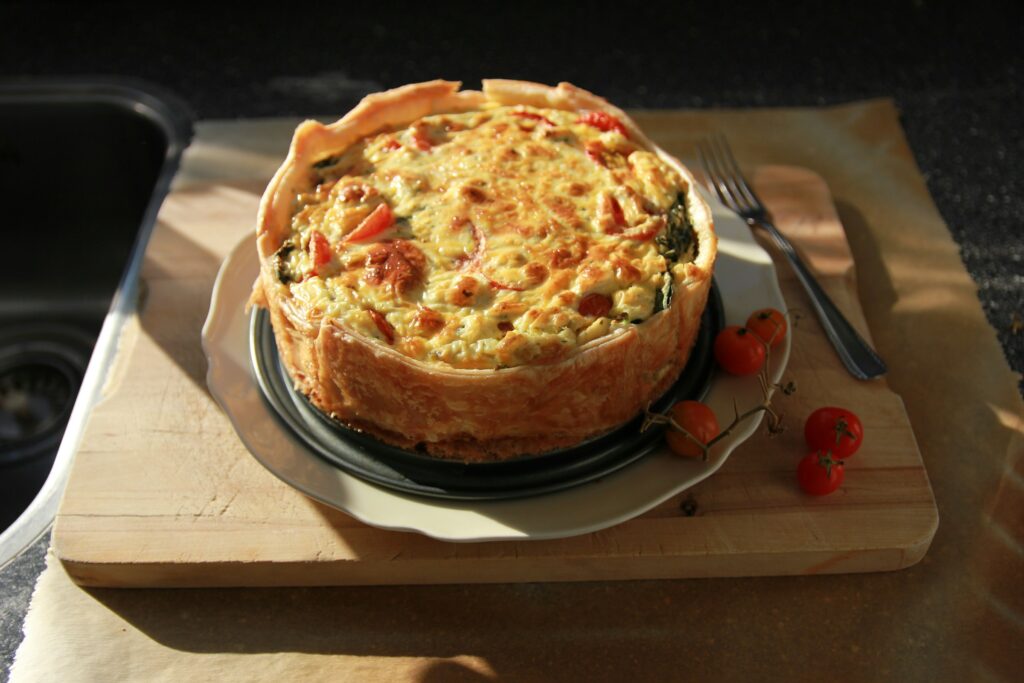
A classic quiche is one of those dishes that feels fancy but asks for almost nothing in return.
It’s simply a buttery crust filled with a silky egg custard and plenty of cheese. You can serve it at brunch, pack it for lunch, or sneak a slice straight from the fridge (no judgment here).
Holidays, busy weekdays, or lazy mornings, this quiche fits right in. It’s versatile, reliable, and always tastes like you put in more effort than you actually did.
Why You’ll Love This Classic Quiche
Simple, timeless flavor
A quiche sings with a few good ingredients. Eggs, cream, and cheese combine into a silky custard that’s never fussy. No complicated spice lists or mystery steps.
That simplicity lets each ingredient shine. It’s comfort food with a clean, classic voice — like grandma’s recipe, but without the nagging.
Customizable with add-ins
Think of the quiche as a blank canvas. Cooked spinach, crisp bacon, sautéed mushrooms, or roasted peppers — they all play nice. Swap cheeses or fold in herbs to match your mood.
Want to use leftovers? Go for it. Mix-and-match is encouraged; the quiche forgives mistakes and rewards creativity.
Beginner-friendly yet impressive
You don’t need culinary school to pull this off. The steps are straightforward: make or buy a crust, sauté fillings, whisk custard, and bake. Yet the final dish looks like you spent hours.
Bring one to a brunch and watch heads turn. It’s the small-business miracle of home cooking: easy to make, big on applause.
Great hot, warm, or chilled
Quiche is flexible in temperature and timing. Serve it straight from the oven for a warm, gooey center.
Let it cool slightly to slice cleanly.
Chill it and grab a cold slice for a quick lunch. No matter how you eat it, the texture and flavor hold up, which is rare and wonderful.
What Is a Quiche?
A quiche is a savory tart built on a crisp, buttery crust and filled with a silky egg custard — think eggs and cream holding everything together like glue for good flavors.
It began in France, most famously as quiche Lorraine from the Lorraine region, where bacon and cheese often show up; over time, it hopped borders and turned into a global brunch superstar.
Unlike a frittata, which is basically an omelette finished in a pan and usually has no crust, quiche needs that pastry shell; the crust gives a textural contrast and keeps the custard neat and sliceable.
A frittata is more rustic and stove-first; a quiche is more composed and oven-baked.
What makes a quiche “classic” is a clear quartet: eggs for structure, cream (or half-and-half) for richness, cheese for depth and melt, and a flaky crust to cradle it all.
Remove any one of those, and it’s still tasty, but it’s no longer the tidy, indulgent classic people expect.
Ingredients You’ll Need
For the Crust
- Flour – The base of your pastry and the key to that classic flaky texture.
- Butter – Adds richness, structure, and all the flavor that makes the homemade crust worth it.
- Salt – Just a pinch to balance and enhance the dough.
- Cold Water – Helps bring the dough together without melting the butter.
- Store-bought crust (optional) – A great shortcut when you want quiche fast and fuss-free.
For the Filling
- Eggs – The backbone of the custard that sets the entire quiche.
- Heavy cream or half-and-half – Adds creaminess and that soft, custardy finish quiche is known for.
- Cheese (Gruyère or cheddar) – Provides flavor, richness, and a perfect melty layer.
- Onion or shallots – Brings mild sweetness and depth to the filling.
- Salt and pepper – Simple, essential seasoning to keep flavors balanced.
- Nutmeg (optional) – A tiny pinch adds warmth and a subtle classic touch.
Ingredient Substitutions & Variations
Milk vs. heavy cream
Heavy cream gives you that classic silky custard with a richer mouthfeel, while milk creates a lighter texture that’s still tasty but slightly less firm.
If you want something in the middle, half-and-half is the sweet spot.
Cheese options
Gruyère is the traditional choice, but cheddar, Swiss, mozzarella, or even feta can step in without missing a beat.
Choose a cheese that melts well and matches the vibe you want — bold, mild, tangy, or creamy.
Add-in ideas
Spinach adds freshness, bacon brings salty crunch, mushrooms offer savory depth, and ham gives a hearty bite. Asparagus or peppers bring color and a touch of sweetness.
Mix and match like you’re building your dream brunch plate; just pre-cook watery veggies so your quiche doesn’t turn into a puddle.
How to make it crustless
Skip the pastry and pour the filling into a greased pie dish. The custard will still set beautifully and form its own light “edge.”
It’s easier, faster, and lighter, which is great for low-carb eaters or days when rolling dough feels like too much work.
Gluten-free crust alternative
Use a gluten-free flour blend to make your own crust, or grab a pre-made gluten-free pie shell to save time.
Nut-based crusts (like almond flour) also work and add a subtle, toasty flavor that pairs surprisingly well with the creamy filling.
Step-by-Step: How to Make a Classic Quiche
1. Prepare and blind-bake the crust
Roll the dough to an even thickness and gently press it into a 9-inch pie or tart pan. Trim the edges and chill the crust 20–30 minutes so it stays flaky.
Line the shell with parchment and fill with pie weights or dried beans — this is blind-baking, and it stops the crust from puffing up.
Bake at 375°F (190°C) until the edges are pale golden, about 12–15 minutes.
Remove the weights and bake 5 more minutes so the bottom dries out; a dry bottom prevents a soggy quiche.
2. Sauté onions or aromatics
Slice onions or shallots thinly for even cooking. Heat a little butter or oil in a skillet over medium heat. Cook until soft and slightly golden. If using mushrooms, cook them until their moisture evaporates.
Season lightly; you’re building flavors that will carry through the whole quiche.
3. Whisk eggs, cream, and seasonings
Crack the eggs into a bowl and beat until smooth. Add heavy cream or half-and-half in a roughly 1:1.5 ratio of eggs to dairy (for example, 4 eggs to 1 1/2 cups cream).
Season with salt, pepper, and a tiny pinch of nutmeg if you like. Whisk until fully combined and slightly frothy, as this helps to achieve a lighter, silkier texture.
4. Assemble: crust → cheese → fillings → custard
Layer a thin blanket of grated cheese on the warm crust first; it acts as a barrier against soggy fillings. Scatter your pre-cooked fillings (onions, bacon, spinach, etc.) evenly.
Pour the egg and cream mixture over the fillings slowly so it settles without splashing. Leave a small gap at the top of the crust to avoid overflow.
Tap the pan gently on the counter to release any trapped air bubbles.
5. Bake until set with a slight jiggle
Place the quiche in a preheated oven at 350°F (175°C). Bake 30–40 minutes, checking at 25 minutes for color. The center should be set but have a gentle jiggle — like Jell-O, not soup.
If the crust browns too fast, tent with foil. A toothpick in the center should come out mostly clean with a few moist crumbs.
6. Rest before slicing
Let the quiche cool at least 15–20 minutes before cutting. Resting finishes the cooking and makes cleaner slices. Serve warm, room temperature, or chilled.
If you can wait, it tastes even better the next day.
Expert Tips for Perfect Quiche
How to prevent a soggy crust
Blind-bake your crust until it’s lightly golden, then add a thin layer of cheese before pouring in the custard.
The melted cheese forms a protective barrier, keeping moisture where it belongs — in the filling, not the crust. Also, always pre-cook watery veggies so they don’t leak into the base.
How to know when the quiche is done
Check the center with a gentle shake. It should wobble like soft gelatin, not ripple like liquid.
The edges will be set and lightly golden. If you insert a knife, it should come out with a few moist crumbs but no raw custard.
Importance of letting it cool
Cooling is where the magic finishes. The custard continues to set, the flavors deepen, and the slices hold together instead of collapsing into a delicious but messy puddle.
Even 15–20 minutes makes a world of difference.
Ratios for custard
A reliable base is 1 egg for every 1/2 cup of cream or half-and-half. This gives you a silky, stable custard that bakes evenly.
Too many eggs make the texture rubbery; too much dairy makes it runny. Stick to the ratio, and you’re golden.
Using room-temperature ingredients
Room-temperature eggs and dairy mix more smoothly and bake more evenly. Cold ingredients can lead to an uneven custard or longer baking times.
A quick 10–15 minutes on the counter is all they need for a more consistent result.
Serving Suggestions
Quiche pairs well with simple, fresh sides that balance its rich, creamy filling. A crisp green salad with a light vinaigrette cuts through the richness and adds a refreshing crunch.
Fresh fruit like berries, melon, or citrus brings natural sweetness that brightens each bite.
If you want something warm and hearty, roasted vegetables like asparagus, tomatoes, or baby potatoes work beautifully.
And on colder days, serve your quiche with a cozy bowl of soup; tomato, butternut, or a light vegetable soup all hit the spot without overpowering the dish. Quiche shines at almost any time of day.
Enjoy it for breakfast when you want something filling but not heavy, serve it at brunch when you want a crowd-pleaser, pack it for lunch because it travels well, or turn it into a simple dinner with a few sides on the table. It’s flexible, friendly, and always ready to fit your schedule.
Storage, Freezing & Reheating
How long quiche lasts in the fridge
Store your quiche tightly wrapped or in an airtight container, and it will keep for about 3–4 days.
The custard stays creamy, and the flavors actually deepen a bit, making leftovers surprisingly delicious. Just be sure to refrigerate it within two hours of baking.
How to freeze whole or sliced quiche
You can freeze quiche, baked or unbaked, whole or sliced, because it’s incredibly freezer-friendly. For a baked quiche, let it cool completely, then wrap it tightly in plastic wrap and a layer of foil.
If you’re freezing slices, wrap each piece individually so you can grab just what you need. Freeze for up to 2–3 months.
To freeze an unbaked quiche, assemble it in a freezer-safe pie dish, freeze until firm, then wrap well; bake from frozen, adding extra time as needed.
Best reheating methods to maintain texture
For the best results, reheat quiche in the oven at 325°F (165°C) until warmed through — usually 10–15 minutes for a slice and 20–25 minutes for a whole quiche.
This keeps the crust crisp and the custard smooth. Avoid the microwave unless you’re in a rush; it tends to make the crust soft and the filling rubbery.
If you must microwave it, use short 15–20 second bursts to prevent overcooking.
Make-Ahead Instructions
Prep crust ahead
You can make the dough up to 2–3 days in advance. Keep it wrapped tightly in the fridge, or freeze it for up to a month.
If you prefer to blind-bake the crust ahead, go for it, but just let it cool completely, then cover and refrigerate until you’re ready to fill.
A pre-baked crust saves time on busy mornings and guarantees a crisp base.
Prep fillings in advance
Cooked veggies, sautéed onions, bacon, ham, or mushrooms can all be prepared 1–2 days ahead. Store them in separate airtight containers.
Pre-cooking removes excess moisture and keeps the quiche from turning watery. When you’re ready to assemble, everything is already done — just layer and pour.
Assemble and bake later
You can assemble the entire quiche (crust, cheese, fillings, custard) up to 24 hours before baking. Keep it covered in the fridge.
When it’s time to bake, place it straight into the oven, but expect to add a few extra minutes since it’s starting cold. This is perfect for brunches when you want zero morning stress.
Fully baked make-ahead options
Bake the quiche completely, let it cool, then refrigerate for up to 3 days. Reheat in the oven when needed, or serve it chilled — surprisingly delicious.
You can also freeze the fully baked quiche for longer storage. It reheats beautifully and makes last-minute meals feel effortless.
Final Thoughts
A classic quiche is one of those recipes that rewards you every single time because of its simple ingredients, straightforward steps, and endless room to play.
Once you’ve mastered the basic custard and crust, the door is wide open for your own twists. Add your favorite veggies, swap cheeses, try new proteins, or even experiment with herbs.
Make it bold, make it light, make it yours!
FAQs
Why is my quiche watery?
A watery quiche usually means too much moisture in the fillings or an underbaked custard. Make sure to sauté veggies until their liquid evaporates, and pat cooked ingredients dry if needed.
Also, stick to the egg-to-cream ratio so the custard sets properly. Once baked, the center should jiggle softly and not slosh.
Why did it crack?
Cracks happen when the quiche bakes for too long or at too high a temperature. The custard tightens and splits, just like an overcooked cheesecake.
Keep the oven at a gentle 350°F (175°C) and pull it out while the middle still wobbles slightly. Cooling also helps the custard relax and settle without breaking.
Can I use milk instead of cream?
Yes, but expect a lighter, softer texture. Milk makes the custard less rich and a bit more fragile, so it may not slice as cleanly.
Half-and-half is the perfect middle ground if you want creamy without being heavy. Whatever you use, keep the ratios consistent for the best results.
How to avoid overbaking?
Start checking early. Look for set edges and a slight jiggle in the center because that’s your sign to pull it from the oven.
Overbaking leads to a rubbery texture and cracks, so trust the wobble. If the top browns too fast, tent the quiche with foil to slow things down.
Can I bake quiche without blind-baking the crust?
You can, but you’ll risk a soggy or undercooked bottom. Blind-baking ensures the crust stays crisp and holds up against the custard.
If you’re in a hurry and skip this step, sprinkle extra cheese on the bottom to help form a barrier. Yes, it’s not perfect, but it helps.
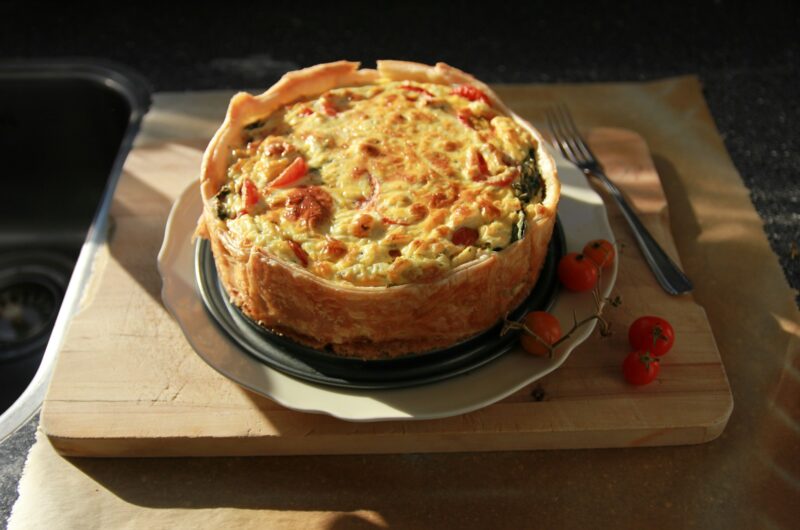
Classic Quiche Recipe: A Rich, Creamy, and Flaky Brunch Favorite
Difficulty: Easy8
servings20
minutes40
minutes1
hourA simple, creamy, and customizable classic quiche baked in a flaky crust—perfect for brunch, lunch, or make-ahead meals.
Ingredients
- For the Crust
1 unbaked 9-inch pie crust (homemade or store-bought)
- For the Filling
4 large eggs
1 1/2 cups heavy cream or half-and-half
1 cup shredded Gruyère or cheddar
1/2 cup sautéed onions or shallots
1 cup cooked add-ins (spinach, bacon, mushrooms, ham, etc.)
1/2 tsp salt
1/4 tsp black pepper
Pinch of nutmeg (optional)
Directions
- Blind-bake the crust: Preheat oven to 375°F (190°C). Line the crust with parchment, add pie weights, and bake 12–15 minutes. Remove weights and bake 5 more minutes.
- Prepare fillings: Sauté onions and cook any add-ins until the moisture evaporates.
- Make custard: Whisk eggs, cream, salt, pepper, and nutmeg.
- Assemble: Reduce oven to 350°F (175°C). Sprinkle cheese over the crust, add fillings, then pour in the custard.
- Bake: Bake 30–40 minutes, or until edges are set and the center has a slight jiggle.
- Rest: Cool 15–20 minutes before slicing.
Notes
- For a lighter custard, replace some cream with milk.
- Use fully cooked fillings to avoid excess moisture.
- Quiche can be served warm, at room temperature, or chilled.
- Stores 3–4 days in the fridge; freezes well for up to 3 months.

Hi, I’m Sorenna Blythe, the baker and writer behind Mix Whisk Bake. I share simple, reliable recipes and honest kitchen moments to help home bakers bake with confidence and joy. When I’m not testing new treats, you’ll find me sipping coffee and dreaming up my next bake.