This page may contain affiliate links. As an Amazon Associate, I earn from qualifying purchases. If you choose to make a purchase after clicking a link, I may receive a commission at no additional cost to you. My goal is to provide helpful and valuable content, and any commissions help me maintain this site and continue creating high-quality content for my readers. Thank you for your support!
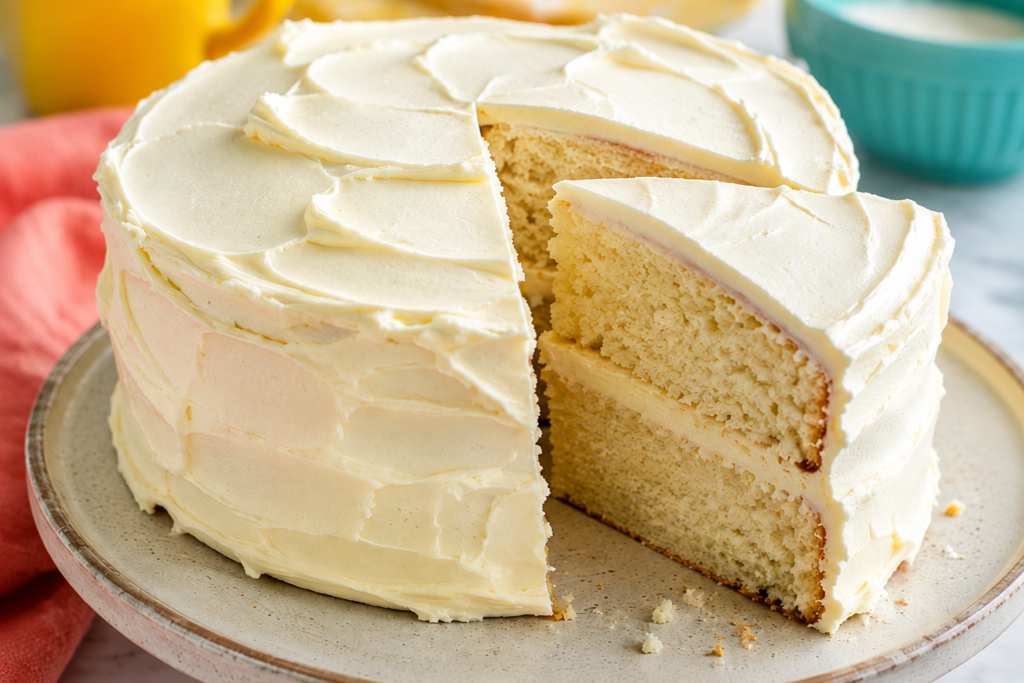
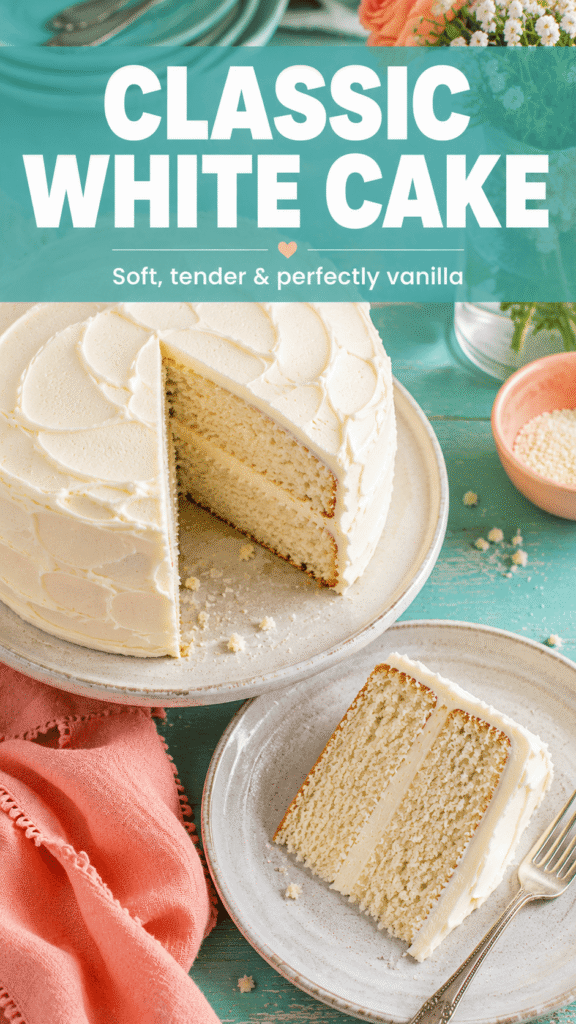
This classic white cake is light, soft, and tender with a delicate vanilla flavor that everyone will love.
Made with simple pantry ingredients, it’s an easy choice for birthdays, celebrations, or a beautiful layered cake.
Best of all, you can pair it with almost any frosting or filling for a dessert that feels homemade and special.
Why You’ll Love This Classic White Cake
- Light, fluffy, and tender: Each bite has a soft texture that melts in your mouth.
- Simple vanilla flavor: Its delicate flavor pairs beautifully with almost any frosting.
- Easy to make: You only need simple ingredients that are easy to find.
- Perfect for any occasion: Serve it at birthdays, weddings, holidays, or as an everyday treat.
- Versatile cake: Bake it as a layered cake or in a sheet pan, depending on the occasion.
Ingredients for Classic White Cake
Dry Ingredients
- 2 cups (250 g) all-purpose flour – Provides the main structure for the cake.
- 2 teaspoons baking powder – Helps the cake rise and stay light.
- ½ teaspoon salt – Enhances the vanilla flavor.
Wet Ingredients
- ½ cup (113 g) unsalted butter, softened – Adds richness and moisture.
- 1½ cups (300 g) granulated sugar – Sweetens the cake and helps create a tender crumb.
- 4 large egg whites – Give the cake its classic white color and light texture.
- 2 teaspoons vanilla extract – Adds a warm, delicate vanilla flavor.
- 1 cup (240 ml) whole milk – Keeps the cake moist and tender.
Optional Ingredients and Variations
- ½ teaspoon almond extract – Adds a subtle nutty flavor alongside the vanilla.
- 1–2 cups frosting or filling – Use vanilla buttercream, cream cheese frosting, or your favorite filling.
- 2–4 tablespoons sprinkles or decorations – Add a festive touch for birthdays and celebrations.
How to Make Classic White Cake
1. Prepare the Cake Pans
Preheat your oven to 350°F (175°C), so it is ready when the batter is finished.
Grease two 8-inch round cake pans with softened butter or nonstick cooking spray.
Line the bottoms with parchment paper to make removing the cakes easier.
A little extra preparation here helps prevent the delicate cake from sticking or breaking when you take it out of the pans.
2. Mix the Dry Ingredients
Add the 2 cups of all-purpose flour, 2 teaspoons of baking powder, and ½ teaspoon of salt to a medium bowl.
Whisk the ingredients together until the baking powder and salt are evenly distributed throughout the flour.
Mixing the dry ingredients first helps prevent pockets of baking powder or salt from ending up in the finished cake.
Set the bowl aside while you prepare the wet ingredients.
3. Cream the Butter and Sugar
Place the ½ cup softened unsalted butter and 1½ cups granulated sugar in a large mixing bowl.
Beat them together for about 3–4 minutes, until the mixture looks pale, light, and fluffy.
This step helps create a lighter texture, so avoid rushing it.
If your butter is too cold, it will be difficult to whip properly, while melted butter can make the cake heavier.
4. Add the Egg Whites and Vanilla
Add the 4 egg whites to the butter mixture gradually, beating well after each addition.
Adding them slowly helps keep the batter smooth and well combined.
Pour in the 2 teaspoons of vanilla extract and mix until evenly incorporated.
The vanilla gives the cake its gentle flavor without overpowering the light texture.
5. Combine the Batter
Add about one-third of the dry ingredients to the butter mixture and mix gently.
Pour in about half of the 1 cup of milk, then continue alternating the dry ingredients and milk until everything has been added.
Begin and end with the dry ingredients for a smoother, more consistent batter.
Mix only until the ingredients are combined, since overmixing can make the cake dense instead of soft and tender.
The finished batter should look smooth and fairly thick, with no large pockets of flour.
6. Bake the Cake
Divide the batter evenly between the two prepared cake pans.
Use a spatula to gently spread the batter so the tops are level.
Bake for approximately 25–30 minutes, or until the tops are lightly golden and a toothpick inserted into the center comes out clean or with a few moist crumbs.
Try not to open the oven during the first 20 minutes, as a sudden drop in temperature can affect the cake’s rise.
Keep a close eye on the cakes toward the end of baking because oven temperatures can vary.
7. Cool and Frost
Remove the cakes from the oven and let them cool in their pans for about 10 minutes.
Run a thin knife around the edges, then carefully turn the cakes onto a wire rack.
Peel away the parchment paper and allow the cake layers to cool completely.
Do not frost the cakes while they are still warm, because the frosting can melt and slide off.
Once completely cool, place one layer on a serving plate, add your favorite frosting or filling, and top with the second layer.
Frost the outside of the cake, then decorate with sprinkles, berries, or any toppings you enjoy.
Best Frosting for White Cake
- Classic vanilla buttercream: A sweet, creamy choice that complements the delicate vanilla flavor.
- Cream cheese frosting: Adds a slightly tangy flavor that balances the cake’s sweetness.
- Whipped cream frosting: A light and airy option that keeps the dessert feeling fresh.
- Chocolate buttercream: Adds rich chocolate flavor for a delicious contrast.
- Strawberry or raspberry filling: Brings bright fruity flavor and a pleasant touch of sweetness.
Tips for Making the Best White Cake
- Use room-temperature ingredients: Room-temperature butter, egg whites, and milk blend more smoothly and help create an even batter.
- Measure flour accurately: Too much flour can make the cake dry and dense, so spoon it into your measuring cup and level it off.
- Avoid overmixing the batter: Mix only until the ingredients are combined to keep the cake soft and tender.
- Do not overbake the cake: Remove it when a toothpick comes out clean or with a few moist crumbs to prevent dryness.
- Let the cake cool completely before frosting: A fully cooled cake keeps the frosting from melting or sliding off.
- Beat the butter and sugar thoroughly: Creaming them until light and fluffy helps create a lighter, more delicate texture.
Classic White Cake Variations
White Almond Cake
Add ½ teaspoon of almond extract along with the vanilla for a gentle nutty flavor.
For a stronger almond taste, you can replace the vanilla with a combination of 1 teaspoon vanilla extract and 1 teaspoon almond extract.
A simple vanilla or almond buttercream pairs especially well with this version.
Lemon White Cake
Add 1 tablespoon of fresh lemon zest and 1 tablespoon of fresh lemon juice to the batter.
The lemon gives the cake a bright, fresh flavor without taking away its soft vanilla base.
Try filling the layers with lemon curd and finishing the cake with vanilla or lemon buttercream.
Coconut White Cake
Stir ½ cup of sweetened shredded coconut into the finished batter before dividing it between the pans.
For extra coconut flavor, replace ¼ cup of the milk with ¼ cup canned coconut milk.
Top the finished cake with coconut buttercream and a sprinkle of toasted coconut.
Strawberry White Cake
Add a layer of ½ cup strawberry jam or preserves between the baked cake layers.
You can also add sliced fresh strawberries just before serving for a fresh, fruity finish.
Strawberry buttercream or whipped cream makes an especially good topping for this variation.
Funfetti White Cake
Fold ½ cup of rainbow sprinkles gently into the batter just before baking.
Use long, jimmie-style sprinkles because they are less likely to bleed into the batter.
Finish the cake with vanilla buttercream and extra sprinkles for a fun birthday dessert.
Chocolate-Filled White Cake
Keep the white cake layers simple and add ½ to 1 cup of chocolate buttercream or chocolate ganache between them.
The rich chocolate filling creates a delicious contrast with the light vanilla cake.
For an extra special finish, frost the outside with vanilla buttercream and drizzle chocolate ganache over the top.
How to Store White Cake
An unfrosted white cake can be kept at room temperature for up to 2 days when tightly wrapped in plastic wrap or stored in an airtight container to help prevent it from drying out.
A frosted cake can also sit at room temperature for about 1–2 days if the frosting is stable and the room is cool, but cakes with cream cheese or whipped cream frosting should be refrigerated.
When refrigerating the cake, cover it well or place it in an airtight container to protect it from absorbing odors and becoming dry.
For the best texture, let refrigerated cake sit at room temperature for about 30 minutes before serving.
To freeze the cake, wrap completely cooled, unfrosted layers tightly in plastic wrap, followed by a layer of aluminum foil or a freezer-safe bag.
Frozen cake layers can be stored for up to 3 months for the best quality.
When you are ready to use them, thaw the wrapped layers in the refrigerator overnight or at room temperature for a few hours before frosting.
What to Serve With White Cake
- Fresh berries: Strawberries, raspberries, blueberries, or blackberries add a fresh, slightly tart contrast.
- Whipped cream: A light, creamy topping adds extra richness without overpowering the cake.
- Ice cream: Vanilla, strawberry, or chocolate ice cream makes the cake an indulgent dessert.
- Fresh fruit sauces: Strawberry, raspberry, or blueberry sauce adds bright flavor and moisture.
- Coffee or tea: A warm cup of coffee or tea pairs beautifully with the cake’s delicate vanilla flavor.
FAQs
What makes a white cake white?
White cake gets its pale color mainly from using egg whites instead of whole eggs.
The absence of egg yolks keeps the cake lighter in color while helping maintain its soft texture.
What is the difference between white cake and vanilla cake?
White cake traditionally uses egg whites, giving it a lighter color and delicate texture.
Vanilla cake can use whole eggs, which usually creates a richer flavor, darker color, and slightly denser texture.
Can I use whole eggs instead of egg whites?
Yes, but the cake will have a more yellow color and richer flavor because of the egg yolks.
The texture may also be slightly heavier than a traditional white cake.
Why is my white cake dense?
A dense cake can result from overmixing the batter, adding too much flour, or using expired baking powder.
Accurately measuring ingredients and mixing only until combined can help keep the cake light and tender.
Can I make this white cake ahead of time?
Yes, you can bake the cake layers ahead and store them tightly wrapped at room temperature for up to 2 days or freeze them for up to 3 months.
Thaw frozen layers completely before frosting and decorating.
What frosting goes best with white cake?
Vanilla buttercream is a classic choice because its creamy sweetness complements the delicate cake flavor.
Cream cheese frosting, whipped cream, chocolate buttercream, and fruit fillings also work well.
Classic White Cake Recipe: Light, Fluffy & Perfect Every Time
Difficulty: Easy10
Slices15
minutes30
minutes45
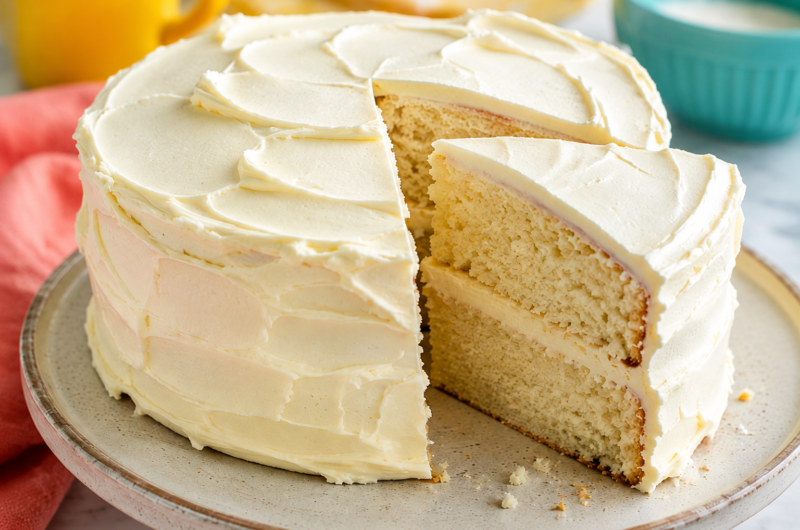
minutesA light, soft, and tender two-layer white cake with delicate vanilla flavor and creamy buttercream frosting.
Ingredients
2 cups (250 g) all-purpose flour
2 teaspoons baking powder
½ teaspoon salt
½ cup (113 g) unsalted butter, softened
1½ cups (300 g) granulated sugar
4 large egg whites, room temperature
2 teaspoons vanilla extract
1 cup (240 ml) whole milk, room temperature
2 cups vanilla buttercream, for filling and frosting
Directions
- Prepare the pans: Preheat the oven to 350°F (175°C) and grease two 8-inch round cake pans. Line the bottoms with parchment paper.
- Combine the dry ingredients: Whisk the flour, baking powder, and salt together in a medium bowl until evenly combined.
- Cream the butter and sugar: In a large bowl, beat the softened butter and sugar for 3–4 minutes, until pale and fluffy.
- Add the egg whites: Add the egg whites one at a time, beating well after each addition. Mix in the vanilla extract.
- Make the batter: Add the dry ingredients in three additions, alternating with the milk in two additions. Mix gently after each addition and stop as soon as the batter is smooth and combined.
- Fill the pans: Divide the batter evenly between the prepared cake pans and gently spread the tops level.
- Bake: Bake for 25–30 minutes, or until the tops are lightly golden and a toothpick inserted into the center comes out clean or with a few moist crumbs.
- Cool: Let the cakes cool in their pans for 10 minutes, then carefully transfer them to a wire rack to cool completely.
- Frost the cake: Place one cooled layer on a serving plate and spread with buttercream. Add the second layer, then frost the top and sides with the remaining buttercream.
- Serve: Slice and serve once the frosting has set slightly.
Notes
- Use room-temperature ingredients for a smoother, more evenly mixed batter.
- Measure the flour carefully to prevent a dry or dense cake.
- Do not overmix once the flour is added, as this can make the cake heavy.
- Cool the cake completely before frosting so the buttercream does not melt.
- For a subtle almond flavor, add ½ teaspoon almond extract with the vanilla.
- Store the frosted cake covered at room temperature for up to 2 days, or refrigerate if using cream cheese or whipped cream frosting.

Hi, I’m Sorenna Blythe, the baker and writer behind Mix Whisk Bake. I share simple, reliable recipes and honest kitchen moments to help home bakers bake with confidence and joy. When I’m not testing new treats, you’ll find me sipping coffee and dreaming up my next bake.