This page may contain affiliate links. As an Amazon Associate, I earn from qualifying purchases. If you choose to make a purchase after clicking a link, I may receive a commission at no additional cost to you. My goal is to provide helpful and valuable content, and any commissions help me maintain this site and continue creating high-quality content for my readers. Thank you for your support!
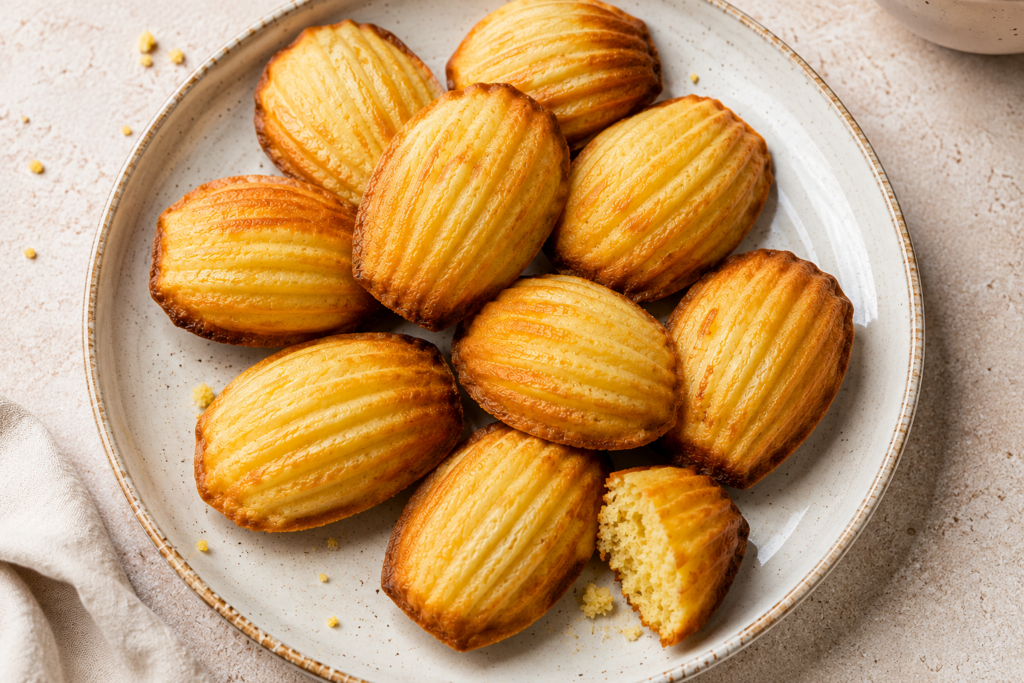
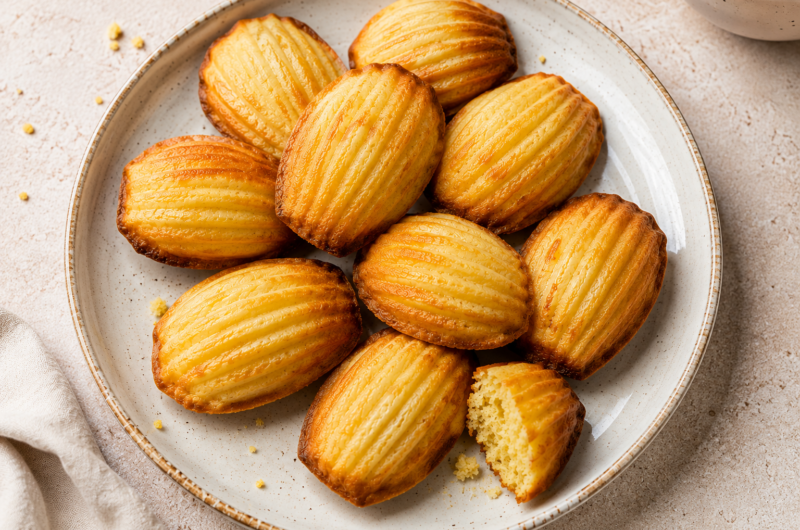
Madeleines are classic French shell-shaped cakes with a delicate buttery flavor, tender crumb, and lightly crisp edges.
This easy recipe uses simple ingredients and straightforward steps, making it perfect for beginners.
What Are Madeleines?
Madeleines are small, shell-shaped French cakes known for their delicate buttery flavor and tender, sponge-like texture.
They are traditionally associated with France, where they have been enjoyed as a simple treat alongside coffee or tea for generations.
Their most recognizable feature is the ridged shell shape, which comes from baking the batter in a special madeleine pan with shell-shaped molds.
Freshly baked madeleines usually have lightly crisp, golden edges while the center stays soft and airy.
Although they are often called cookies, madeleines are closer to small sponge cakes because their batter is light and tender rather than dense or chewy.
Unlike a typical cake, however, they are baked as individual portions, giving each madeleine its own golden edges and pretty shell pattern.
That combination of a delicate crumb, buttery flavor, and crisp edges makes madeleines a lovely little treat that is easy to enjoy with your favorite hot drink.
Why You’ll Love This Madeleines Recipe
- Simple ingredients: This recipe uses common pantry staples that are easy to find and work with.
- Beginner-friendly: The steps are straightforward, making it a great recipe for both new and experienced bakers.
- Buttery and tender: Each madeleine has a soft, delicate crumb with rich buttery flavor and lightly crisp edges.
- Classic shell shape: The signature golden shell design gives these little cakes their beautiful and elegant appearance.
- Perfect for any time of day: Enjoy them with coffee, tea, or as a light afternoon snack.
- Easy to customize: Add flavors like lemon, orange, vanilla, or chocolate to make them your own.
- Great for sharing: Their small size makes them perfect for serving at gatherings, brunches, or special occasions.

Madeleines Recipe Ingredients
- 1 cup (125 g) all-purpose flour – Provides the structure for the madeleines while keeping them light and tender.
- 1 teaspoon baking powder – Helps the madeleines rise and develop their soft, airy texture.
- ¼ teaspoon salt – Balances the sweetness and enhances the buttery flavor.
- 3 large eggs – Add moisture, richness, and structure to the batter.
- ½ cup (100 g) granulated sugar – Sweetens the madeleines and helps create a delicate crumb.
- ½ cup (113 g) unsalted butter, melted – Gives the madeleines their rich, buttery flavor and tender texture.
- 1 teaspoon vanilla extract – Adds a warm, subtle flavor.
- 1 tablespoon fresh lemon zest – Adds a bright citrus note that complements the butter.
- 2 tablespoons powdered sugar – Use for a light dusting before serving.
How to Make Madeleines
1. Prepare the Batter
In a medium bowl, whisk together the flour, baking powder, and salt to distribute the ingredients evenly.
In a separate bowl, beat the eggs and granulated sugar until the mixture becomes pale and slightly thickened.
Gradually add the dry ingredients to the egg mixture, stirring gently until just combined.
Fold in the melted butter, vanilla extract, and lemon zest until you have a smooth, evenly mixed batter.
Avoid overmixing at this stage, as too much stirring can make the madeleines less tender.
2. Chill the Batter
Cover the bowl with plastic wrap and refrigerate the batter for at least 1 hour, or until well chilled.
Chilling gives the butter time to firm up and helps the batter react to the heat of the oven, creating the classic raised hump on each madeleine.
It also gives the finished cakes a slightly more tender texture and helps them hold their shape during baking.
3. Prepare the Madeleine Pan
Lightly grease each shell-shaped mold with melted butter, then dust it with a thin layer of flour.
Tap out any excess flour so it does not leave a heavy coating on the baked madeleines.
Properly preparing the pan helps the delicate cakes release easily while keeping their beautiful shell pattern intact.
4. Bake the Madeleines
Preheat your oven to 375°F (190°C) and place the prepared pan in the refrigerator while the oven heats.
Spoon the chilled batter into the molds, filling each one about three-quarters full to leave room for the madeleines to rise.
Bake for about 10–12 minutes, or until the edges are golden and the centers are set.
Keep an eye on them during the final few minutes because madeleines can quickly go from golden to overly brown.
Let the madeleines cool in the pan for a few minutes before gently removing them and transferring them to a wire rack.
5. Serve
Once slightly cooled, dust the madeleines with powdered sugar for a simple finishing touch.
Madeleines are best served fresh and can be enjoyed warm or at room temperature.
Pair them with coffee or tea for an easy afternoon treat, or serve them as a light dessert after a meal.
Tips for Perfect Madeleines
- Chill the batter: Refrigerate the batter before baking to help create the classic hump and tender texture.
- Avoid overmixing: Stir the batter just until the ingredients are combined to keep the madeleines light and soft.
- Don’t overfill the molds: Fill each shell about three-quarters full so the batter has room to rise without spilling over.
- Prepare the pan properly: Grease and lightly flour the molds to help the madeleines release cleanly after baking.
- Watch the baking time: Check the madeleines near the end of baking and remove them once the edges are golden to prevent overbrowning.
- Use a fully preheated oven: A properly heated oven helps the batter rise quickly and develop the signature hump.
Madeleines Recipe Variations
Lemon Madeleines
Add extra fresh lemon zest to the batter for a stronger citrus flavor.
For an extra bright finish, drizzle the cooled madeleines with a simple glaze made from powdered sugar and lemon juice.
Chocolate Madeleines
Replace a small portion of the all-purpose flour with unsweetened cocoa powder to give the madeleines a rich chocolate flavor.
Be careful not to add too much cocoa powder, as it can make the cakes dry and overpower the delicate texture.
Orange Madeleines
Replace the lemon zest with fresh orange zest for a sweeter, more fragrant citrus flavor.
You can also add a little fresh orange juice to a powdered sugar glaze and drizzle it over the cooled madeleines.
Almond Madeleines
Add a small amount of almond extract to the batter for a warm, nutty flavor.
For more almond flavor and texture, you can also mix in finely ground almonds while keeping the batter light enough to rise properly.
How to Store Madeleines
Let the madeleines cool completely before storing them to prevent trapped steam from making them soggy.
Place the cooled madeleines in an airtight container and keep them at room temperature.
They will generally stay fresh for about 2–3 days, although their crisp edges and tender texture are best during the first day.
For the best flavor and texture, enjoy madeleines shortly after baking while they are still fresh and buttery.
If they become slightly dry after storage, a brief warm-up in the oven can help soften them before serving.
What to Serve With Madeleines
- Coffee: The rich flavor of coffee pairs beautifully with buttery, lightly sweet madeleines.
- Espresso: A small, bold espresso balances the delicate sweetness of these French cakes.
- Tea: Serve madeleines with black, green, or herbal tea for a simple afternoon treat.
- Hot chocolate: Creamy hot chocolate makes a cozy pairing, especially with chocolate madeleines.
- Fresh berries: Strawberries, raspberries, or blueberries add fresh flavor and a touch of natural sweetness.
- Whipped cream: A spoonful of lightly sweetened whipped cream adds extra richness and a soft, creamy contrast.
Final Thoughts
These homemade madeleines are buttery, tender, and surprisingly simple to make with a few basic ingredients.
Once you master the classic recipe, try lemon, orange, chocolate, or almond flavors to create your favorite version.
FAQs
Why do madeleines have a hump?
The chilled batter reacts to the heat of the oven, causing it to rise quickly and form the classic madeleine hump.
Do I have to chill madeleine batter?
Chilling is highly recommended because it helps create a more pronounced hump and gives the madeleines a better texture.
Why are my madeleines sticking to the pan?
Madeleines can stick when the pan is not properly greased and floured, or when the pan is not suitable for baking madeleines.
Can I make madeleine batter ahead of time?
Yes, you can prepare the batter ahead of time and keep it covered in the refrigerator until you are ready to bake.
How should madeleines be served?
Serve madeleines fresh with coffee or tea, and dust them lightly with powdered sugar for a simple finishing touch.
Easy Madeleines Recipe: Buttery, Soft & Perfectly Golden
Difficulty: Easy18
servings15
minutes12
minutes1
hour25
minutesThese classic French madeleines are buttery, tender, and lightly crisp around the edges, with a delicate lemon-vanilla flavor and beautiful golden shell shape.
Ingredients
1 cup (125 g) all-purpose flour
1 teaspoon baking powder
¼ teaspoon salt
3 large eggs, room temperature
½ cup (100 g) granulated sugar
½ cup (113 g) unsalted butter, melted and slightly cooled
1 teaspoon vanilla extract
1 tablespoon finely grated lemon zest
2 tablespoons powdered sugar, for dusting
Extra butter and flour, for preparing the pan
Directions
- Prepare the dry ingredients: Whisk the flour, baking powder, and salt together in a bowl and set aside.
- Beat the eggs and sugar: In a separate bowl, beat the eggs and granulated sugar for 3–4 minutes, until pale, slightly thickened, and smooth.
- Combine the batter: Gradually add the dry ingredients to the egg mixture, gently folding until just combined.
- Add the butter and flavor: Fold in the melted butter, vanilla extract, and lemon zest until the batter is smooth and evenly mixed.
- Chill the batter: Cover the bowl and refrigerate for at least 1 hour. Chilling helps the madeleines develop their classic hump and tender texture.
- Prepare the pan: Grease a madeleine pan with softened butter and lightly dust it with flour, tapping out any excess.
- Fill the molds: Preheat the oven to 375°F (190°C). Spoon the chilled batter into each mold, filling it about three-quarters full.
- Bake: Bake for 10–12 minutes, until the edges are golden brown and the centers are set.
- Cool: Let the madeleines rest in the pan for 2–3 minutes, then gently remove them and transfer them to a wire rack.
- Serve: Dust lightly with powdered sugar and serve warm or at room temperature with coffee or tea.
Notes
- Chill the batter: This is important for creating the signature madeleine hump.
- Don’t overmix: Fold the ingredients together just until combined to keep the cakes light and tender.
- Don’t overfill: Leave room for the batter to rise during baking.
- Watch the oven: Madeleines can brown quickly, so remove them as soon as the edges are golden.
- Best fresh: Madeleines have their best texture and flavor on the day they are baked, but they can be stored in an airtight container at room temperature for 2–3 days.


Hi, I’m Sorenna Blythe, the baker and writer behind Mix Whisk Bake. I share simple, reliable recipes and honest kitchen moments to help home bakers bake with confidence and joy. When I’m not testing new treats, you’ll find me sipping coffee and dreaming up my next bake.