This page may contain affiliate links. As an Amazon Associate, I earn from qualifying purchases. If you choose to make a purchase after clicking a link, I may receive a commission at no additional cost to you. My goal is to provide helpful and valuable content, and any commissions help me maintain this site and continue creating high-quality content for my readers. Thank you for your support!
Profiteroles may look fancy, but they’re surprisingly easy to make at home.
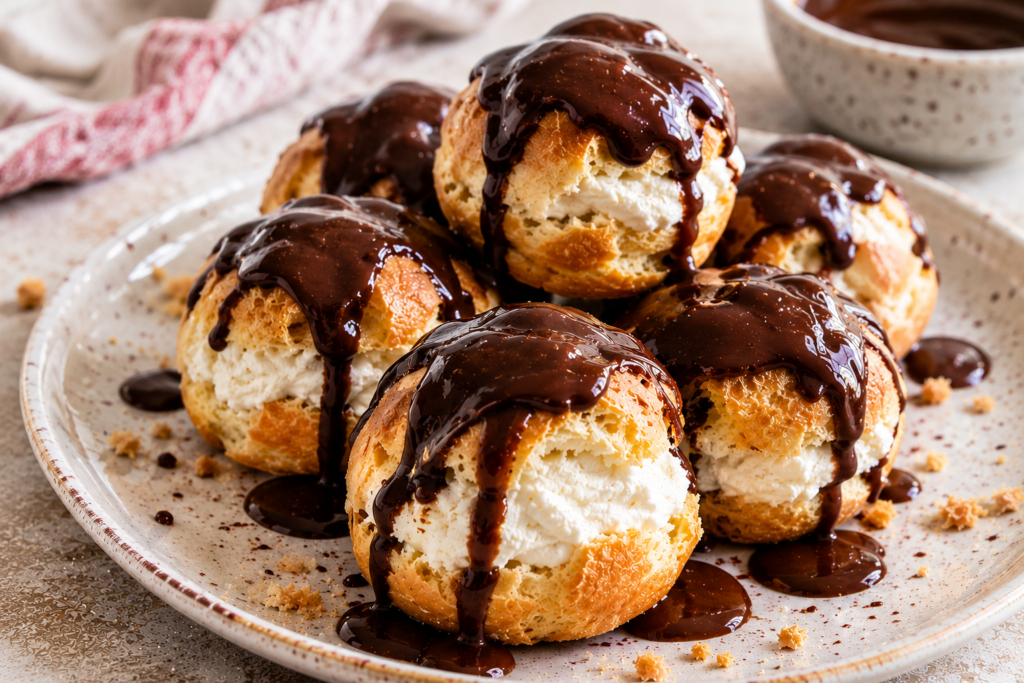
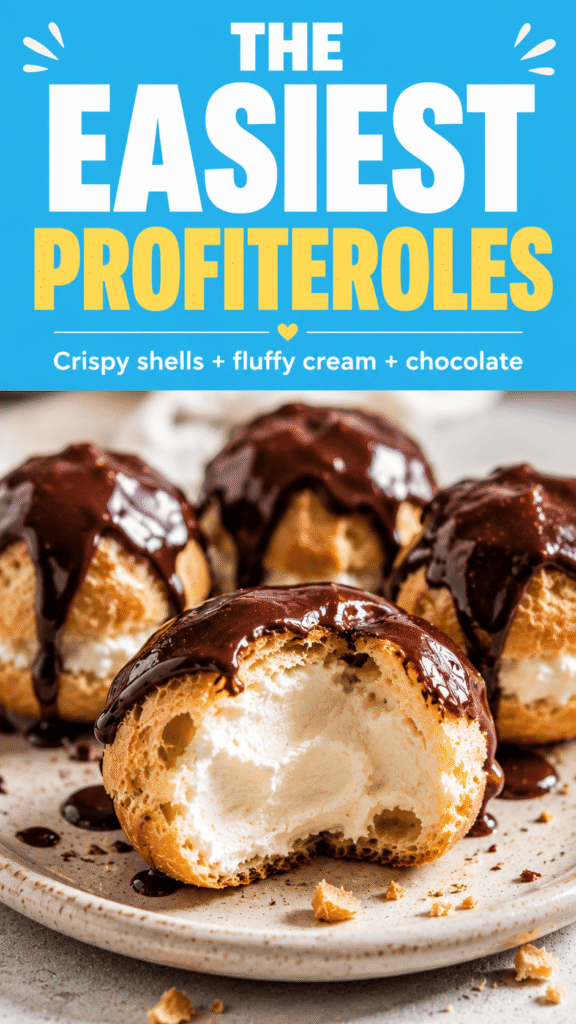
These light, crisp choux pastries are filled with fluffy cream and finished with rich chocolate sauce.
Follow a few simple steps, and you’ll have an impressive dessert with the perfect mix of crisp pastry, creamy filling, and smooth chocolate.
What Are Profiteroles?
Profiteroles are classic French pastries made from light, airy choux pastry that is baked until golden, filled with a creamy filling, and finished with chocolate sauce.
They are believed to have originated in France and have become a popular dessert around the world, especially when served for celebrations and special occasions.
The pastry itself is made from a simple dough of water, butter, flour, and eggs, which puffs up in the oven to create a hollow center that is perfect for filling.
Traditional profiteroles are usually filled with whipped cream, pastry cream, or ice cream, then topped with warm chocolate sauce for a rich finish.
What makes them so delicious is the contrast of textures: the pastry is light and slightly crisp on the outside, the filling is soft and creamy, and the chocolate adds a smooth, rich layer.
Profiteroles are closely related to cream puffs, but the names can vary depending on the recipe and region, with profiteroles often referring specifically to filled choux pastries served with chocolate or another sauce.
Éclairs are also made from choux pastry, but they are piped into long, finger-shaped pieces rather than small round puffs and are usually filled with pastry cream and topped with icing or chocolate.
Why You’ll Love This Profiteroles Recipe
- Light and crisp pastry: The choux pastry bakes up golden and airy with a delicate crisp shell.
- Creamy, delicious filling: Soft whipped cream adds a smooth, sweet center to every bite.
- Rich chocolate topping: Warm chocolate sauce gives the profiteroles an indulgent finish.
- Made with simple ingredients: You only need a handful of basic ingredients to make this elegant dessert.
- Perfect for special occasions: Profiteroles make an impressive dessert for parties, holidays, and family gatherings.
- Can be prepared ahead: The pastry shells can be made in advance, making assembly easier when you’re ready to serve.
Ingredients for Profiteroles
For the Choux Pastry
- 1 cup (240 ml) water
- ½ cup (113 g) unsalted butter, cut into pieces
- ¼ teaspoon salt
- 1 cup (125 g) all-purpose flour
- 4 large eggs, at room temperature
For the Cream Filling
- 1½ cups (360 ml) heavy cream
- ¼ cup (30 g) powdered sugar
- 1 teaspoon vanilla extract
For the Chocolate Sauce
- 6 oz (170 g) semi-sweet or dark chocolate, finely chopped
- ¾ cup (180 ml) heavy cream
- 1 tablespoon (14 g) unsalted butter
- ½ teaspoon vanilla extract, optional
Equipment You’ll Need
- Saucepan: For cooking the choux pastry dough.
- Wooden spoon: For stirring the flour into the butter mixture until smooth.
- Mixing bowl: For preparing the whipped cream filling.
- Electric mixer: Makes whipping the cream quick and easy.
- Piping bag: Helps you pipe evenly sized profiterole shells and fill them neatly.
- Round piping tip: Creates smooth, uniform pastry rounds.
- Baking sheet: Provides a flat surface for baking the profiteroles.
- Parchment paper: Prevents the pastry from sticking to the baking sheet.
- Wire rack: Allows the baked profiterole shells to cool without becoming soggy.
How to Make Profiteroles
Step 1: Make the Choux Pastry
Preheat your oven to 400°F (200°C) and line a baking sheet with parchment paper.
Add the water, butter, and salt to a saucepan and heat over medium heat until the butter has melted and the mixture comes to a gentle boil.
Remove the saucepan from the heat and add the flour all at once.
Stir firmly with a wooden spoon until the flour is fully incorporated and a smooth dough forms.
Return the saucepan to low heat and cook the dough for about 1–2 minutes, stirring constantly, until it pulls away from the sides of the pan and leaves a thin film on the bottom.
Transfer the dough to a mixing bowl and let it cool for a few minutes so it is warm rather than hot before adding the eggs.
Step 2: Add the Eggs
Add the eggs one at a time, mixing well after each addition.
The dough may look lumpy or separated at first, but keep mixing until each egg is fully absorbed before adding the next.
When ready, the dough should be smooth, glossy, and thick enough to hold its shape when piped.
A simple test is to lift some dough with a spoon and check that it falls back slowly, forming a soft V-shaped point.
Step 3: Pipe the Profiteroles
Transfer the choux pastry to a piping bag fitted with a round piping tip.
Pipe small mounds about 1½ inches (4 cm) wide onto the prepared baking sheet, leaving space between each one for the pastry to expand.
Keep the sizes as even as possible so the profiteroles finish baking at the same time.
If the tops have small points, gently smooth them with a damp fingertip.
Step 4: Bake the Choux Pastry
Bake the profiteroles at 400°F (200°C) for about 20–25 minutes, or until they are well puffed and golden brown.
Avoid opening the oven door during the early part of baking, as a sudden drop in temperature can cause the shells to collapse.
Once they are deeply golden and feel firm, turn off the oven and leave the shells inside for 5 minutes with the door slightly open to help release excess moisture.
Transfer the shells to a wire rack and let them cool completely before filling.
Step 5: Make the Whipped Cream Filling
Pour the heavy cream into a chilled mixing bowl and add the powdered sugar and vanilla extract.
Beat with an electric mixer until the cream becomes thick and forms stiff peaks.
Be careful not to overmix, as the cream can become grainy and start turning into butter.
Transfer the whipped cream to a piping bag fitted with a small round tip.
Step 6: Fill the Profiteroles
Once the pastry shells are completely cool, use a small knife or piping tip to make a hole in the bottom of each shell.
Insert the piping tip and gently squeeze the bag to fill each profiterole with whipped cream.
Stop when the shell feels slightly heavier, and the filling begins to reach the opening.
Avoid overfilling, as too much cream can make the profiteroles difficult to serve neatly.
Step 7: Make the Chocolate Sauce
Place the chopped chocolate, heavy cream, and butter in a heatproof bowl.
Melt the mixture gently over a saucepan of barely simmering water, stirring until the chocolate is completely melted and the sauce is smooth.
You can also heat the cream separately until hot, then pour it over the chocolate and stir until smooth before mixing in the butter.
Add the vanilla extract if using, then let the sauce cool for a few minutes if it seems too hot or thin.
Step 8: Assemble and Serve
Arrange the filled profiteroles on a serving plate or stack them into a small mound for a classic presentation.
Drizzle the warm chocolate sauce generously over the top, allowing it to run down the sides.
For an extra-rich dessert, serve the profiteroles with additional chocolate sauce on the side.
Profiteroles are best served soon after filling so the pastry stays light and crisp against the creamy filling.
Tips for Making Perfect Profiteroles
- Use room-temperature eggs: They blend into the warm dough more easily and help create a smooth, consistent mixture.
- Add eggs gradually: Mix in one egg at a time and check the dough before adding more to avoid making it too loose.
- Pipe evenly sized shells: Consistent sizes help all the profiteroles bake evenly and finish at the same time.
- Keep the oven door closed: Opening the door too early can cause the rising pastry to lose heat and collapse.
- Bake until deeply golden: Well-baked shells are firmer and less likely to sink as they cool.
- Cool the shells completely: Filling warm pastry can cause the cream to soften and make the shells soggy.
- Fill just before serving: This keeps the pastry crisp while giving you the best contrast with the creamy filling.
Common Mistakes to Avoid
Why Did My Profiteroles Collapse?
Profiteroles can collapse if the pastry has not been baked long enough to set the inside properly.
The shells need to become deeply golden and dry enough to hold their shape after coming out of the oven.
Avoid taking them out while they are still pale or soft, even if they look fully puffed.
Letting the baked shells sit in the turned-off oven for a few minutes with the door slightly open can also help remove excess moisture.
Why Are My Profiteroles Flat?
Flat profiteroles are often caused by underbaking, incorrect dough consistency, or opening the oven too early.
If the dough is too loose, the pastry may spread instead of rising properly.
Opening the oven door while the shells are still rising can also cause them to lose the heat and steam they need to puff up.
Keep the oven closed during the main baking time and bake until the shells are firm and golden.
Why Is My Choux Pastry Too Runny?
Choux pastry can become too runny if you add more egg than the flour mixture can absorb.
Add the eggs one at a time and mix thoroughly after each addition.
You may not need to use every last bit of an egg if the dough has already reached the right consistency.
The finished dough should be smooth and glossy but still thick enough to hold its shape when piped.
Why Are My Profiteroles Soggy?
Soggy profiteroles are usually caused by underbaking, trapped moisture, or filling the shells too far ahead of serving.
Make sure the pastry is deeply golden and feels firm before removing it from the oven.
Allow the shells to cool completely on a wire rack so steam can escape instead of softening the pastry.
For the crispest texture, fill the profiteroles shortly before serving and add the chocolate sauce just before they reach the table.
Profiterole Variations
- Vanilla whipped cream profiteroles: Fill the shells with lightly sweetened vanilla whipped cream for a simple, classic flavor.
- Pastry cream-filled profiteroles: Use rich, smooth pastry cream for a thicker and more custard-like filling.
- Chocolate cream profiteroles: Add melted chocolate or cocoa powder to the whipped cream for a delicious chocolate filling.
- Coffee-flavored profiteroles: Mix a little instant espresso powder into the cream for a subtle coffee kick.
- Strawberry and cream profiteroles: Add sliced fresh strawberries alongside the whipped cream for a fruity, refreshing filling.
- Caramel profiteroles: Drizzle the filled profiteroles with caramel sauce for a sweet, buttery finish.
- Nutella-filled profiteroles: Fill the pastry shells with Nutella or another chocolate-hazelnut spread for an extra indulgent treat.
How to Store Profiteroles
Unfilled profiterole shells can be stored in an airtight container at room temperature for up to 2 days once completely cooled.
If the shells have softened, place them in a 350°F (175°C) oven for about 5–8 minutes to crisp them up again, then let them cool before filling.
Filled profiteroles should be stored in an airtight container in the refrigerator and are best enjoyed within 1–2 days.
Keep the shells and filling separate whenever possible if you are preparing them ahead, as the cream will gradually soften the pastry.
Chocolate-topped profiteroles are best enjoyed fresh because the sauce can make the pastry softer over time.
For the best texture, fill the shells and add the chocolate sauce shortly before serving.
Can You Make Profiteroles Ahead of Time?
Yes, profiteroles are easy to prepare ahead, which makes them a convenient dessert for parties and special occasions.
The choux pastry shells can be baked up to 2 days in advance and stored in an airtight container once completely cooled.
The whipped cream filling can be prepared a few hours ahead and kept covered in the refrigerator until you are ready to use it.
The chocolate sauce can also be made in advance and gently warmed before serving if it becomes too thick.
For the best texture, keep the pastry shells, cream filling, and chocolate sauce separate until shortly before serving.
Fill the profiteroles and add the chocolate topping just before serving to keep the pastry light and crisp.
What to Serve With Profiteroles
- Fresh berries: Strawberries, raspberries, or blueberries add a fresh, slightly tart contrast to the sweet profiteroles.
- Extra chocolate sauce: Serve warm chocolate sauce on the side for anyone who wants an even richer dessert.
- Caramel sauce: A drizzle of caramel adds buttery sweetness that pairs beautifully with the chocolate topping.
- Powdered sugar: A light dusting gives the profiteroles a simple, elegant finish.
- Vanilla ice cream: Cold, creamy ice cream makes a delicious contrast to the warm chocolate and crisp pastry.
- Coffee or espresso: A cup of coffee or espresso balances the sweetness and makes a perfect after-dinner pairing.
FAQs
What are profiteroles made of?
Profiteroles are made from choux pastry, which is filled with whipped cream or pastry cream and topped with chocolate sauce.
What is the secret to good profiteroles?
Bake the pastry until deeply golden and dry, and avoid opening the oven door while the profiteroles are rising.
Why do profiteroles collapse after baking?
They can collapse when they are underbaked or contain too much moisture, so make sure the shells are firm and well browned.
Can I make profiteroles ahead of time?
Yes, you can bake the shells ahead and store them separately from the filling and chocolate sauce until you’re ready to assemble.
How long do homemade profiteroles last?
Filled profiteroles are best enjoyed within 1–2 days when stored in the refrigerator.
Can I freeze profiterole shells?
Yes, freeze completely cooled, unfilled shells in an airtight container for up to 2 months and crisp them briefly in the oven after thawing.
What is the difference between profiteroles and cream puffs?
Both use choux pastry, but profiteroles are often served with chocolate sauce, while cream puffs are commonly filled and served without a sauce.
Can I fill profiteroles with pastry cream?
Yes, pastry cream makes a delicious, rich filling and is a great alternative to whipped cream.
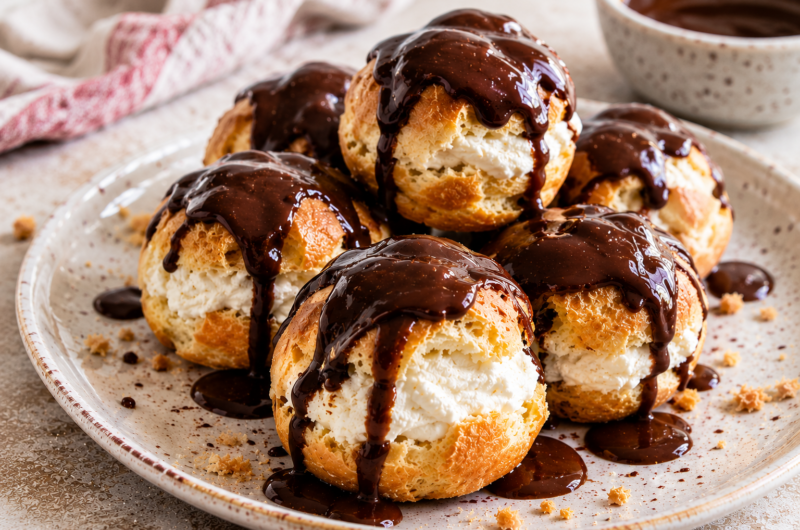
Easy Profiteroles Recipe: Light, Crispy & Creamy
Difficulty: Medium24
Profiteroles30
minutes25
minutes55
minutesLight and crisp choux pastry filled with fluffy vanilla whipped cream and finished with a rich chocolate sauce. These homemade profiteroles look impressive but are made with simple ingredients.
Ingredients
For the choux pastry:
1 cup (240 ml) water
½ cup (113 g) unsalted butter, cut into pieces
¼ teaspoon salt
1 cup (125 g) all-purpose flour
4 large eggs, preferably at room temperature
For the whipped cream filling:
1½ cups (360 ml) heavy cream
¼ cup (30 g) powdered sugar
1 teaspoon vanilla extract
For the chocolate sauce:
6 oz (170 g) semi-sweet or dark chocolate, finely chopped
¾ cup (180 ml) heavy cream
1 tablespoon (14 g) unsalted butter
½ teaspoon vanilla extract, optional
Directions
- Prepare the oven: Preheat the oven to 400°F (200°C) and line a baking sheet with parchment paper.
- Make the choux dough: Add the water, butter, and salt to a saucepan and bring to a gentle boil over medium heat. Remove from the heat, add the flour all at once, and stir vigorously until a smooth dough forms.
- Cook the dough: Return the saucepan to low heat and stir for 1–2 minutes, until the dough pulls away from the sides and forms a smooth ball. Transfer it to a mixing bowl and let it cool for a few minutes.
- Add the eggs: Beat in the eggs one at a time, mixing well after each addition. The finished dough should be smooth, glossy, and thick enough to hold its shape when piped.
- Pipe the profiteroles: Transfer the dough to a piping bag fitted with a round tip. Pipe about 1½-inch (4 cm) mounds onto the prepared baking sheet, leaving space between each one. Smooth any pointed tops with a damp fingertip.
- Bake: Bake for 20–25 minutes, without opening the oven door, until the profiteroles are puffed and deeply golden. Turn off the oven, leave the door slightly open, and let them sit for 5 minutes to help release excess moisture.
- Cool the shells: Transfer the profiteroles to a wire rack and allow them to cool completely before filling.
- Make the filling: Beat the heavy cream, powdered sugar, and vanilla with an electric mixer until stiff peaks form. Transfer the whipped cream to a piping bag.
- Fill the profiteroles: Make a small hole in the bottom of each cooled pastry shell. Pipe in the whipped cream until each profiterole feels full but not overstuffed.
- Make the chocolate sauce: Place the chopped chocolate, heavy cream, and butter in a heatproof bowl. Melt gently over a saucepan of barely simmering water, stirring until smooth and glossy. Stir in the vanilla if using.
- Assemble: Arrange the filled profiteroles on a serving plate and spoon or drizzle the chocolate sauce generously over the top.
- Serve: Serve immediately for the best contrast between the crisp pastry, creamy filling, and rich chocolate sauce.
Notes
- Eggs: Add the eggs gradually because you may not need every last bit if the dough reaches the correct consistency early.
- Baking: Do not remove the profiteroles while they are pale or soft, as underbaked shells are more likely to collapse.
- Make ahead: Bake the unfilled shells up to 2 days ahead and store them in an airtight container.
- Storage: Filled profiteroles can be refrigerated for 1–2 days, although they are best when freshly assembled.
- Chocolate: Dark or semi-sweet chocolate works well, but milk chocolate can be used for a sweeter topping.
- Texture tip: Fill the profiteroles shortly before serving to keep the choux pastry as crisp as possible.

Hi, I’m Sorenna Blythe, the baker and writer behind Mix Whisk Bake. I share simple, reliable recipes and honest kitchen moments to help home bakers bake with confidence and joy. When I’m not testing new treats, you’ll find me sipping coffee and dreaming up my next bake.