This page may contain affiliate links. As an Amazon Associate, I earn from qualifying purchases. If you choose to make a purchase after clicking a link, I may receive a commission at no additional cost to you. My goal is to provide helpful and valuable content, and any commissions help me maintain this site and continue creating high-quality content for my readers. Thank you for your support!
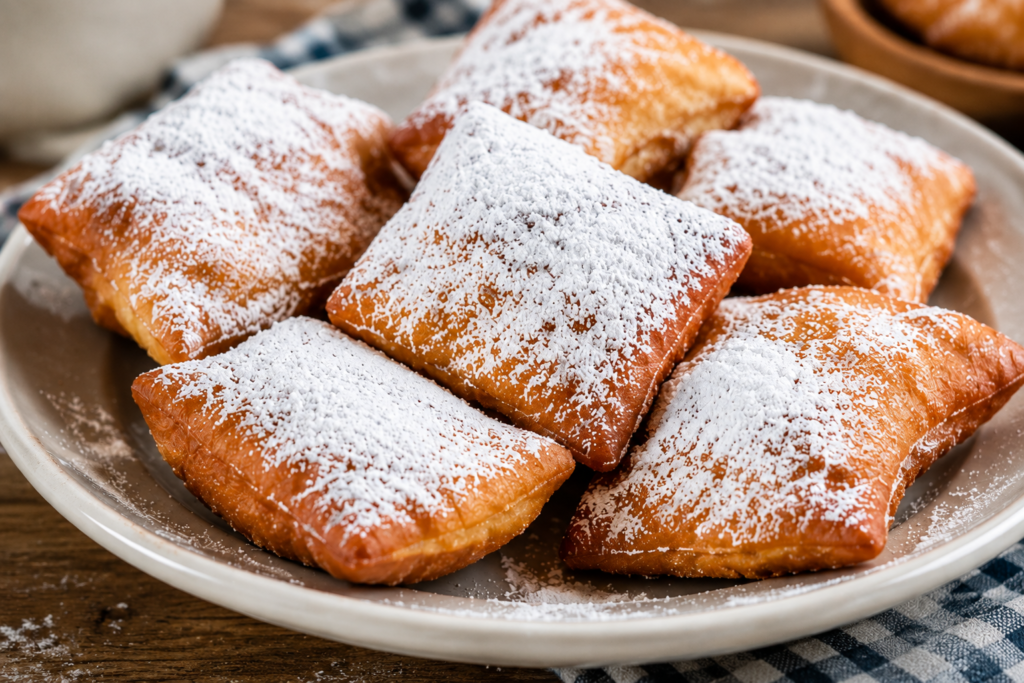
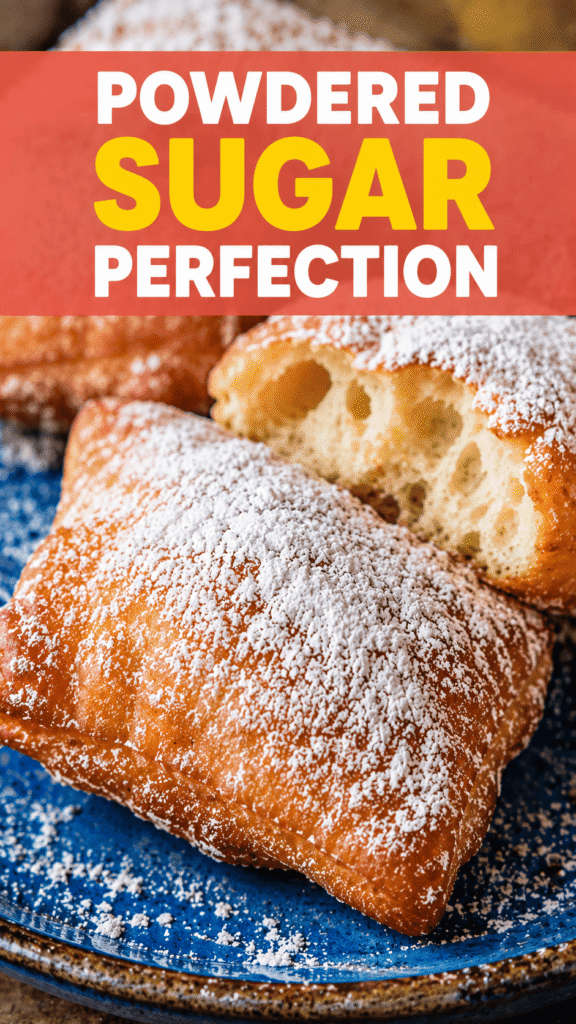
Beignets are light, fluffy pastries that are deep-fried until golden and then covered generously with powdered sugar.
They have a lightly crisp outside, a soft and airy center, and just the right amount of sweetness from that snowy layer of powdered sugar.
While beignets may look like something you would only order at a bakery or café, they are surprisingly easy to make at home with a few simple ingredients and some patience while the dough rises.
The dough does need time to rest and rise, but the actual process is straightforward, even if you are making beignets for the first time.
Once the dough is ready, you simply roll it out, cut it into squares, fry the pieces until puffed and golden, and finish them with plenty of powdered sugar.
Serve them warm alongside a cup of coffee or your favorite drink, and you will have a homemade treat that feels special without requiring complicated baking skills.
What Are Beignets?
Traditional beignets are soft, yeast-raised pastries made from a simple dough that is rolled, cut into pieces, and deep-fried until puffed and golden.
They are especially associated with New Orleans, where beignets became a beloved part of the city’s food culture and are commonly enjoyed with coffee for breakfast or as a sweet afternoon treat.
Their history is tied to French culinary traditions, with the name beignet referring broadly to a type of fried pastry.
Unlike many traditional donuts, beignets are usually cut into simple squares or rectangles rather than rings, and they typically do not have a glaze or filled center.
Their most recognizable feature is the generous coating of powdered sugar added after frying, which gives them their classic snowy appearance and adds sweetness to every bite.
Freshly fried beignets should have a lightly crisp surface while remaining soft, airy, and tender inside.
The combination of warm dough and plenty of powdered sugar is what makes these simple pastries so satisfying, especially when they are served fresh.
Why You’ll Love This Homemade Beignets Recipe
- Crispy and golden outside: Each beignet fries to a lightly crisp, golden exterior that pairs perfectly with the soft center.
- Soft and fluffy inside: The yeast-raised dough creates a light, airy texture that makes every bite tender and satisfying.
- Simple pantry ingredients: You only need basic ingredients that are easy to find, making this recipe convenient to prepare at home.
- Perfect for any occasion: Serve warm beignets for breakfast, brunch, an afternoon treat, or a simple dessert.
- Easy to customize: Keep them classic with powdered sugar or add cinnamon, chocolate, caramel, or your favorite sweet topping.
Ingredients for Homemade Beignets
For the Beignet Dough
- 3 ½ cups (440 g) all-purpose flour
- ¼ cup (50 g) granulated sugar
- 2 ¼ teaspoons (7 g) active dry yeast
- 1 cup (240 ml) warm whole milk
- 1 large egg
- 3 tablespoons (42 g) unsalted butter, melted
- ½ teaspoon salt
- 1 teaspoon vanilla extract
For Frying
- 6 cups (1.4 liters) neutral frying oil, such as vegetable or canola oil
For Topping
- 1 cup (120 g) powdered sugar, or more as needed for generous dusting
Equipment You’ll Need
- Large mixing bowl: Gives the dough plenty of room to mix and rise without spilling over.
- Measuring cups and spoons: Help you measure each ingredient accurately for consistent results.
- Rolling pin: Makes it easy to roll the risen dough into an even layer.
- Knife or pizza cutter: Use it to cut the rolled dough into neat squares or rectangles.
- Deep skillet or Dutch oven: Provides enough depth for safely frying the beignets.
- Candy or deep-fry thermometer: Helps you keep the oil at the right temperature for evenly cooked beignets.
- Slotted spoon: Makes it easy to lift the fried beignets from the hot oil while allowing excess oil to drain away.
- Wire rack: Lets the beignets cool slightly without trapping steam underneath and making them soggy.
- Paper towels: Useful for briefly draining excess oil after frying.
How to Make Homemade Beignets
Step 1: Activate the Yeast
Pour the warm milk into a large mixing bowl and stir in the active dry yeast and a little of the granulated sugar.
The milk should feel warm but not hot, as very hot liquid can damage the yeast and prevent the dough from rising properly.
Let the mixture sit for about 5–10 minutes until it becomes slightly foamy on top.
If there is little or no foam after this time, your yeast may not be active, so it is better to start again before adding the other ingredients.
Step 2: Make the Dough
Add the egg, melted butter, vanilla extract, and remaining sugar to the yeast mixture, then whisk until everything is well combined.
Gradually add the flour and salt, stirring as you go until a soft dough begins to form.
Once the dough becomes difficult to stir, transfer it to a lightly floured surface and knead it for about 5–7 minutes until it feels smooth and elastic.
The dough should be soft and slightly tacky, but it should not stick heavily to your hands or the work surface.
Avoid adding too much extra flour, as a stiff dough can produce dense rather than light and fluffy beignets.
Step 3: Let the Dough Rise
Lightly grease a clean bowl and place the dough inside, turning it once so the surface is lightly coated.
Cover the bowl with plastic wrap or a clean kitchen towel and leave it in a warm, draft-free place.
Let the dough rise for about 1–1½ hours, or until it has roughly doubled in size.
The rising time can vary depending on the temperature of your kitchen, so use the dough’s size as your main guide rather than watching the clock.
Step 4: Roll and Cut the Dough
Once the dough has doubled, gently press it down to release some of the excess air.
Transfer it to a lightly floured surface and roll it into an even rectangle about ¼-inch thick.
Try to keep the thickness consistent so the beignets cook evenly and puff up nicely during frying.
Use a sharp knife or pizza cutter to cut the dough into squares or rectangles, roughly 2½–3 inches wide.
Keep the pieces as evenly sized as possible, but there is no need for them to look perfectly identical.
Step 5: Heat the Oil
Pour the neutral frying oil into a deep skillet or Dutch oven, making sure the pan is not more than halfway full.
Heat the oil to 350°F (175°C) and check the temperature with a deep-fry thermometer.
Maintaining the right temperature is important because oil that is too cool can make the beignets greasy, while oil that is too hot can brown the outside before the inside cooks.
Allow the oil to return to about 350°F between batches for the most consistent results.
Step 6: Fry the Beignets
Carefully lower a few pieces of dough into the hot oil, leaving enough space between them for the beignets to expand.
Fry them for about 1–2 minutes per side, turning gently with a slotted spoon once the first side becomes puffed and golden.
The exact cooking time will depend on the thickness of your dough, so look for a deep golden color and a fully cooked center.
Avoid overcrowding the pan because adding too many beignets at once can lower the oil temperature and prevent them from frying properly.
Work in small batches and give the oil a moment to return to temperature before adding the next batch.
Step 7: Drain and Add Powdered Sugar
Use a slotted spoon to carefully remove the finished beignets from the oil and place them on a wire rack or a plate lined with paper towels.
Let them drain briefly while they are still hot, but do not leave them sitting in excess oil for too long.
Transfer the warm beignets to a serving plate and dust them generously with powdered sugar.
For the classic beignet experience, do not be shy with the powdered sugar—it should cover the tops generously and add sweetness to every bite.
Serve the beignets while they are warm and fresh, when the outside is crisp and the inside is still soft and airy.
Tips for Making Perfect Homemade Beignets
- Don’t overheat the frying oil: Keep the oil around 350°F (175°C) so the beignets cook evenly without burning on the outside.
- Avoid adding too much flour: Use just enough flour to create a soft, manageable dough so your beignets stay light and tender.
- Give the dough enough time to rise: Let the dough double in size before rolling it out to help create a fluffy texture.
- Roll the dough evenly: Aim for a consistent thickness so all the beignets puff and cook at roughly the same rate.
- Don’t overcrowd the pan: Fry only a few beignets at a time to prevent the oil temperature from dropping too quickly.
- Keep the oil temperature consistent: Check the temperature between batches and allow the oil to return to about 350°F (175°C) before frying more dough.
- Add plenty of powdered sugar: Dust the warm beignets generously just before serving for the classic sweet finish.
Common Mistakes to Avoid
Why Are My Beignets Dense?
Dense beignets are often caused by yeast that is no longer active, so always check that the yeast becomes foamy before making the dough.
Adding too much flour can also make the dough heavy, so add the flour gradually and stop once you have a soft, slightly tacky dough.
Overworking the dough or not giving it enough time to rise can reduce the light, airy texture you want.
Why Are My Beignets Greasy?
Greasy beignets usually mean the frying oil was not hot enough to cook the dough properly.
Keep the oil close to 350°F (175°C) and check the temperature between batches.
Frying too many beignets at once can quickly lower the oil temperature, so work in small batches instead.
Why Are My Beignets Raw in the Middle?
If the outside turns dark golden while the center remains raw, the oil is probably too hot.
Lower the heat slightly and allow the oil to return to around 350°F (175°C) before continuing.
You should also avoid cutting the dough too thick, as thicker pieces take longer to cook through.
Why Didn’t My Beignets Puff Up?
Beignets may not puff properly if the yeast is inactive, the dough is too dry, or it has not had enough time to rise.
Make sure your yeast is fresh and allow the dough to roughly double in size before rolling and cutting it.
Keeping the dough soft and rolling it to an even thickness will also help the beignets expand nicely when they hit the hot oil.
Variations and Topping Ideas
- Cinnamon sugar beignets: Toss warm beignets in a mixture of granulated sugar and ground cinnamon for a simple twist on the classic.
- Chocolate-filled beignets: Fill the beignets with melted chocolate or chocolate pastry cream for a rich, indulgent center.
- Nutella beignets: Add a small spoonful of Nutella inside each beignet for a creamy hazelnut chocolate filling.
- Caramel-drizzled beignets: Drizzle warm beignets with caramel sauce before serving for extra sweetness and a buttery finish.
- Cinnamon roll-inspired beignets: Top them with cinnamon sugar and a light vanilla glaze for the flavors of a cinnamon roll.
- Fruit-filled beignets: Fill the beignets with fruit preserves, such as raspberry, strawberry, or blueberry, for a fruity contrast.
- Maple-glazed beignets: Drizzle the beignets with a simple maple glaze for a sweet topping that pairs especially well with coffee.
What to Serve With Beignets
- Coffee: A freshly brewed cup of coffee balances the sweetness of powdered sugar and makes a classic pairing.
- Café au lait: The combination of strong coffee and warm milk pairs beautifully with soft, freshly fried beignets.
- Hot chocolate: Serve beignets with hot chocolate for a rich and comforting breakfast or dessert.
- Fresh fruit: Berries, sliced bananas, or other fresh fruit add a light, refreshing contrast to the fried pastry.
- Whipped cream: A spoonful of lightly sweetened whipped cream adds a creamy texture and works especially well with fruit-filled beignets.
- Chocolate or caramel sauce: Serve the sauces on the side for dipping or drizzle them over warm beignets when you want an extra-indulgent treat.
How to Store Homemade Beignets
Beignets are best eaten fresh, while they are still warm, crisp, and generously covered with powdered sugar.
If you have leftovers, let them cool completely before placing them in an airtight container lined with a paper towel.
Keep the container at room temperature for up to 2 days, as refrigeration can make the beignets lose some of their soft texture.
Avoid sealing warm beignets in the container because trapped steam can make the exterior soft and soggy.
For the best texture when reheating, place the beignets in a 350°F (175°C) oven or air fryer for 3–5 minutes until warmed through.
Avoid microwaving them for too long, as it can make the dough chewy and soft rather than lightly crisp.
Add a fresh dusting of powdered sugar after reheating to bring back the classic beignet finish.
Can You Freeze Beignets?
Yes, you can freeze cooked beignets, although they will always have their best texture when eaten fresh.
Allow the fried beignets to cool completely before freezing them to prevent excess moisture from forming.
Arrange them in a single layer on a baking sheet and freeze for about 1–2 hours until firm.
Transfer the frozen beignets to an airtight freezer-safe container or zip-top bag, placing parchment paper between layers to prevent them from sticking together.
Freeze them for up to 2 months for the best quality.
When ready to eat, reheat the frozen beignets directly in a 350°F (175°C) oven or air fryer for about 5–8 minutes, or until heated through and lightly crisp.
Avoid thawing them at room temperature first, as this can make the surface damp and soft.
Dust the reheated beignets generously with fresh powdered sugar just before serving.
Final Thoughts
Homemade beignets are best enjoyed warm, freshly fried, and generously dusted with powdered sugar.
With simple ingredients and an easy process, you can make these crisp, fluffy treats at home and enjoy a bakery-style dessert without the fuss.
FAQs
What are beignets made of?
Beignets are typically made with flour, sugar, yeast, milk, egg, butter, salt, and vanilla, then deep-fried and covered with powdered sugar.
What is the secret to fluffy beignets?
Use active yeast, avoid adding too much flour, and give the dough enough time to rise until it doubles in size.
Why are my beignets greasy?
Greasy beignets are usually caused by oil that is too cool or by overcrowding the pan, which lowers the oil temperature.
Why didn’t my beignets puff up?
Inactive yeast, insufficient rising time, or dough that is too dense can prevent beignets from puffing properly.
What oil is best for frying beignets?
Use a neutral oil with a high smoke point, such as vegetable, canola, or peanut oil.
What temperature should beignets be fried at?
Fry beignets at approximately 350°F (175°C) for an even golden exterior and fully cooked center.
Can I make beignets ahead of time?
You can prepare the dough ahead and refrigerate it, but beignets are best fried shortly before serving for the freshest texture.
How long do homemade beignets last?
Store leftover beignets in an airtight container at room temperature for up to 2 days, although they are best enjoyed fresh.
Can I freeze homemade beignets?
Yes, cooked beignets can be frozen for up to 2 months and reheated in the oven or air fryer until warm and lightly crisp.
Can I make beignets without yeast?
Yes, you can make quick beignets with baking powder instead of yeast, but they will have a denser texture and less of the traditional airy crumb.
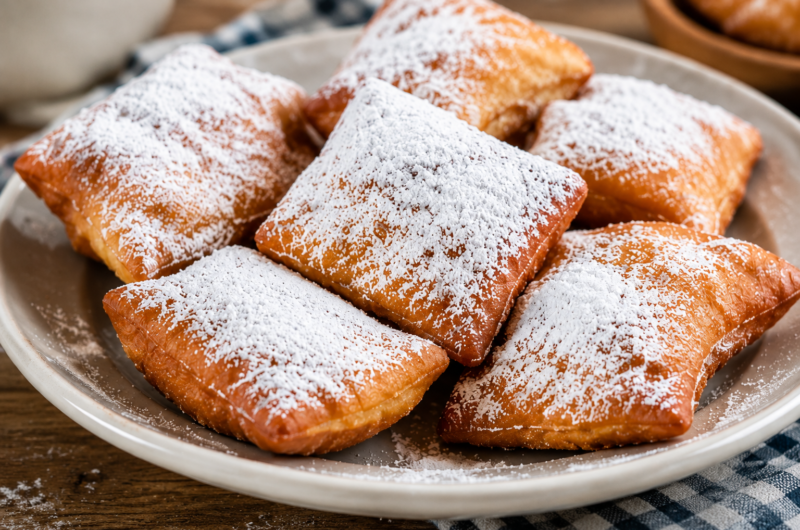
Homemade Beignets: Fluffy, Crispy & Covered in Powdered Sugar
Difficulty: Easy18
Beignets20
minutes15
minutes1
hour45
minutesThese homemade beignets are light and fluffy inside, golden and lightly crisp outside, then generously dusted with powdered sugar for a classic finish.
Ingredients
3½ cups (440 g) all-purpose flour
¼ cup (50 g) granulated sugar
2¼ teaspoons (7 g) active dry yeast
1 cup (240 ml) warm whole milk
1 large egg
3 tablespoons (42 g) unsalted butter, melted
1 teaspoon vanilla extract
½ teaspoon salt
6 cups (1.4 liters) vegetable or canola oil, for frying
1 cup (120 g) powdered sugar, for topping
Directions
- Activate the yeast: Add the warm milk, yeast, and 1 tablespoon of the sugar to a large bowl and stir gently. Let it sit for 5–10 minutes until foamy.
- Make the dough: Whisk in the egg, melted butter, vanilla, and remaining sugar. Gradually add the flour and salt, mixing until a soft dough forms.
- Knead: Transfer the dough to a lightly floured surface and knead for 5–7 minutes until smooth and elastic. The dough should be soft and slightly tacky, not heavily sticky.
- Let it rise: Place the dough in a lightly greased bowl, cover, and leave it in a warm place for about 1–1½ hours, or until doubled in size.
- Roll and cut: Gently press down the risen dough and roll it into a rectangle about ¼-inch thick. Cut into approximately 2½–3-inch squares or rectangles.
- Heat the oil: Heat the oil in a deep skillet or Dutch oven to 350°F (175°C). Use a thermometer to keep the temperature steady.
- Fry: Carefully fry a few beignets at a time for about 1–2 minutes per side, turning once, until puffed and golden brown. Avoid overcrowding the pan.
- Drain: Remove the beignets with a slotted spoon and place them on a wire rack or paper towels to drain briefly.
- Add powdered sugar: While the beignets are still warm, dust them generously with powdered sugar and serve immediately.
Notes
- Keep the oil close to 350°F (175°C) for evenly cooked, non-greasy beignets.
- Don’t add too much flour, as a stiff dough can make the beignets dense.
- Beignets are best served fresh while the outside is crisp and the inside is fluffy.
- For the classic finish, add plenty of powdered sugar just before serving.


Hi, I’m Sorenna Blythe, the baker and writer behind Mix Whisk Bake. I share simple, reliable recipes and honest kitchen moments to help home bakers bake with confidence and joy. When I’m not testing new treats, you’ll find me sipping coffee and dreaming up my next bake.