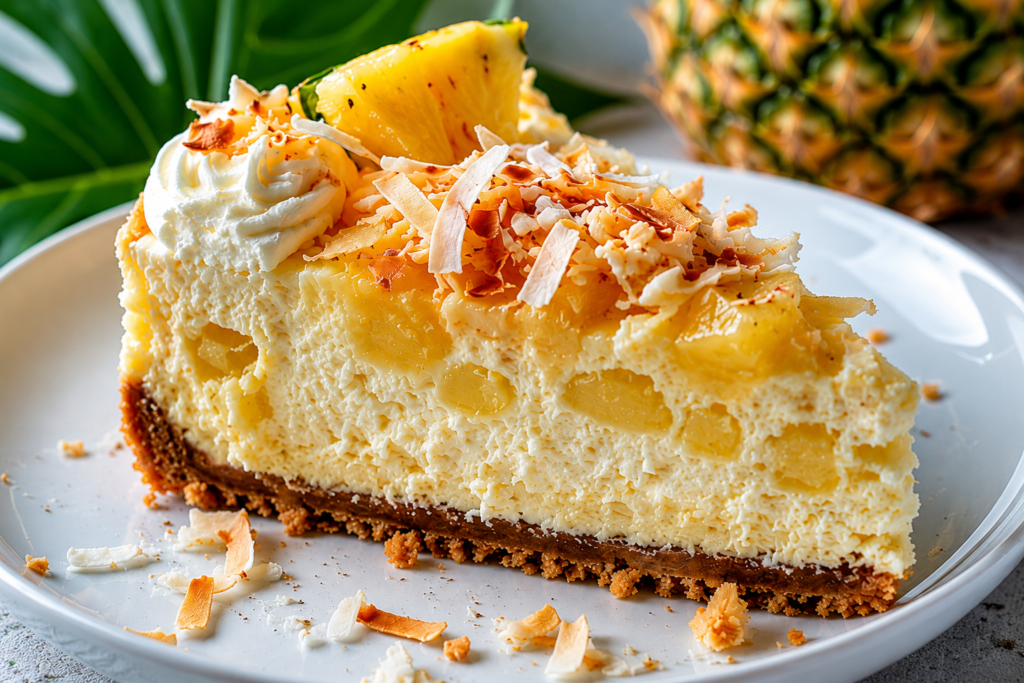
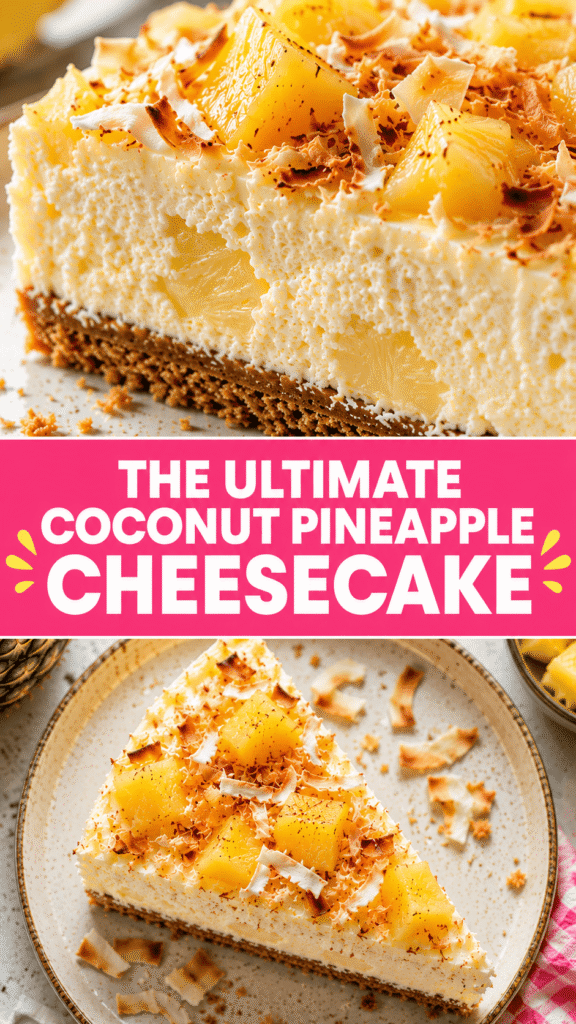
If you love tropical desserts, this Coconut Pineapple Cheesecake is one you’ll want to save.
It combines a rich, creamy cheesecake filling with sweet pineapple and coconut for a flavor that feels bright, refreshing, and indulgent all at once.
The pineapple adds a juicy sweetness, while the coconut brings a subtle nutty flavor that pairs perfectly with the smooth cheesecake.
Every bite is rich, balanced, and packed with tropical goodness.
Don’t worry if you’re new to cheesecake baking because this recipe will guide you through each step and help you create a dessert that looks as good as it tastes.
Why You’ll Love This Coconut Pineapple Cheesecake
- Creamy and Rich Texture – The smooth cheesecake filling creates a decadent dessert that melts in your mouth.
- Sweet Tropical Flavors in Every Bite – Coconut and pineapple come together for a bright, refreshing flavor combination.
- Easy to Make Ahead – This cheesecake tastes even better after chilling, making it perfect for preparing in advance.
- Beautiful Presentation for Entertaining – Its elegant look and tropical toppings make it a standout dessert for any occasion.

Ingredients You’ll Need
For the Crust
- 1 ½ cups graham cracker crumbs
- ½ cup sweetened shredded coconut
- 6 tablespoons unsalted butter, melted
- 2 tablespoons granulated sugar
For the Cheesecake Filling
- 24 ounces (680 g) cream cheese, softened
- 1 cup granulated sugar
- 3 large eggs, room temperature
- ½ cup sour cream
- 1 cup crushed pineapple, well drained
- 1 teaspoon coconut extract
- 1 teaspoon vanilla extract
Optional Toppings
- ½ cup toasted coconut flakes
- ½ cup fresh pineapple chunks
- 1 cup whipped cream
- ¼ cup pineapple glaze
Kitchen Tools You’ll Need
- 9-inch springform pan – Makes it easy to remove the cheesecake without damaging the sides.
- Mixing bowls – For preparing the crust and cheesecake filling.
- Electric mixer – Helps create a smooth, creamy batter with minimal effort.
- Measuring cups and spoons – Ensures accurate ingredient measurements.
- Rubber spatula – Useful for scraping down the bowl and folding ingredients together.
- Baking sheet – Catches any drips and makes transferring the cheesecake easier.
How to Make Coconut Pineapple Cheesecake
Step 1: Prepare the Crust
Preheat your oven to 325°F (163°C).
In a medium mixing bowl, combine the graham cracker crumbs, shredded coconut, melted butter, and sugar.
Stir until all of the crumbs are evenly coated and the mixture resembles wet sand.
Pour the mixture into a 9-inch springform pan.
Use the bottom of a measuring cup or glass to firmly press the crumbs into an even layer across the bottom of the pan.
Take a moment to press around the edges as well to create a sturdy base for the cheesecake.
Bake the crust for 8 to 10 minutes, or until it becomes lightly golden and fragrant.
Remove the pan from the oven and allow the crust to cool slightly while you prepare the filling.
Step 2: Make the Cheesecake Filling
Place the softened cream cheese in a large mixing bowl.
Beat it with an electric mixer until completely smooth and free of lumps.
Starting with softened cream cheese makes this step much easier and helps create a silky filling.
Add the granulated sugar, coconut extract, and vanilla extract.
Mix until everything is fully combined.
Add the eggs one at a time, mixing on low speed after each addition.
Mixing slowly helps prevent too much air from getting into the batter, which can reduce the chance of cracks later.
Add the sour cream and mix just until smooth.
Gently fold in the well-drained crushed pineapple using a rubber spatula.
Make sure the pineapple is thoroughly drained so excess moisture does not affect the texture of the cheesecake.
The finished batter should be creamy, smooth, and evenly mixed.
Step 3: Assemble and Bake
Pour the cheesecake filling over the cooled crust.
Use a spatula to spread the batter evenly across the pan.
Gently tap the pan on the counter a few times to release any large air bubbles.
Place the springform pan on a baking sheet for easier handling.
Bake for 55 to 65 minutes, or until the edges look set and the center still has a slight jiggle when gently shaken.
Avoid opening the oven door too often during baking, as sudden temperature changes can affect the cheesecake.
The center will continue to firm up as it cools.
Step 4: Cool and Chill
Once baked, turn off the oven and crack the oven door open slightly.
Allow the cheesecake to sit inside for about 1 hour.
This gradual cooling process helps minimize cracking and keeps the texture smooth.
Remove the cheesecake from the oven and let it cool completely at room temperature.
Once cooled, cover the pan and transfer it to the refrigerator.
Chill for at least 6 hours, but overnight is even better.
The extra chilling time allows the flavors to develop and makes the cheesecake easier to slice.
Step 5: Add Toppings and Serve
Carefully remove the cheesecake from the springform pan once fully chilled.
Sprinkle toasted coconut flakes over the top for extra flavor and texture.
Add fresh pineapple chunks for a bright, tropical finish.
If desired, pipe or spoon whipped cream around the edges.
Drizzle a little pineapple glaze over the top for an extra touch of sweetness.
Use a sharp knife to slice the cheesecake.
For clean slices, wipe the knife between each cut.
Serve chilled and enjoy every creamy, tropical bite.
Tips for the Best Coconut Pineapple Cheesecake
Drain Pineapple Thoroughly
One of the most important steps in this recipe is draining the crushed pineapple well.
Too much liquid can make the cheesecake filling overly soft and may affect how it bakes.
Place the pineapple in a fine-mesh strainer and gently press out excess juice before adding it to the batter.
Taking a few extra minutes here helps create a rich, creamy texture that slices beautifully.
Use Room-Temperature Ingredients
Allow the cream cheese, eggs, and sour cream to sit at room temperature before you begin.
Room-temperature ingredients blend together more easily and create a smoother filling.
Cold ingredients can leave small lumps in the batter and make mixing more difficult.
If you forget to take them out ahead of time, let them sit on the counter for about 30 to 60 minutes before baking.
Avoid Overmixing the Batter
Mix the ingredients just until everything is combined.
Overmixing adds extra air to the batter, which can cause the cheesecake to puff up in the oven and then sink or crack as it cools.
Using a low mixer speed once the eggs are added can help prevent this.
A smooth batter is the goal, but there is no need to keep mixing once everything looks evenly incorporated.
Chill Completely Before Slicing
It can be tempting to cut into the cheesecake right away, but chilling is essential for the best texture.
As the cheesecake rests in the refrigerator, it continues to firm up and develop flavor.
An overnight chill often produces the cleanest slices and the richest taste.
Patience pays off when it comes to cheesecake.
Use a Water Bath for Extra-Creamy Results
A water bath is simply a pan of hot water placed around or beneath the cheesecake while it bakes.
The gentle moisture helps the cheesecake bake more evenly and reduces the chance of cracks.
If you want an especially smooth and creamy texture, this extra step is worth considering.
Wrap the outside of the springform pan tightly with foil before placing it in a larger pan filled with hot water.
While a water bath is optional, it can help create a bakery-style cheesecake with a beautifully silky texture.
Variations and Substitutions
Coconut Cookie Crust
If you’d like even more coconut flavor, swap the graham cracker crumbs for crushed coconut cookies.
The cookies add extra sweetness and create a richer, more tropical base for the cheesecake.
Simply use the same amount of cookie crumbs as you would graham cracker crumbs.
This small change can give the dessert a completely different flavor while keeping the recipe just as easy to make.
No-Bake Version
For a quicker dessert, turn this recipe into a no-bake cheesecake.
Replace the eggs with whipped topping or stabilized whipped cream and skip the baking step entirely.
Prepare the crust as directed, then chill it before adding the filling.
Allow the cheesecake to set in the refrigerator for several hours until firm.
This option is especially nice during warmer months when you don’t want to turn on the oven.
Pineapple Coconut Swirl Cheesecake
For a more decorative look, reserve a few tablespoons of crushed pineapple before mixing the filling.
Drop small spoonfuls over the cheesecake batter and gently swirl them with a knife.
The swirls create a beautiful pattern and add pockets of pineapple flavor throughout the cheesecake.
It’s an easy way to make the dessert feel extra special without adding much work.
Mini Cheesecake Cups
This recipe can easily be divided into individual servings.
Line a muffin pan with paper liners and press a small amount of crust mixture into each cup.
Fill each liner with cheesecake batter and bake until set.
Mini cheesecakes are perfect for parties, potlucks, and holiday dessert tables.
They are also easier to serve and require no slicing.
Gluten-Free Option
Making this cheesecake gluten-free is simple.
Use gluten-free graham crackers or your favorite gluten-free cookies for the crust.
Double-check that any packaged ingredients, including extracts and toppings, are labeled gluten-free if needed.
The filling itself is naturally free of gluten-containing flour, making this an easy recipe to adapt.
You’ll still get the same creamy texture and tropical flavor everyone loves.
How to Store Coconut Pineapple Cheesecake
After the cheesecake has completely cooled and chilled, cover it tightly with plastic wrap or place it in an airtight container before storing it in the refrigerator.
Keeping the cheesecake covered helps prevent it from drying out and protects it from absorbing odors from other foods.
Stored properly in the refrigerator, Coconut Pineapple Cheesecake will stay fresh for up to 5 days.
If you plan to make it well in advance, freezing is a great option.
For best results, freeze the cheesecake without fresh toppings, as they can lose their texture after thawing.
Wrap the whole cheesecake or individual slices tightly in plastic wrap, then add a layer of aluminum foil or place them in a freezer-safe container.
This extra protection helps prevent freezer burn and preserves the flavor.
The cheesecake can be frozen for up to 2 months while maintaining its quality.
When you’re ready to enjoy it, transfer the cheesecake to the refrigerator and let it thaw overnight.
Avoid thawing it at room temperature, as slow thawing in the refrigerator helps maintain the creamy texture.
Once thawed, add any fresh toppings just before serving for the best appearance and flavor.
What to Serve with Coconut Pineapple Cheesecake
- Tropical Fruit Salad – A mix of fresh pineapple, mango, and kiwi adds a bright, refreshing contrast to the rich cheesecake.
- Coconut Whipped Cream – Light and fluffy coconut whipped cream enhances the tropical flavors without overpowering them.
- Fresh Berries – Strawberries, raspberries, or blueberries add a pop of color and a touch of natural tartness.
- Iced Coffee or Tropical Cocktails – A cold coffee drink or fruity tropical beverage pairs perfectly with the creamy, sweet dessert.
Final Thoughts
This Coconut Pineapple Cheesecake combines a rich, creamy texture with sweet tropical flavors for a dessert that’s both refreshing and indulgent.
It’s a wonderful choice for holidays, celebrations, summer gatherings, or anytime you want to share something special with family and friends.
Give it a try, have fun with your favorite toppings, and don’t forget to share your results and creative variations in the comments.
FAQs
Can I Use Fresh Pineapple Instead of Canned?
Yes, you can use fresh pineapple. Finely chop it and drain any excess juice to prevent extra moisture in the cheesecake.
Why Does My Cheesecake Crack?
Cheesecakes can crack from overmixing, overbaking, or cooling too quickly. Using room-temperature ingredients and allowing the cheesecake to cool gradually can help prevent cracks.
Can I Make This Cheesecake Ahead of Time?
Absolutely. In fact, cheesecake is often even better when made a day ahead because the flavors have more time to develop.
Can I Freeze Coconut Pineapple Cheesecake?
Yes. Wrap the cheesecake tightly and freeze it for up to 2 months. Thaw it overnight in the refrigerator before serving.
How Do I Know When the Cheesecake Is Done Baking?
The edges should look set while the center still has a slight jiggle when gently shaken. It will continue to firm up as it cools and chills.
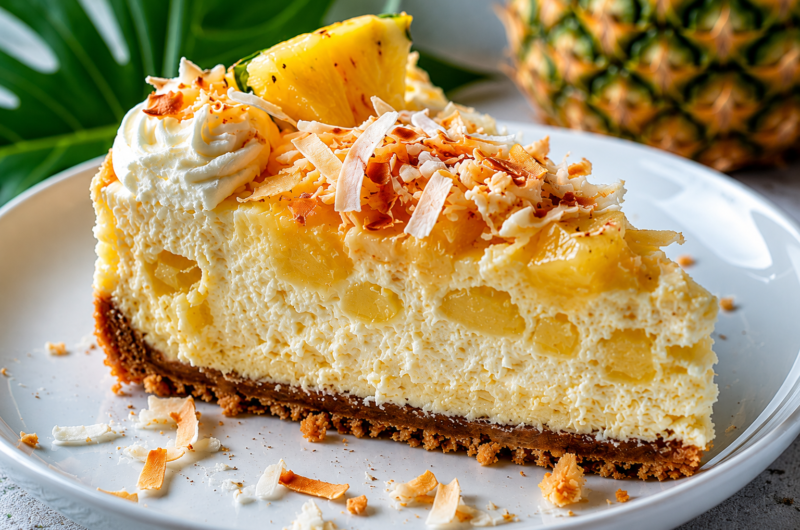
Dreamy Coconut Pineapple Cheesecake That Melts in Your Mouth
Difficulty: Easy12
Slices20
minutes1
hour7
hours20
minutesCreamy coconut pineapple cheesecake with a buttery graham cracker crust, sweet pineapple, and toasted coconut for the perfect tropical dessert.
Ingredients
1 ½ cups graham cracker crumbs
½ cup shredded coconut
6 tablespoons melted butter
2 tablespoons sugar
24 ounces cream cheese, softened
1 cup granulated sugar
3 eggs
½ cup sour cream
1 cup crushed pineapple, drained
1 teaspoon coconut extract
1 teaspoon vanilla extract
Toasted coconut and pineapple chunks for garnish
Directions
- Preheat the oven to 325°F (163°C).
- Mix graham cracker crumbs, coconut, butter, and sugar. Press into a 9-inch springform pan and bake for 10 minutes.
- Beat cream cheese until smooth. Add sugar, extracts, sour cream, and eggs one at a time.
- Fold in the drained pineapple and pour the filling over the crust.
- Bake for 55–65 minutes, until the center is slightly set.
- Cool completely, then refrigerate for at least 6 hours or overnight.
- Top with toasted coconut and pineapple before serving.
Notes
- Drain the pineapple well to prevent a watery cheesecake.
- Use room-temperature ingredients for the smoothest filling.
- Chill overnight for the best texture and flavor.
- Store covered in the refrigerator for up to 5 days.

Hi, I’m Sorenna Blythe, the baker and writer behind Mix Whisk Bake. I share simple, reliable recipes and honest kitchen moments to help home bakers bake with confidence and joy. When I’m not testing new treats, you’ll find me sipping coffee and dreaming up my next bake.