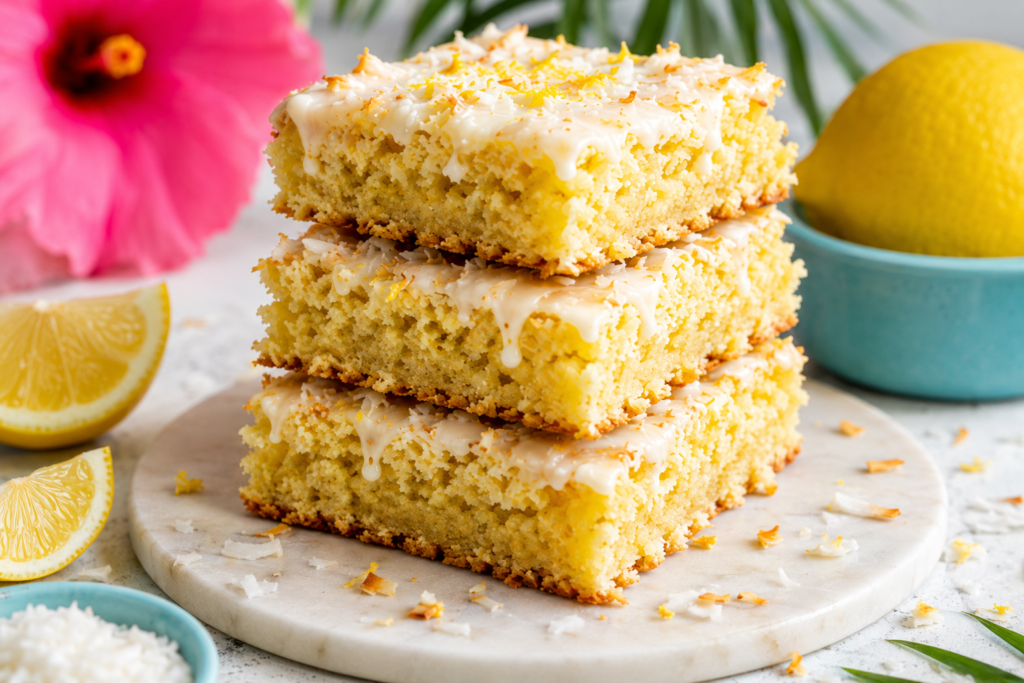
If you’re looking for a dessert that feels bright, fresh, and a little tropical, these Lemon Coconut Cookie Bars are a perfect choice.
The combination of zesty lemon and sweet coconut creates a balance of flavors that is both refreshing and comforting in every bite.
These easy cookie bars are great for spring and summer gatherings, potlucks, bake sales, or simply enjoying with an afternoon cup of coffee or tea.
They’re soft, chewy, and packed with flavor without requiring complicated steps or special ingredients.
In this recipe, you’ll learn exactly how to make tender lemon coconut cookie bars from scratch, along with helpful tips to ensure they turn out delicious every time.
Why You’ll Love These Lemon Coconut Cookie Bars
- Soft and chewy texture – Every bite is tender, buttery, and perfectly satisfying.
- Sweet coconut paired with tangy lemon – The tropical sweetness of coconut balances beautifully with fresh citrus flavor.
- Easy one-pan dessert – No rolling or shaping required; simply spread the dough in a pan and bake.
- Simple pantry-friendly ingredients – Made with everyday ingredients you may already have on hand.
- Great for make-ahead baking – These bars stay delicious for days, making them perfect for parties, gatherings, and meal prep.
What Are Lemon Coconut Cookie Bars?
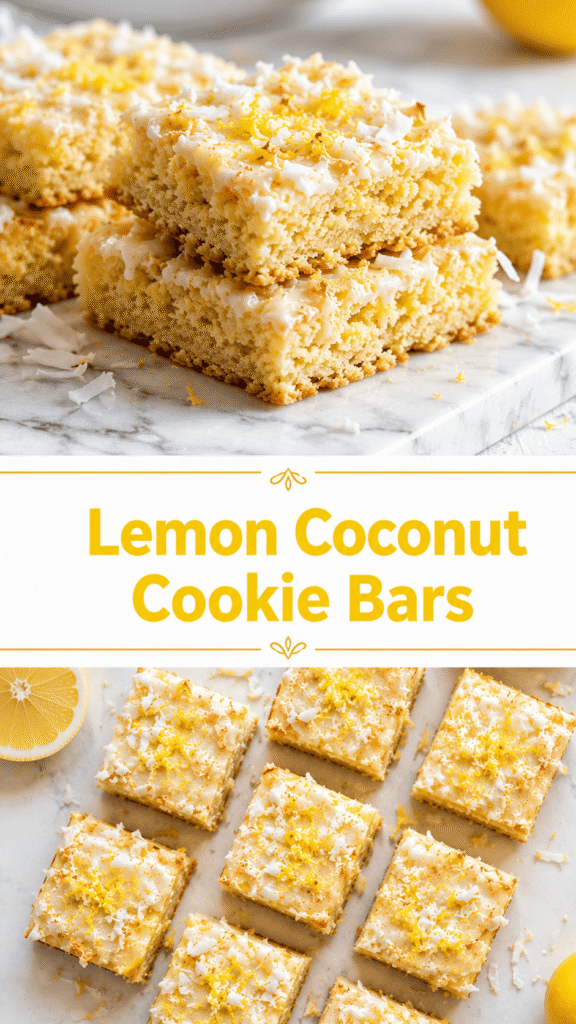
Lemon Coconut Cookie Bars are a simple dessert made by spreading cookie dough into a baking pan, baking it as one large batch, and then cutting it into squares or rectangles once cooled.
Unlike traditional cookies that require scooping individual portions onto a baking sheet, cookie bars are baked all at once, which saves time and makes preparation much easier, especially when you’re baking for a crowd.
The flavor is a delicious blend of bright lemon and sweet coconut, creating a dessert that feels both refreshing and comforting at the same time.
Fresh lemon zest and juice add a vibrant citrus taste that keeps the bars from feeling overly sweet, while the coconut brings a subtle tropical flavor that pairs naturally with the lemon.
In terms of texture, these bars are soft and chewy in the center with lightly golden edges, giving you the best parts of a cookie in every bite.
Because the dough is baked in a single pan, the bars stay moist and tender, making them especially satisfying to eat and easy to serve.
One of the biggest advantages of cookie bars is their convenience, since there is no need to roll, shape, or portion the dough before baking.
Simply mix the ingredients, spread the dough evenly in the pan, and let the oven do the work.
This makes them a great option for beginner bakers who want impressive results without extra steps or complicated techniques.
They’re also perfect for parties, potlucks, lunch boxes, and holiday dessert trays because they can be cut into as many servings as you need and are easy to transport.
Ingredients You’ll Need
For the Cookie Bar Base
- 1 cup (227g) unsalted butter, softened
- 1 cup (200g) granulated sugar
- ½ cup (110g) light brown sugar, packed
- 2 large eggs, room temperature
- 1 teaspoon vanilla extract
- 2 tablespoons fresh lemon zest (about 2 lemons)
- 2 tablespoons fresh lemon juice
- 2½ cups (315g) all-purpose flour
- 1 teaspoon baking powder
- ½ teaspoon salt
- 1½ cups (120g) sweetened shredded coconut
Optional Lemon Glaze
- 1 cup (120g) powdered sugar
- 2–3 tablespoons fresh lemon juice
- 1 teaspoon fresh lemon zest
Ingredient Notes and Substitutions
Fresh Lemon vs Bottled Lemon Juice
Fresh lemons are highly recommended for this recipe because they provide both the juice and the zest, which work together to create a bright, natural citrus flavor.
Lemon zest contains fragrant oils found in the outer peel, and these oils add a fresh lemon aroma that bottled juice simply cannot provide.
Fresh lemon juice also delivers a cleaner, more vibrant taste that helps balance the sweetness of the cookie bars.
Bottled lemon juice can be used in a pinch, but the flavor is often sharper and less complex than juice squeezed from fresh lemons.
If you decide to use bottled lemon juice, the bars will still be delicious, but they may not have the same fresh citrus character that makes this recipe stand out.
For the best results, choose firm, brightly colored lemons and zest them before juicing.
Coconut Options
Sweetened shredded coconut is the best choice if you want soft, chewy cookie bars with a rich coconut flavor and a touch of extra sweetness.
The added sweetness blends beautifully with the tangy lemon and helps create a balanced flavor throughout the bars.
Unsweetened coconut is another good option for bakers who prefer desserts that are slightly less sweet.
When using unsweetened coconut, expect the coconut flavor to be a little more noticeable and the overall sweetness of the bars to be slightly reduced.
If you enjoy deeper, nuttier flavors, try using toasted coconut instead of regular shredded coconut.
To toast coconut, spread it in a thin layer on a baking sheet and bake for a few minutes until lightly golden, watching carefully because it can brown quickly.
Toasted coconut adds extra flavor and a subtle crunch that pairs wonderfully with the soft texture of the bars.
You can even sprinkle a small amount of toasted coconut over the lemon glaze for an attractive finishing touch.
Gluten-Free Adaptation
These cookie bars can easily be made gluten-free by replacing the all-purpose flour with a high-quality gluten-free all-purpose flour blend.
Choose a blend that is designed for one-to-one substitution, which means it can replace regular flour in the same amount without additional adjustments.
Many gluten-free baking blends already contain ingredients that help improve texture and structure, making them a simple choice for beginner bakers.
The finished bars may have a slightly different texture, but they should still be soft, flavorful, and enjoyable.
If your flour blend does not already contain xanthan gum, check the package directions to see whether a small amount should be added for the best results.
No matter which flour option you choose, avoid overmixing the batter to help keep the bars tender and light.
Kitchen Equipment Needed
- 9×13-inch baking pan – Provides the perfect size and thickness for evenly baked cookie bars.
- Mixing bowls – Needed for combining the wet and dry ingredients.
- Electric mixer or whisk – Helps cream the butter and sugars until light and smooth.
- Microplane or zester – Makes it easy to remove the flavorful outer zest from fresh lemons.
- Measuring cups and spoons – Ensure accurate ingredient measurements for consistent results.
- Parchment paper – Prevents sticking and allows the bars to be lifted out of the pan with ease.
How to Make Lemon Coconut Cookie Bars
Step 1: Prepare the Pan
Preheat your oven to 350°F (175°C) so it reaches the correct temperature before the batter is ready.
Line a 9×13-inch baking pan with parchment paper, leaving a little overhang on the sides to make lifting the bars out easier later.
A parchment-lined pan also helps prevent sticking and makes cleanup much quicker.
Step 2: Mix the Wet Ingredients
In a large mixing bowl, beat the softened butter, granulated sugar, and brown sugar together until the mixture looks light and creamy.
This step helps create a soft and tender texture, so take an extra minute or two if needed.
Add the eggs one at a time, mixing well after each addition to create a smooth batter.
Stir in the vanilla extract, fresh lemon zest, and lemon juice until everything is fully combined.
The lemon zest adds a burst of fresh citrus flavor, while the juice brings brightness to every bite.
Step 3: Add the Dry Ingredients
In a separate bowl, whisk together the all-purpose flour, baking powder, and salt.
Gradually add the dry ingredients to the wet mixture, mixing on low speed or stirring gently with a spatula.
Continue mixing just until no dry streaks of flour remain.
Avoid overmixing at this stage, as too much mixing can make the bars less tender.
Step 4: Fold in Coconut
Add the shredded coconut to the batter and gently fold it in until it is evenly distributed throughout the mixture.
Folding simply means stirring carefully so the batter stays light while ensuring every bite contains plenty of coconut flavor.
Take a quick look around the bowl to make sure there are no pockets of coconut or batter left unmixed.
Step 5: Bake
Spread the batter evenly into the prepared baking pan using a spatula or the back of a spoon.
Smooth the top so the bars bake evenly from edge to center.
Place the pan in the preheated oven and bake for 25 to 30 minutes, or until the edges are lightly golden and the center is set.
A toothpick inserted near the center should come out with a few moist crumbs but no wet batter.
Keep a close eye on the bars during the final few minutes of baking to avoid overbaking.
Step 6: Cool Completely
Remove the pan from the oven and place it on a wire rack to cool.
Allow the bars to cool completely before slicing.
Cooling gives the bars time to finish setting, which helps them hold their shape when cut.
Cutting them while they are still warm can cause them to crumble or fall apart.
The wait can be difficult, but it makes a noticeable difference in the final texture.
Step 7: Add Lemon Glaze (Optional)
In a small bowl, whisk together the powdered sugar, fresh lemon juice, and lemon zest until smooth.
If the glaze seems too thick, add a small amount of lemon juice until it reaches a drizzle-friendly consistency.
Once the bars are completely cool, drizzle the glaze evenly over the top.
Allow the glaze to set for a few minutes before slicing and serving.
The glaze adds an extra layer of bright lemon flavor and gives the bars a beautiful finishing touch.
Tips for Perfect Lemon Coconut Cookie Bars
Don’t Overmix the Batter
Once the dry ingredients are added, mix only until everything is combined and no visible streaks of flour remain.
Overmixing can develop too much gluten in the flour, which may make the bars denser and less tender.
A few gentle turns with a spatula are often all you need to finish the batter.
If you’re unsure, it’s usually better to stop mixing a little early than to keep stirring unnecessarily.
Use Room-Temperature Ingredients
Softened butter, room-temperature eggs, and freshly squeezed lemon juice blend together more smoothly than cold ingredients.
This helps create an even batter and promotes consistent baking throughout the pan.
Cold ingredients can cause the butter to firm up again, making the mixture harder to combine properly.
For best results, set the butter and eggs out about 30 minutes before you begin baking.
Measure Flour Correctly
Using too much flour is one of the most common reasons homemade cookie bars turn out dry.
Instead of scooping the measuring cup directly into the flour container, spoon the flour into the cup and level it off with a knife.
This simple method helps prevent packing extra flour into the measuring cup.
Accurate measurements give the bars a softer texture and help maintain the perfect balance between the lemon and coconut flavors.
Let Bars Cool Before Cutting
Allowing the bars to cool completely is an important step that should not be rushed.
As the bars cool, they continue to set and develop their final texture.
Cutting them too soon can cause them to crumble, break apart, or lose their clean edges.
If you want neat, bakery-style squares, give the bars enough time to cool before slicing.
Add Extra Lemon Zest for Stronger Citrus Flavor
If you love bold lemon desserts, adding a little extra lemon zest is an easy way to increase the citrus flavor without affecting the texture.
The natural oils in the zest provide a bright, fresh lemon taste that is stronger than juice alone.
An additional teaspoon of zest can make the bars taste even more vibrant and refreshing.
This small adjustment is perfect for anyone who enjoys a more pronounced lemon flavor in every bite.
Delicious Variations
Lemon Coconut White Chocolate Bars
If you enjoy a sweeter dessert, try adding 1 cup of white chocolate chips to the batter before baking.
The creamy sweetness of white chocolate pairs beautifully with the bright lemon flavor and complements the coconut without overpowering it.
The melted chocolate creates little pockets of sweetness throughout the bars, making every bite feel extra indulgent.
This variation is especially popular for parties, holiday dessert trays, and special occasions when you want something a little more decadent.
Toasted Coconut Lemon Bars
For a richer coconut flavor, replace the regular shredded coconut with toasted coconut.
Toasting brings out the natural oils in the coconut, creating a deeper flavor with subtle nutty notes.
The added complexity works wonderfully alongside the fresh lemon and gives the bars a slightly more sophisticated taste.
You can toast the coconut before adding it to the batter or sprinkle a small amount on top of the glaze for extra texture and visual appeal.
Keep a close eye on the coconut while toasting, as it can quickly go from golden to overbrowned.
Berry Lemon Coconut Bars
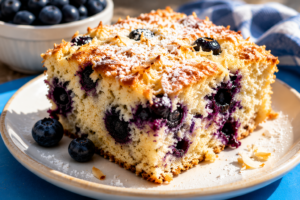
Fresh raspberries or blueberries make a delicious addition to these cookie bars.
Gently fold 1 cup of berries into the batter just before spreading it into the baking pan.
The berries add bursts of juicy flavor that blend naturally with the lemon and coconut.
Raspberries bring a slightly tart contrast that enhances the citrus notes, while blueberries add a mild sweetness that keeps the bars balanced.
If using frozen berries, add them directly from the freezer to help prevent excess moisture from affecting the batter.
Coconut Cream Cheese Lemon Bars
For an extra creamy twist, add a simple cream cheese swirl before baking.
Beat 4 ounces of softened cream cheese with 2 tablespoons of sugar until smooth.
Drop spoonfuls of the mixture over the batter and gently swirl it with a knife to create a marbled effect.
The cream cheese adds richness and a slight tang that pairs beautifully with the lemon flavor.
This variation creates a dessert that feels part cookie bar and part cheesecake, making it a great choice for anyone who loves creamy desserts.
How to Store Lemon Coconut Cookie Bars
At Room Temperature
Once the bars have cooled completely, place them in an airtight container to help maintain their soft and chewy texture.
If you are stacking the bars, place a sheet of parchment paper between the layers to prevent them from sticking together.
Stored properly at room temperature, these cookie bars will stay fresh for up to 4 days.
Keep the container in a cool, dry place away from direct sunlight and heat sources.
If your kitchen is especially warm, refrigeration may be a better option to preserve freshness.
In the Refrigerator
For longer storage, place the bars in an airtight container and store them in the refrigerator.
Refrigerated bars will stay fresh for up to 1 week.
Allowing the bars to cool completely before storing helps prevent excess moisture from building up inside the container.
If the bars have a lemon glaze, refrigeration can help the glaze stay firm and neat.
For the best texture, let the bars sit at room temperature for about 15 to 20 minutes before serving.
This short rest allows them to soften slightly and brings out their flavor more fully.
Freezing Instructions
These Lemon Coconut Cookie Bars freeze very well, making them a great make-ahead dessert.
To freeze, first allow the bars to cool completely.
Wrap individual bars or the entire batch tightly in plastic wrap, then place them in a freezer-safe container or freezer bag.
Adding this extra layer of protection helps prevent freezer burn and preserves flavor.
Label the container with the date so you can easily keep track of storage time.
The bars can be frozen for up to 3 months.
When you’re ready to enjoy them, transfer the bars to the refrigerator overnight or let them thaw at room temperature for 1 to 2 hours.
If desired, wait until after thawing to add the lemon glaze for the freshest appearance.
Freezing is an excellent option when preparing desserts ahead of holidays, parties, or busy weeks, when having a homemade treat ready to enjoy is always a welcome bonus.
Serving Suggestions
- Serve with iced tea or coffee – The bright lemon flavor pairs wonderfully with both hot and cold beverages.
- Pair with lemonade for summer gatherings – A glass of fresh lemonade complements the citrus notes and makes a refreshing warm-weather treat.
- Add a scoop of vanilla ice cream – The creamy ice cream balances the tangy lemon and adds an extra indulgent touch.
- Dust with powdered sugar for presentation – A light sprinkle creates an elegant finish and makes the bars look bakery-worthy.
Final Thoughts
These Lemon Coconut Cookie Bars combine bright citrus flavor with sweet tropical coconut for a dessert that is simple, fresh, and satisfying.
Whether you’re baking for a family gathering, potluck, holiday, or casual afternoon treat, these bars are an easy option that always feels special.
With their soft texture, versatile flavor, and straightforward preparation, they’re a recipe you’ll find yourself coming back to again and again.
Give them a try, and enjoy sharing a homemade dessert that’s sure to bring smiles with every bite.
FAQs
Can I use bottled lemon juice?
Yes, you can use bottled lemon juice if needed, but fresh lemon juice and zest will give the bars the brightest and most natural flavor.
Can I make these bars ahead of time?
Absolutely. These bars can be made 1 to 2 days in advance and stored in an airtight container until ready to serve.
Can I use unsweetened coconut?
Yes, unsweetened coconut works well, though the bars will be slightly less sweet and have a more pronounced coconut flavor.
How do I know when the bars are done baking?
The edges should be lightly golden, and a toothpick inserted near the center should come out with a few moist crumbs but no wet batter.
Can I freeze lemon coconut cookie bars?
Yes, these bars freeze very well for up to 3 months when wrapped tightly and stored in a freezer-safe container.
Lemon Coconut Cookie Bars: The Perfect Sweet and Tangy Treat
Difficulty: Easy16
Bars15
minutes30
minutes45
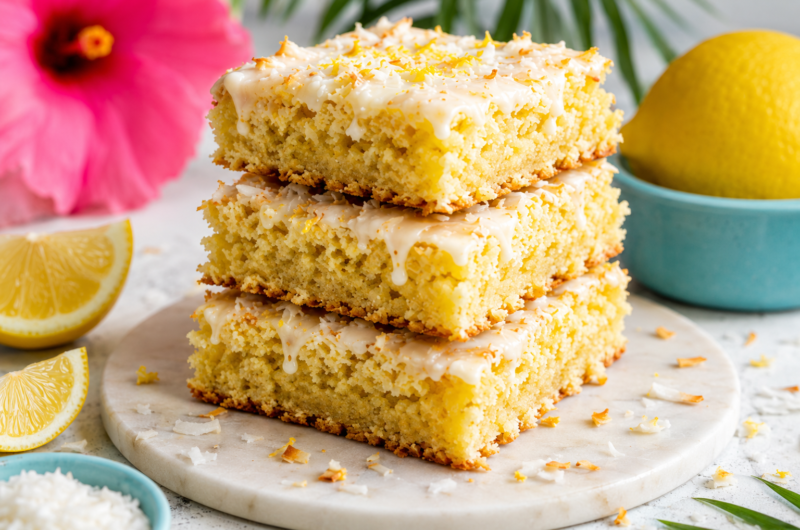
minutesSoft and chewy Lemon Coconut Cookie Bars topped with a bright lemon glaze and sweet coconut for the perfect citrus-inspired dessert.
Ingredients
- For the Bars:
1 cup unsalted butter, softened
1 cup granulated sugar
½ cup brown sugar
2 large eggs
1 tsp vanilla extract
2 tbsp lemon zest
2 tbsp fresh lemon juice
2½ cups all-purpose flour
1 tsp baking powder
½ tsp salt
1½ cups sweetened shredded coconut
- For the Lemon Glaze:
1 cup powdered sugar
2–3 tbsp fresh lemon juice
1 tsp lemon zest
Directions
- Preheat the oven to 350°F (175°C) and line a 9×13-inch baking pan with parchment paper.
- Beat the butter and sugars until light and creamy. Mix in the eggs, vanilla, lemon zest, and lemon juice.
- Stir in the flour, baking powder, and salt until just combined. Fold in the coconut.
- Spread the batter evenly into the prepared pan.
- Bake for 25–30 minutes or until lightly golden and set in the center.
- Cool completely in the pan.
- Whisk together the glaze ingredients and drizzle over the cooled bars.
- Slice into squares and serve.
Notes
- Use fresh lemon juice and zest for the best flavor.
- Do not overmix the batter to keep the bars soft and tender.
- Store in an airtight container for up to 4 days.
- These bars can be frozen for up to 3 months.


Hi, I’m Sorenna Blythe, the baker and writer behind Mix Whisk Bake. I share simple, reliable recipes and honest kitchen moments to help home bakers bake with confidence and joy. When I’m not testing new treats, you’ll find me sipping coffee and dreaming up my next bake.