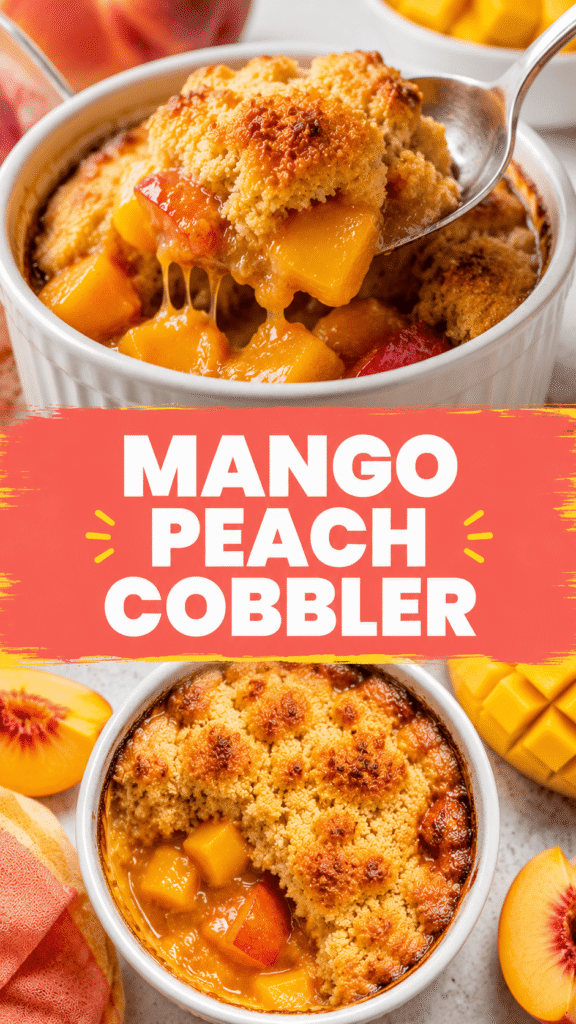
There’s something special about a warm fruit cobbler fresh from the oven, and this Mango Peach Cobbler delivers every time.
Sweet, juicy peaches and tropical mangoes come together to create a bright, flavorful filling that tastes like summer in every bite.
The best part? It’s incredibly easy to make with simple ingredients and very little prep.
The buttery golden topping pairs perfectly with the soft fruit, making it a dessert that’s always a hit with family and friends.
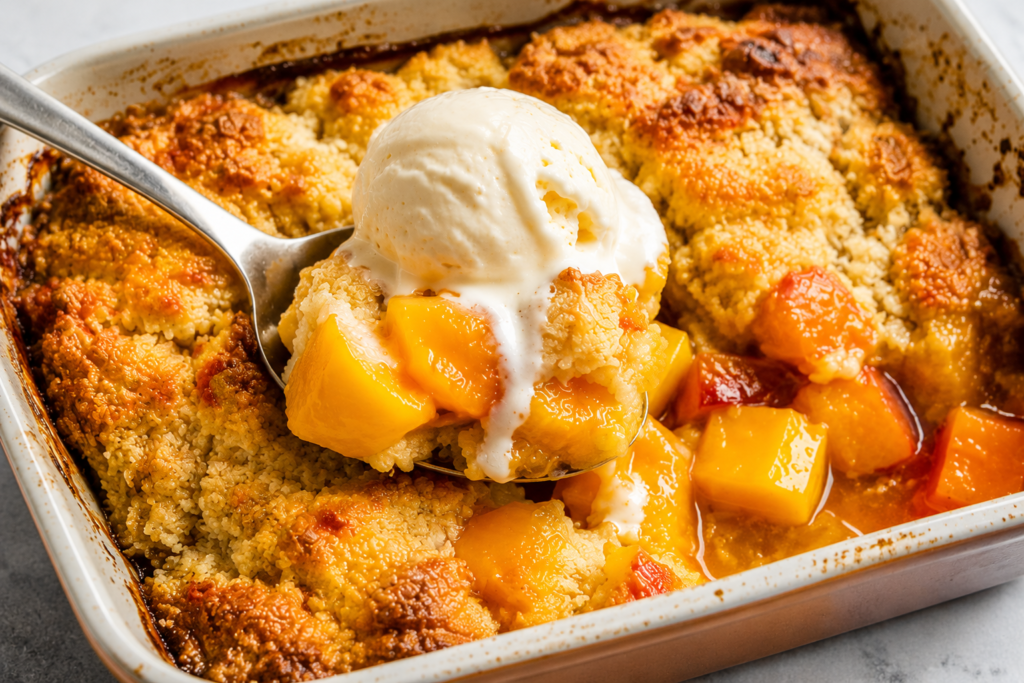
Serve it warm with a scoop of vanilla ice cream or a dollop of whipped cream for an extra treat.
Why You’ll Love This Mango Peach Cobbler
- Sweet and juicy seasonal fruit flavors – Mangoes and peaches create a delicious blend of tropical sweetness and fresh summer flavor.
- Simple ingredients and easy preparation – Made with everyday pantry staples and straightforward steps that anyone can follow.
- Perfect for summer gatherings and family desserts – This crowd-pleasing treat is ideal for barbecues, potlucks, and casual family dinners.
- Crispy golden topping with a soft fruit filling – The buttery cobbler topping bakes up beautifully over the warm, juicy fruit.
- Great way to use fresh or frozen fruit – Enjoy this recipe year-round with whatever fruit you have on hand.
What Is a Cobbler?
A cobbler is a baked fruit dessert topped with a soft biscuit-like or cake-like topping that becomes golden and slightly crisp as it bakes.
Unlike a pie, a cobbler does not require a rolled crust, which makes it much quicker and easier to prepare.
The fruit filling sits directly in the baking dish and is covered with spoonfuls of batter or dough rather than being enclosed in pastry.
Cobblers are often compared to crisps and crumbles because all three desserts feature baked fruit, but the toppings are what set them apart.
A crisp typically includes oats in the topping, creating a crunchy texture that becomes even crisper as it bakes.
A crumble is similar to a crisp but usually skips the oats and relies on a buttery mixture of flour, sugar, and butter for its topping.
A cobbler, on the other hand, stands out because of its soft, fluffy topping that resembles biscuits or a rustic cake rather than a crunchy streusel layer.
One of the most recognizable features of a traditional cobbler is its rustic appearance, with the topping dropped or spooned over the fruit instead of spread perfectly smooth.
As the dessert bakes, the fruit becomes tender and bubbly while the topping turns beautifully golden, creating a delicious contrast of textures in every bite.
This simple approach is part of what makes cobblers so comforting and inviting, especially when served warm.
Cobblers are also one of the most beginner-friendly desserts you can make because they do not require special baking skills or complicated techniques.
There is no need to worry about rolling dough, creating decorative crusts, or achieving perfect presentation.
The recipe is forgiving, easy to customize, and still looks wonderful even with a rustic finish.
If you’re new to baking, a cobbler is a great place to start because it delivers impressive results with minimal effort.
Even better, the focus stays on the fruit, allowing fresh seasonal ingredients like mangoes and peaches to shine while the topping adds just the right amount of sweetness and texture.
Ingredients You’ll Need
For the Fruit Filling
- 4 cups fresh peaches, peeled and sliced (about 4–5 medium peaches)
- 3 cups fresh mangoes, peeled and diced (about 2–3 large mangoes)
- ½ cup granulated sugar
- 1 tablespoon lemon juice
- 2 tablespoons cornstarch
- ½ teaspoon ground cinnamon (optional)
For the Cobbler Topping
- 1½ cups all-purpose flour
- 2 teaspoons baking powder
- ¼ teaspoon salt
- ⅓ cup granulated sugar
- ½ cup unsalted butter, melted
- ¾ cup milk
- 1 teaspoon vanilla extract
Ingredient Notes and Substitutions
Fresh vs. Frozen Fruit
Fresh mangoes and peaches provide the best texture and flavor when they are in season, creating a filling that is naturally sweet and juicy.
If fresh fruit is not available, frozen mangoes and peaches work very well and make this recipe easy to enjoy year-round.
Background
There is no need to thaw frozen fruit completely before using it, although draining any excess liquid can help prevent the filling from becoming too watery.
If you use frozen fruit, you may want to add an extra teaspoon of cornstarch to help thicken the filling as it bakes.
How to Choose Ripe Mangoes and Peaches
A ripe mango should feel slightly soft when gently pressed, similar to a ripe avocado.
The skin color of a mango can vary by variety, so softness and a sweet fruity aroma are usually better indicators of ripeness than color alone.
When choosing peaches, look for fruit that gives slightly under gentle pressure without feeling mushy.
Avoid peaches that are very hard, as they may lack sweetness and remain firm even after baking.
For the best cobbler, choose fruit that is ripe and flavorful but still firm enough to hold its shape during baking.
Alternative Sweeteners
Granulated sugar adds sweetness while helping the fruit release its natural juices during baking.
Light brown sugar can be used instead if you prefer a deeper, slightly caramel-like flavor.
Honey or maple syrup can also be substituted, although they may make the filling a little softer because they add extra moisture.
If using a liquid sweetener, consider reducing the amount slightly and adding a bit more cornstarch to maintain the right consistency.
Feel free to adjust the sweetness based on the ripeness of your fruit and your personal preference.
Gluten-Free Flour Options
A good-quality gluten-free all-purpose flour blend can usually be substituted for regular flour in the cobbler topping.
Choose a blend designed for baking that contains a binder such as xanthan gum, which helps create a soft and tender texture.
The topping may look slightly different from a traditional version, but it will still bake up beautifully and taste delicious.
Always measure the flour carefully to avoid a topping that is too dry or dense.
Optional Spices and Flavor Additions
Ground cinnamon adds gentle warmth that pairs wonderfully with both mangoes and peaches.
A small pinch of nutmeg can add extra depth without overpowering the fruit.
For a brighter flavor, try adding a little lemon or orange zest to the filling.
A splash of almond extract can bring a subtle bakery-style flavor that complements the fruit beautifully.
If you enjoy tropical flavors, a handful of shredded coconut mixed into the topping can add a delicious twist.
Kitchen Tools Needed
- Mixing bowls – Used for preparing the fruit filling and mixing the cobbler topping.
- Measuring cups and spoons – Help ensure accurate ingredient measurements for consistent results.
- 9×13-inch baking dish – Provides enough space for the fruit filling and topping to bake evenly.
- Whisk – Makes it easy to combine dry ingredients and create a smooth batter.
- Rubber spatula – Useful for scraping bowls and gently folding ingredients together without waste.
How to Make Mango Peach Cobbler
Step 1: Prepare the Fruit
Start by preheating your oven to 375°F (190°C), so it is ready once the cobbler is assembled.
Peel the mangoes and peaches, then cut them into bite-sized pieces that will bake evenly and be easy to serve.
Place the prepared fruit in a large mixing bowl.
Add the granulated sugar, lemon juice, cornstarch, and cinnamon if using.
Gently stir everything together until the fruit is evenly coated and the cornstarch is fully distributed.
The sugar will help draw out the fruit’s natural juices while the cornstarch thickens those juices into a rich, spoonable filling as the cobbler bakes.
Set the fruit mixture aside while you prepare the topping.
Step 2: Make the Cobbler Batter
In a separate mixing bowl, whisk together the all-purpose flour, baking powder, salt, and granulated sugar.
Mixing the dry ingredients first helps ensure the baking powder is evenly spread throughout the batter.
Pour in the melted butter and stir until the mixture begins to resemble coarse crumbs.
Add the milk and vanilla extract.
Stir gently until a thick batter forms and no large pockets of dry flour remain.
Avoid overmixing the batter, as a light touch helps create a softer and more tender topping.
A few small lumps are perfectly fine and will bake out in the oven.
Step 3: Assemble the Cobbler
Transfer the prepared fruit mixture into a lightly greased 9×13-inch baking dish.
Spread the fruit into an even layer so every serving gets a balanced amount of filling.
Using a spoon, drop portions of the batter over the top of the fruit.
There is no need to spread the batter perfectly from edge to edge.
Leaving a few small gaps allows the colorful fruit filling to peek through and gives the cobbler its classic rustic appearance.
As the cobbler bakes, the topping will spread slightly and develop a beautiful golden crust.
Step 4: Bake
Place the baking dish in the preheated oven and bake for 40 to 45 minutes.
As it bakes, the fruit filling will become bubbly, and the topping will turn golden brown.
Keep an eye on the cobbler during the final few minutes to avoid overbaking.
To check for doneness, insert a toothpick into the topping.
If it comes out clean or with only a few moist crumbs attached, the topping is ready.
You should also see bubbling fruit juices around the edges of the dish, which is a good sign that the filling has thickened properly.
Step 5: Cool and Serve
Carefully remove the cobbler from the oven and place it on a heat-safe surface.
Allow it to rest for about 10 to 15 minutes before serving.
This short cooling period gives the filling time to set slightly, making it easier to scoop and serve.
Serve the cobbler warm for the best flavor and texture.
For an extra-special dessert, add a scoop of vanilla ice cream or a spoonful of freshly whipped cream on top.
Enjoy every bite of the sweet peaches, juicy mangoes, and buttery golden topping that make this cobbler such a comforting favorite.
Expert Tips for the Best Cobbler
Use Ripe but Firm Fruit
Choosing ripe but firm mangoes and peaches is one of the easiest ways to improve the final texture of your cobbler.
Ripe fruit delivers the natural sweetness and flavor that make this dessert shine.
Fruit that is overly soft can break down too much during baking and create a filling that is less structured.
When gently pressed, the fruit should yield slightly while still feeling firm enough to hold its shape.
This balance helps create a filling that is juicy, flavorful, and packed with distinct pieces of fruit in every bite.
Don’t Overmix the Topping
Once you add the milk and vanilla to the dry ingredients, mix only until everything is combined.
Overmixing can develop too much gluten in the flour, which may result in a topping that is heavier and less tender.
A cobbler topping should be soft, light, and slightly fluffy after baking.
It is perfectly normal for the batter to have a few small lumps.
A gentle hand during mixing will reward you with a more delicate texture and a better overall cobbler.
Leave Some Fruit Exposed for a Rustic Look
When spooning the topping over the fruit, resist the urge to cover every inch of the filling.
Leaving a few small gaps allows the colorful mangoes and peaches to peek through as the cobbler bakes.
These exposed areas also allow the fruit juices to bubble up around the topping, creating the classic appearance many people love.
The rustic look is part of the charm of a homemade cobbler.
It does not need to be perfectly smooth or evenly covered to turn out beautifully.
Let the Cobbler Cool Slightly Before Serving
Freshly baked cobbler smells incredible, but giving it a few minutes to rest is worth the wait.
Allowing the cobbler to cool for about 10 to 15 minutes helps the filling thicken slightly as it settles.
This makes serving easier and prevents the filling from being too runny.
The flavors also have a chance to come together during this short resting period.
You will still enjoy a warm dessert, but with a better texture and cleaner servings.
Add a Sprinkle of Coarse Sugar Before Baking
For a simple finishing touch, sprinkle a small amount of coarse sugar over the topping before placing the cobbler in the oven.
As it bakes, the sugar creates a delicate crunch and adds a beautiful sparkle to the golden crust.
This extra layer of texture pairs wonderfully with the soft fruit filling underneath.
It takes only a few seconds to do, yet it can make the finished cobbler look and taste even more special.
Small details like this are often what turn a good cobbler into a memorable one.
Variations to Try
Tropical Mango Peach Coconut Cobbler
If you love tropical desserts, adding coconut is an easy way to give this cobbler even more island-inspired flavor.
Mix about ½ cup of sweetened or unsweetened shredded coconut into the topping before baking.
The coconut becomes lightly toasted in the oven and adds a subtle chewiness that pairs beautifully with the sweet mangoes.
For even more tropical flavor, serve each portion with a scoop of coconut ice cream instead of vanilla.
This variation is especially delicious during the warmer months when fresh fruit is at its peak.
Brown Sugar Cinnamon Cobbler
For a deeper, richer flavor, replace the granulated sugar in the filling with light brown sugar.
Brown sugar adds gentle caramel notes that complement both the peaches and mangoes.
You can also increase the cinnamon slightly if you enjoy a warmer, more comforting flavor profile.
The result is a cobbler that feels especially cozy while still highlighting the fresh fruit.
This version is perfect when you’re looking for a dessert that tastes a little more like a classic baked treat.
Berry Mango Peach Cobbler
Adding berries is a simple way to bring extra color and flavor to the filling.
Fresh or frozen blueberries, raspberries, or blackberries all work well in this recipe.
Replace about 1 to 2 cups of the peaches or mangoes with your favorite berries.
The berries add a pleasant tartness that balances the sweetness of the fruit.
They also create beautiful bursts of color throughout the filling, making every serving look even more inviting.
Ginger-Spiced Cobbler
A touch of ginger can completely change the flavor of this dessert while still allowing the fruit to shine.
Add ½ teaspoon of ground ginger to the filling along with the cinnamon.
The gentle spice pairs naturally with both mangoes and peaches and adds a little extra warmth.
If you enjoy bolder flavors, you can also add a small pinch of nutmeg for additional depth.
This variation is a great choice when you want a cobbler with a slightly more sophisticated flavor while keeping the recipe simple.
Gluten-Free Cobbler Version
Making this cobbler gluten-free is easier than many people expect.
Simply replace the all-purpose flour in the topping with a gluten-free all-purpose flour blend designed for baking.
Choose a blend that contains xanthan gum or another binder to help create a tender, sturdy topping.
The rest of the ingredients can remain the same, making this a straightforward substitution.
The finished cobbler will still have a delicious fruit filling and a golden topping, allowing everyone at the table to enjoy this dessert regardless of dietary needs.
What to Serve with Mango Peach Cobbler
- Vanilla ice cream – The cold, creamy texture pairs perfectly with the warm fruit filling and buttery topping.
- Whipped cream – Adds a light and fluffy finish that complements the cobbler without overpowering it.
- Coconut whipped topping – Brings a subtle tropical flavor that works especially well with the mangoes.
- Caramel sauce – A drizzle of caramel adds extra sweetness and rich flavor to every bite.
- Fresh fruit garnish – A few slices of mango, peach, or fresh berries make the dessert look even more vibrant and inviting.
How to Store Leftovers
If you have leftover Mango Peach Cobbler, allow it to cool completely before storing it to prevent excess moisture from building up inside the container.
Once cooled, cover the baking dish tightly with plastic wrap, aluminum foil, or a fitted lid if your dish has one.
You can also transfer individual portions to airtight containers for easy serving later.
Storing the cobbler in an airtight container helps maintain its flavor and prevents it from absorbing odors from other foods in the refrigerator.
Place the cobbler in the refrigerator as soon as it has cooled, especially since the fruit filling contains plenty of moisture.
Properly stored, Mango Peach Cobbler will stay fresh for up to 4 days in the refrigerator.
The topping may soften slightly over time, but the dessert will still taste delicious and remain enjoyable to eat.
For the best texture, reheat individual servings in the microwave for about 20 to 30 seconds or warm larger portions in a low-temperature oven until heated through.
Glass food storage containers are an excellent choice because they seal well, are easy to clean, and can often go directly from the refrigerator to the oven.
Plastic airtight containers also work well and are convenient for storing smaller portions.
If you plan to keep the cobbler in its original baking dish, make sure it is covered tightly to help preserve both the topping and the fruit filling.
Taking a few moments to store leftovers properly will help you enjoy the same sweet, fruity flavors for days after baking.
Can You Freeze Mango Peach Cobbler?
Yes, Mango Peach Cobbler freezes very well, making it a great dessert to prepare ahead of time or save for later.
If you are freezing a baked cobbler, allow it to cool completely before wrapping it tightly to protect it from freezer burn.
Cover the baking dish with a layer of plastic wrap followed by aluminum foil, or transfer portions to freezer-safe airtight containers.
Properly stored, baked cobbler can be frozen for up to 3 months while maintaining its best quality and flavor.
For the best results, label the container with the date so you can easily keep track of how long it has been stored.
When you are ready to enjoy it, thaw the cobbler overnight in the refrigerator.
Once thawed, reheat it in a 350°F (175°C) oven until warmed through and the filling is bubbling gently around the edges.
Heating it in the oven helps restore some of the topping’s texture and keeps the dessert tasting freshly baked.
If you are reheating a single serving, the microwave is a quick and convenient option.
Warm individual portions in short intervals until heated through, being careful not to overheat the fruit filling.
This cobbler is also an excellent make-ahead dessert for holidays, family gatherings, and special occasions.
You can prepare the fruit filling and topping separately up to a day in advance and store them in the refrigerator until you are ready to assemble and bake.
Another option is to assemble the entire cobbler, cover it tightly, and refrigerate it for several hours before baking.
Having some of the prep work done ahead of time can make baking day much easier and allows you to spend more time enjoying the occasion.
Common Mistakes to Avoid
- Using underripe fruit – Underripe mangoes and peaches can lack sweetness and may stay too firm after baking.
- Skipping the thickener – Cornstarch helps thicken the fruit juices, preventing the filling from becoming overly runny.
- Overbaking the topping – Baking too long can dry out the topping and make it less tender.
- Serving immediately from the oven – Allowing the cobbler to rest for a few minutes helps the filling set and makes it easier to serve.
Final Thoughts
This Mango Peach Cobbler combines sweet, juicy peaches with tropical mangoes for a dessert that is simple, comforting, and full of flavor.
With its golden topping and warm fruit filling, it’s an easy recipe that’s sure to become a family favorite.
Give it a try the next time you’re craving a homemade dessert, and don’t be afraid to make it your own with different fruits, spices, or toppings.
FAQs
Can I use canned peaches?
Yes, canned peaches can be used if fresh peaches are unavailable. Be sure to drain them well before adding them to the filling.
Can I make this cobbler ahead of time?
Yes, you can prepare the filling and topping a day in advance and store them separately in the refrigerator until ready to bake.
Do I need to peel the peaches?
Peeling is recommended for the smoothest texture, but you can leave the skins on if you prefer.
Can I use frozen mangoes?
Absolutely. Frozen mangoes work well in this recipe and can be used without fully thawing them first.
How do I know when the cobbler is done baking?
The cobbler is ready when the topping is golden brown, and the fruit filling is bubbling around the edges of the baking dish.
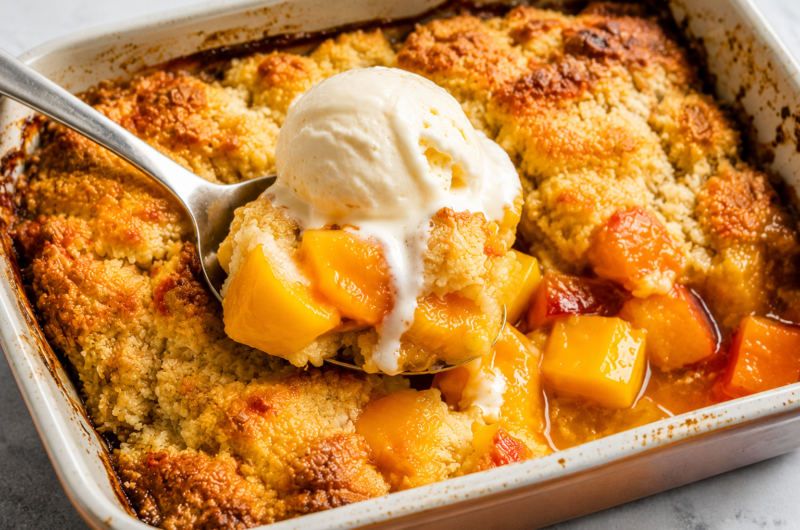
Fresh Mango Peach Cobbler with a Golden Buttery Topping
Difficulty: Easy8
servings15
minutes45
minutes1
hourThis Mango Peach Cobbler combines sweet peaches and juicy mangoes with a buttery golden topping for a simple, comforting dessert that’s perfect for summer gatherings or family dinners.
Ingredients
- For the Filling:
4 cups peaches, peeled and sliced
3 cups mangoes, peeled and diced
½ cup granulated sugar
1 tbsp lemon juice
2 tbsp cornstarch
½ tsp ground cinnamon (optional)
- For the Topping:
1½ cups all-purpose flour
2 tsp baking powder
¼ tsp salt
⅓ cup granulated sugar
½ cup unsalted butter, melted
¾ cup milk
1 tsp vanilla extract
Directions
- Preheat oven to 375°F (190°C) and lightly grease a 9×13-inch baking dish.
- In a large bowl, combine peaches, mangoes, sugar, lemon juice, cornstarch, and cinnamon. Transfer to the baking dish.
- In another bowl, whisk together flour, baking powder, salt, and sugar.
- Stir in melted butter, milk, and vanilla until a thick batter forms.
- Spoon the batter evenly over the fruit, leaving some gaps for a rustic look.
- Bake for 40–45 minutes, or until the topping is golden brown and the fruit is bubbly.
- Let cool for 10–15 minutes before serving.
- Serve warm with vanilla ice cream or whipped cream if desired.
Notes
- Fresh or frozen fruit can be used.
- If using frozen fruit, add an extra teaspoon of cornstarch if needed.
- Allow the cobbler to rest before serving so the filling can thicken.
- Store leftovers in the refrigerator for up to 4 days.


Hi, I’m Sorenna Blythe, the baker and writer behind Mix Whisk Bake. I share simple, reliable recipes and honest kitchen moments to help home bakers bake with confidence and joy. When I’m not testing new treats, you’ll find me sipping coffee and dreaming up my next bake.