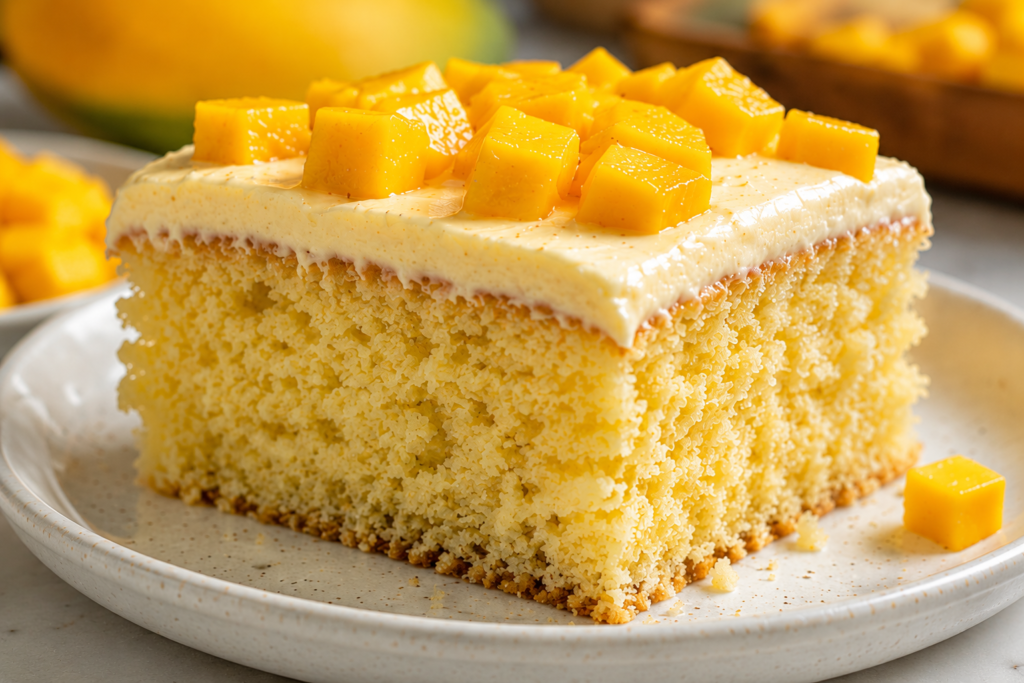
If you’re looking for a dessert that feels bright, fresh, and easy to share, this Mango Vanilla Sheet Cake is a wonderful choice.
Sweet, juicy mango and rich vanilla come together to create a flavor combination that’s simple, classic, and full of tropical charm.
The cake bakes up soft and moist, with fresh mango adding natural sweetness in every bite.
Best of all, sheet cakes are easy to make, serve, and transport, making them perfect for birthdays, potlucks, family gatherings, and casual weekend treats.
Grab your favorite ripe mangoes, and let’s get baking!
Why You’ll Love This Mango Vanilla Sheet Cake
- Easy one-pan dessert – Everything bakes in a single pan, making preparation and cleanup simple.
- Soft, fluffy vanilla cake base – The vanilla cake is light, tender, and perfectly complements the fruit.
- Sweet, juicy mango flavor throughout – Fresh mango adds natural sweetness and a burst of tropical flavor in every bite.
- Perfect for summer celebrations – Its bright, fruity taste makes it a great choice for warm-weather gatherings.
- Great make-ahead dessert – You can bake it in advance, giving the flavors time to develop before serving.
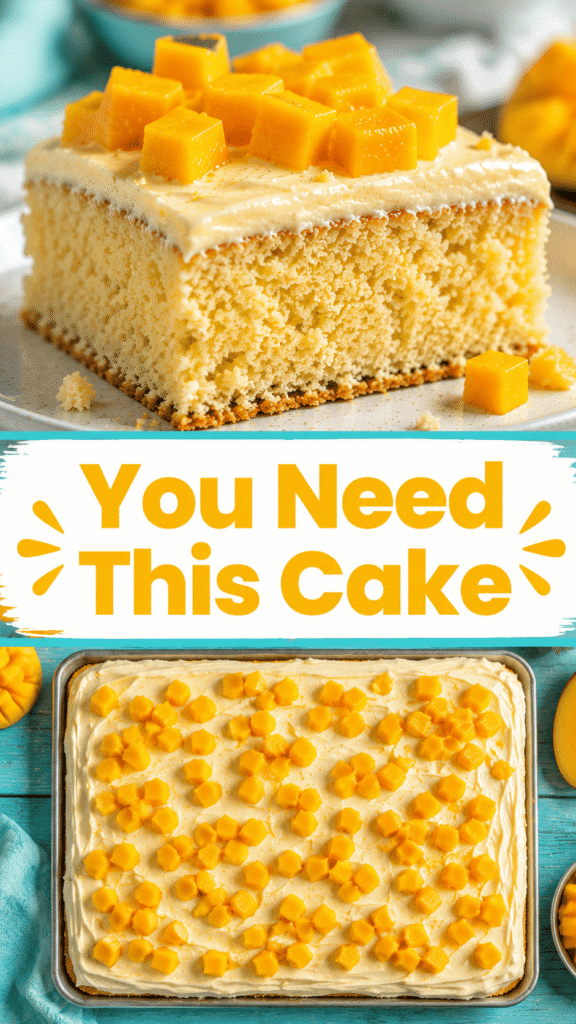
What Is a Mango Vanilla Sheet Cake?
A Mango Vanilla Sheet Cake is a soft vanilla cake baked in a large rectangular pan and flavored with sweet, ripe mango for a fresh tropical twist.
Unlike layer cakes that require multiple cake layers, stacking, and extra decorating, a sheet cake is baked in a single pan, making it much quicker and easier to prepare.
Sheet cakes are known for being practical, which is one reason they are so popular for birthdays, family dinners, potlucks, and holiday gatherings where serving a crowd matters.
The vanilla base provides a rich, comforting flavor that pairs beautifully with the bright, fruity taste of mango without overpowering it.
Fresh mango adds natural sweetness to the cake, which helps create a balanced flavor that tastes vibrant and refreshing rather than overly sugary.
Mango also contributes moisture to the batter, helping the cake stay soft and tender long after it comes out of the oven.
As the cake bakes, the fruit blends into the crumb, creating pockets of juicy flavor that make each bite a little different from the last.
One of the biggest differences between a sheet cake and a traditional layer cake is the amount of effort involved in assembling and decorating.
With a sheet cake, there is no need to level cake layers, stack them evenly, or worry about creating a perfectly smooth finish around the sides.
Instead, you simply spread the frosting over the cooled cake, add your favorite toppings, and it’s ready to serve.
This simplicity makes the recipe especially welcoming for beginner bakers who want impressive results without complicated techniques.
The ingredients are familiar, the steps are straightforward, and the cake is forgiving enough that small mistakes are unlikely to affect the final result.
Even if you’re new to baking, you can feel confident making this recipe because it focuses on simple methods while delivering a cake that looks beautiful and tastes bakery-worthy.
Ingredients You’ll Need
For the Vanilla Sheet Cake
- 2½ cups (312g) all-purpose flour
- 2½ teaspoons baking powder
- ½ teaspoon salt
- ¾ cup (170g) unsalted butter, softened
- 1½ cups (300g) granulated sugar
- 3 large eggs, room temperature
- 2 teaspoons vanilla extract
- 1 cup (240ml) whole milk, room temperature
For the Mango Layer
- 2 cups (330g) fresh ripe mango, peeled and diced
- 1 tablespoon lemon juice (optional), to brighten the mango flavor
For the Mango Vanilla Frosting
- 1 cup (226g) unsalted butter, softened
- 4 cups (480g) powdered sugar
- 2 teaspoons vanilla extract
- ½ cup (120ml) mango puree
- 2–3 tablespoons heavy cream or milk, as needed for consistency
Ingredient Notes and Substitutions
Best Mango Varieties to Use
The best mangoes for this cake are varieties that are naturally sweet, juicy, and rich in flavor, such as Ataulfo, Honey, Kent, or Tommy Atkins mangoes.
Ataulfo mangoes are especially popular for baking because they have smooth flesh, very little fiber, and a naturally creamy texture.
Kent mangoes are another excellent choice because they offer plenty of sweetness and a bright tropical flavor that stands out in both the cake and frosting.
When choosing mangoes, look for fruit that gives slightly when gently pressed, as this usually means it is ripe and ready to use.
Avoid overly firm mangoes because they may lack sweetness and can taste slightly tart in the finished cake.
Fresh vs. Frozen Mango
Fresh mango is the preferred option because it delivers the brightest flavor, the best texture, and the most natural sweetness.
Fresh fruit also holds its shape better when folded into the batter, creating delicious bites of mango throughout the cake.
If fresh mangoes are not available, frozen mango works well as a convenient substitute.
Allow frozen mango to thaw completely before using it.
Drain away any excess liquid after thawing to prevent extra moisture from affecting the texture of the cake batter.
Whether you use fresh or frozen fruit, taste the mango first to make sure it is sweet and flavorful.
Dairy-Free Alternatives
This recipe can easily be adapted for dairy-free baking without sacrificing flavor or texture.
Replace the butter in both the cake and frosting with a good-quality plant-based butter designed for baking.
For the milk, unsweetened almond milk, oat milk, or soy milk are all reliable options.
Oat milk is often a favorite because its mild flavor and creamy texture work particularly well in cakes.
If making the frosting dairy-free, use your preferred non-dairy milk a tablespoon at a time until the frosting reaches a smooth, spreadable consistency.
Vanilla Bean Paste vs. Vanilla Extract
Vanilla extract provides a classic vanilla flavor and is an easy option that most home bakers already have on hand.
Pure vanilla extract delivers a warm flavor that pairs beautifully with the sweetness of mango.
Vanilla bean paste can be used instead if you want a slightly richer vanilla taste.
Because vanilla bean paste contains real vanilla seeds, it also adds attractive specks throughout the frosting.
You can generally substitute vanilla bean paste in equal amounts for vanilla extract in this recipe.
Both options work well, so choose whichever is easiest for you to find.
Tips for Achieving Maximum Mango Flavor
Start with fully ripe mangoes since most of the cake’s tropical flavor comes directly from the fruit itself.
If your mangoes are not very sweet, allowing them to ripen on the counter for a day or two can make a noticeable difference.
Using mango in both the cake and the frosting helps create layers of flavor rather than concentrating it in just one part of the dessert.
A small amount of lemon juice can brighten the fruit and make the mango taste even more vibrant without making the cake sour.
For the strongest mango flavor, avoid adding too many competing ingredients that could overpower the fruit.
Taking a few extra minutes to choose high-quality, ripe mangoes is one of the simplest ways to make this cake taste truly special.
Kitchen Tools You’ll Need
- Sheet cake pan – Provides the perfect size and shape for baking the cake evenly.
- Mixing bowls – Useful for keeping wet and dry ingredients separate during preparation.
- Electric mixer – Helps create a smooth batter and fluffy frosting with less effort.
- Measuring cups and spoons – Ensure accurate ingredient measurements for consistent results.
- Offset spatula – Makes it easy to spread the frosting evenly across the cake.
- Cooling rack – Allows the cake to cool properly and prevents excess moisture from building up underneath.
How to Make Mango Vanilla Sheet Cake
Step 1: Prepare the Pan and Oven
Begin by preheating your oven to 350°F (175°C) so it reaches the proper temperature before the cake goes in.
A fully preheated oven helps the cake rise evenly and bake consistently from edge to center.
Grease your sheet cake pan with butter or nonstick spray to prevent sticking.
For extra insurance, line the bottom of the pan with parchment paper so the cake releases easily after baking.
Taking a few minutes to prepare the pan properly can save you a lot of frustration later.
Step 2: Make the Vanilla Cake Batter
In a large mixing bowl, beat the softened butter and granulated sugar together until the mixture looks light and fluffy.
This process adds air to the batter, which helps create a soft and tender cake.
Add the eggs one at a time, mixing well after each addition to keep the batter smooth.
Stir in the vanilla extract and mix until everything is fully combined.
In a separate bowl, whisk together the flour, baking powder, and salt.
Gradually add the dry ingredients to the butter mixture, alternating with the milk.
Start and finish with the dry ingredients, mixing only until no streaks of flour remain.
Avoid overmixing at this stage because too much mixing can make the cake dense instead of light and fluffy.
Step 3: Fold in the Mango
Peel and dice the mango into small, evenly sized pieces.
Smaller pieces distribute more evenly throughout the cake and make every bite flavorful.
Add the diced mango to the batter.
Using a spatula, gently fold the fruit into the mixture with slow, careful strokes.
Folding rather than stirring helps preserve the air in the batter and prevents the mango pieces from breaking apart.
Continue folding only until the fruit is evenly distributed.
Step 4: Bake the Cake
Transfer the batter to the prepared sheet cake pan.
Use a spatula to spread the batter into an even layer, paying attention to the corners.
An even layer helps the cake bake uniformly across the entire pan.
Place the pan in the preheated oven and bake for 30 to 35 minutes.
The cake is ready when the top is lightly golden and springs back when gently touched.
You can also insert a toothpick into the center of the cake.
If the toothpick comes out clean or with only a few moist crumbs attached, the cake is done baking.
Step 5: Cool Completely
Remove the cake from the oven and place the pan on a cooling rack.
Allow the cake to cool in the pan for about 15 minutes before letting it finish cooling completely.
Patience is important during this step because warm cake and frosting do not work well together.
If frosting is added too soon, it can melt and slide across the surface instead of staying smooth and fluffy.
A fully cooled cake creates the best foundation for decorating.
Step 6: Make the Mango Vanilla Frosting
Place the softened butter in a large bowl and beat it until it becomes smooth, creamy, and noticeably lighter in texture.
Gradually add the powdered sugar, mixing a little at a time to avoid lumps.
Add the vanilla extract and continue mixing until the frosting becomes smooth.
Pour in the mango puree and beat until fully incorporated.
The puree adds both flavor and a beautiful natural color to the frosting.
If the frosting feels too thick, add a small amount of heavy cream or milk until it reaches a spreadable consistency.
If it becomes too soft, refrigerate it for a few minutes before frosting the cake.
Step 7: Frost and Decorate
Once the cake has cooled completely, spread the mango vanilla frosting evenly over the top.
An offset spatula makes this process quick and helps create a smooth finish.
Scatter fresh mango cubes across the frosted cake for extra color and flavor.
The fresh fruit gives the dessert a bright, inviting appearance and adds a juicy burst of sweetness.
For additional decoration, consider adding toasted coconut, a sprinkle of lime zest, or a few fresh mint leaves.
These simple garnishes complement the tropical flavors without overwhelming the cake.
Slice, serve, and enjoy every soft, fruity bite of your homemade Mango Vanilla Sheet Cake.
Expert Tips for the Best Mango Vanilla Sheet Cake
Use Ripe but Firm Mangoes
Choose mangoes that are ripe enough to be sweet and flavorful but still firm enough to hold their shape when diced.
A mango that is overly soft can release too much juice into the batter, which may affect the texture of the finished cake.
When gently pressed, a ripe mango should give slightly without feeling mushy.
Using high-quality fruit is one of the easiest ways to improve the flavor of this cake.
Since mango is the star ingredient, starting with sweet, ripe fruit will make a noticeable difference in every bite.
Avoid Overmixing the Batter
Once the flour is added, mix the batter only until the ingredients are combined.
Overmixing develops too much gluten, which can make the cake dense and less tender.
A few small lumps in the batter are perfectly fine and will usually disappear during baking.
Gentle mixing helps create the soft, fluffy texture that makes this cake so enjoyable.
When folding in the mango, use slow, careful motions to avoid crushing the fruit and overworking the batter.
Measure Flour Correctly
Too much flour is one of the most common reasons cakes turn out dry or heavy.
Instead of scooping directly into the flour container, spoon the flour into your measuring cup and level it off with a straight edge.
This simple method helps prevent packing extra flour into the cup.
If you have a kitchen scale, weighing the flour is even more accurate and can help ensure consistent results every time.
Accurate measurements give the cake the right balance of moisture and structure.
Chill Frosting if Too Soft
The natural moisture in mango puree can sometimes make frosting softer than expected.
If your frosting feels difficult to spread or starts sliding around, place it in the refrigerator for 10 to 15 minutes.
A short chilling period helps the butter firm up and makes the frosting easier to work with.
Be careful not to chill it for too long, as very cold frosting can become difficult to spread smoothly.
A properly textured frosting creates a cleaner finish and helps the cake look as good as it tastes.
Let Flavors Develop Before Serving
Although the cake can be served right away, the flavors become even better after a little time to rest.
Allowing the frosted cake to sit for about 30 minutes before serving gives the mango and vanilla more time to blend together.
If you make the cake a few hours ahead, the fruit flavor often becomes even more noticeable.
This resting time also allows the frosting to set slightly, making the cake easier to slice and serve.
A little patience can reward you with a more flavorful and beautifully presented dessert.
Delicious Variations
Coconut Mango Sheet Cake
If you love tropical desserts, adding coconut is an easy way to give this cake even more island-inspired flavor.
Stir ½ to ¾ cup of sweetened or unsweetened shredded coconut into the cake batter before baking.
The coconut adds a subtle chewiness that pairs beautifully with the soft texture of the cake.
You can also sprinkle toasted coconut over the frosting for extra flavor and a little crunch.
Toasting the coconut beforehand brings out its natural sweetness and creates a richer taste.
This variation is especially popular for summer gatherings because the mango and coconut combination feels bright, fresh, and comforting at the same time.
Mango Passion Fruit Cake
Passion fruit adds a sweet-tart flavor that makes the mango taste even more vibrant.
Mix ¼ to ⅓ cup of passion fruit puree into the frosting or swirl it into the batter before baking.
The slight tang helps balance the sweetness of the cake without overpowering the mango.
If using fresh passion fruit, strain the pulp if you prefer a smoother texture.
For an extra burst of flavor, drizzle a small amount of passion fruit glaze over the frosted cake just before serving.
This variation creates a more tropical and slightly sophisticated flavor profile while still being simple to make.
Mango Cream Cheese Frosting
For a richer and tangier topping, replace part of the butter in the frosting with softened cream cheese.
The cream cheese adds a pleasant tang that balances the sweetness of both the mango and powdered sugar.
Many bakers enjoy this variation because it creates a frosting that feels creamy without being overly sweet.
Allow the cream cheese to come to room temperature before mixing to help create a smooth, lump-free frosting.
The slight tartness complements the fruity flavor of the mango and gives the cake a bakery-style finish.
This option works particularly well for birthdays, celebrations, and special occasions.
Tropical Fruit Sheet Cake
Turn this recipe into a colorful fruit-filled dessert by adding additional tropical fruits.
Small pieces of fresh pineapple can be folded into the batter alongside the mango for extra sweetness and moisture.
Kiwi can be added as a garnish after frosting to provide a bright color contrast and a refreshing flavor.
When adding extra fruit, avoid using too much so the cake maintains its soft and fluffy texture.
Choose fruits that are ripe and flavorful since they will contribute directly to the overall taste of the dessert.
This variation is a great way to customize the cake and create a tropical centerpiece that looks as impressive as it tastes.
How to Store Mango Vanilla Sheet Cake
If you plan to enjoy the cake within a day, it can be stored at room temperature in an airtight container or tightly covered with plastic wrap to help protect it from drying out.
Keep the cake in a cool area away from direct sunlight or heat sources, as warm temperatures can soften the frosting and affect the texture.
If your kitchen is particularly warm or humid, refrigeration is the better option for maintaining freshness.
For longer storage, place the covered cake in the refrigerator, where it will stay fresh for up to 4 days.
A cake carrier with a secure lid or a tightly sealed container works especially well because it helps prevent the cake from absorbing odors from other foods.
Before serving refrigerated cake, allow it to sit at room temperature for about 20 to 30 minutes.
This short resting time helps soften the frosting and allows the flavors of the mango and vanilla to become more noticeable.
One of the best ways to keep this cake moist is to store it as soon as it has completely cooled rather than leaving it uncovered on the counter.
Proper covering helps lock in moisture and protects the soft texture that makes this cake so enjoyable.
Because mango naturally contributes moisture to the cake, it tends to stay tender longer than many traditional vanilla cakes when stored correctly.
If you have already sliced the cake, press a piece of plastic wrap gently against any exposed cut edges before covering the entire pan.
Can You Freeze It?
Yes, this Mango Vanilla Sheet Cake freezes very well, making it a convenient dessert to prepare ahead of time for parties, holidays, or busy weeks.
If you want the best possible texture after freezing, freezing the unfrosted cake is often the preferred option.
Allow the cake to cool completely before wrapping it tightly in a layer of plastic wrap, followed by a layer of aluminum foil.
This double layer of protection helps prevent freezer burn and keeps the cake from absorbing unwanted freezer odors.
The unfrosted cake can typically be frozen for up to 3 months while maintaining good flavor and texture.
If the cake has already been frosted, it can still be frozen successfully with a little extra care.
Place the frosted cake in the freezer uncovered for about 30 to 60 minutes, or until the frosting feels firm to the touch.
Once the frosting is firm, wrap the cake carefully and place it in an airtight container or freezer-safe bag.
This quick freezing step helps protect the frosting and prevents it from sticking to the wrapping.
When you’re ready to enjoy the cake, transfer it from the freezer to the refrigerator and allow it to thaw overnight.
Slow thawing helps preserve the cake’s soft texture and prevents excess moisture from forming on the surface.
After thawing in the refrigerator, let the cake sit at room temperature for about 20 to 30 minutes before serving.
This gives the cake time to soften slightly and allows the mango and vanilla flavors to shine.
If possible, add any fresh mango garnish after thawing rather than before freezing, as fresh fruit tends to look and taste better when added just before serving.
Serving Suggestions
- Serve chilled or at room temperature – Enjoy it straight from the refrigerator for a refreshing treat or let it sit out briefly for a softer texture.
- Pair with fresh fruit – Fresh mango, berries, or sliced kiwi complement the cake’s tropical flavors beautifully.
- Add whipped cream – A dollop of lightly sweetened whipped cream adds extra richness without overpowering the cake.
- Perfect for birthdays, BBQs, and summer parties – Its easy-to-serve format and bright flavors make it ideal for feeding a crowd.
Common Mistakes to Avoid
- Using underripe mangoes – Underripe mangoes lack sweetness and can result in a less flavorful cake.
- Overbaking the cake – Baking too long can dry out the cake and reduce its soft, moist texture.
- Frosting while warm – Applying frosting before the cake has completely cooled can cause it to melt and slide off.
- Adding too much fruit to the batter – Excess fruit can introduce too much moisture and affect the cake’s structure and baking consistency.
Final Thoughts
This Mango Vanilla Sheet Cake combines sweet tropical mango with soft vanilla cake for a dessert that is both simple to make and full of fresh flavor.
Its easy preparation and crowd-friendly size make it a great choice for everything from casual family desserts to special celebrations.
Feel free to make the recipe your own by adding your favorite fruits, toppings, or frosting variations.
Have fun experimenting and discovering new flavor combinations that suit your taste.
Happy baking!
FAQs
Can I use canned mango?
Yes, you can use canned mango if fresh mango is unavailable, but drain it well and choose mango packed in juice rather than heavy syrup for the best flavor.
What type of mango works best?
Ataulfo, Honey, Kent, and Tommy Atkins mangoes are all excellent choices because they are naturally sweet and flavorful.
Can I make this cake ahead of time?
Absolutely, this cake can be baked a day in advance and stored covered until you’re ready to frost and serve it.
Can I use a different frosting?
Yes, cream cheese frosting, whipped frosting, coconut frosting, or even a simple vanilla buttercream all pair well with the mango flavor.
How long does the cake stay fresh?
When stored properly in an airtight container, the cake will stay fresh for up to 2 days at room temperature or up to 4 days in the refrigerator.
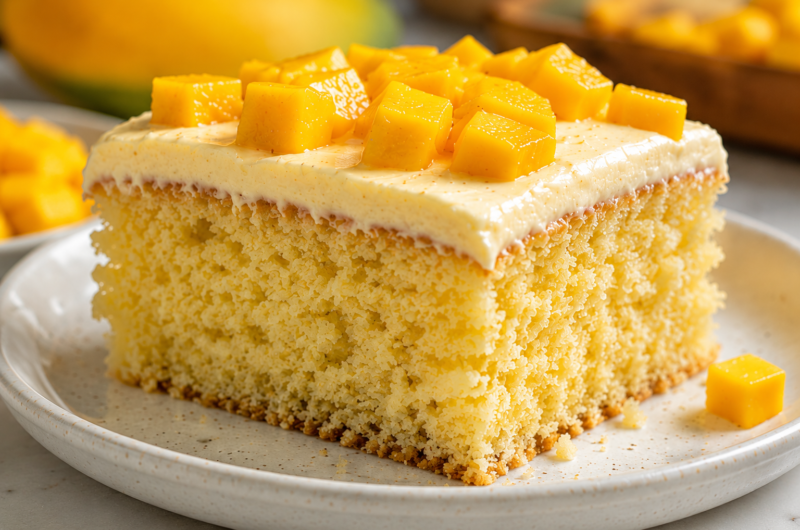
Moist Mango Vanilla Sheet Cake with Creamy Vanilla Frosting
Difficulty: Easy15
Slices20
minutes35
minutes55
minutesA soft and moist vanilla sheet cake topped with creamy mango frosting and fresh mango chunks for a bright tropical dessert.
Ingredients
- For the Cake
2½ cups all-purpose flour
2½ teaspoons baking powder
½ teaspoon salt
¾ cup unsalted butter, softened
1½ cups granulated sugar
3 large eggs
2 teaspoons vanilla extract
1 cup whole milk
2 cups diced ripe mango
- For the Frosting
1 cup unsalted butter, softened
4 cups powdered sugar
2 teaspoons vanilla extract
½ cup mango puree
2–3 tablespoons heavy cream or milk
Directions
- Preheat the oven to 350°F (175°C) and grease a 9×13-inch sheet cake pan.
- Cream the butter and sugar until light and fluffy, then mix in the eggs and vanilla.
- Add the flour, baking powder, and salt alternately with the milk until combined.
- Fold in the diced mango and spread the batter evenly into the prepared pan.
- Bake for 30–35 minutes or until a toothpick inserted in the center comes out clean.
- Let the cake cool completely.
- Beat the frosting ingredients together until smooth and fluffy.
- Spread the frosting over the cooled cake and top with extra fresh mango if desired.
- Slice and serve.
Notes
- Use ripe but firm mangoes for the best flavor and texture.
- Do not overmix the batter to keep the cake soft and fluffy.
- Refrigerate leftovers in an airtight container for up to 4 days.
- For extra tropical flavor, sprinkle toasted coconut over the frosting before serving.

Hi, I’m Sorenna Blythe, the baker and writer behind Mix Whisk Bake. I share simple, reliable recipes and honest kitchen moments to help home bakers bake with confidence and joy. When I’m not testing new treats, you’ll find me sipping coffee and dreaming up my next bake.