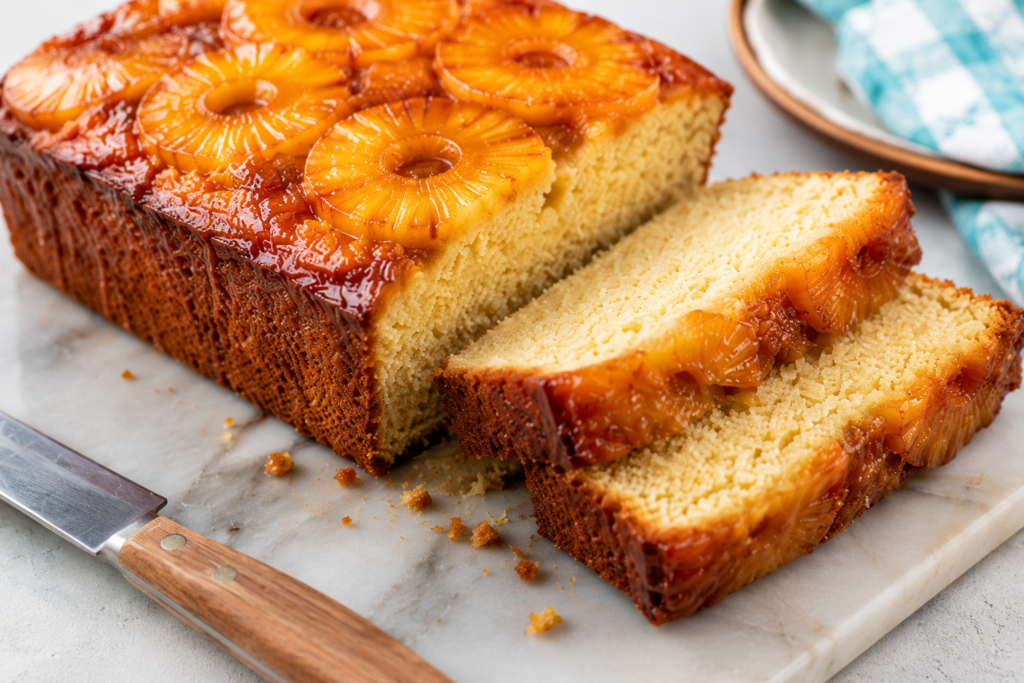
If you love classic pineapple upside down cake, this loaf version is sure to become a new favorite.
It has the same sweet caramelized pineapple topping and soft, buttery cake, all baked in an easy-to-slice loaf shape.
This recipe is perfect for brunch, dessert, afternoon tea, or sharing with family and friends on special occasions.
The combination of juicy pineapple, rich brown sugar, and a moist vanilla cake creates a dessert that looks impressive but is surprisingly simple to make.
Just a few simple ingredients come together to create a beautiful loaf that’s full of flavor in every bite.
Why You’ll Love This Pineapple Upside Down Loaf Cake
- Beautiful Caramelized Pineapple Topping – The pineapple and brown sugar create a golden, glossy topping that looks as good as it tastes.
- Soft and Buttery Cake Texture – Every slice is moist, tender, and packed with rich buttery flavor.
- Simple Pantry-Friendly Ingredients – Made with everyday baking staples and easy-to-find ingredients.
- Easier Than a Traditional Layered Cake – No stacking, frosting, or complicated decorating required.
- Great Make-Ahead Dessert – Bake it in advance and enjoy a delicious treat that stays moist and flavorful.

What Is a Pineapple Upside Down Loaf Cake?
A pineapple upside down loaf cake is a loaf-shaped version of the classic pineapple upside down cake, featuring a layer of caramelized pineapple baked beneath a soft cake batter and then flipped over after baking to reveal its beautiful fruit topping.
While a traditional pineapple upside down cake is usually baked in a round cake pan and served as a larger centerpiece dessert, the loaf cake version is baked in a standard loaf pan, making it more compact, easier to slice, and convenient for everyday baking.
The flavor remains just as delicious, with sweet pineapple, rich brown sugar, buttery cake, and a moist crumb coming together in every bite.
One of the biggest advantages of the loaf format is its presentation, as each slice showcases the golden pineapple topping and creates a neat, bakery-style look without any extra decorating.
Because the cake is baked in a loaf pan, it is simple to portion and serve, making it a practical choice for family desserts, casual gatherings, and afternoon treats.
Many home bakers also appreciate that a loaf cake feels less intimidating than a full-sized layer cake, especially when baking for the first time.
The smaller size makes it ideal when you want a homemade dessert without ending up with an excessive number of servings.
It is perfect for brunch tables, coffee dates, afternoon tea, potlucks, and small celebrations where a simple yet impressive dessert is needed.
The loaf shape also stores easily in the refrigerator or on the countertop, making leftovers convenient to keep fresh for later.
If you enjoy classic desserts with a tropical twist, this pineapple upside down loaf cake offers all the charm of the original recipe in a format that is easy to bake, serve, and enjoy.
Ingredients You’ll Need
For the Pineapple Topping
- 6 pineapple rings or slices – Creates the classic fruity topping and adds natural sweetness.
- ¼ cup (50g) brown sugar – Melts into a rich caramel layer as the cake bakes.
- 3 tablespoons (42g) unsalted butter, melted – Combines with the brown sugar to form the caramelized topping.
- 6 maraschino cherries (optional) – Adds a pop of color and a traditional pineapple upside down cake look.
For the Loaf Cake Batter
- 1½ cups (190g) all-purpose flour – Provides the structure for the loaf cake.
- 1½ teaspoons baking powder – Helps the cake rise and stay light.
- ¼ teaspoon salt – Balances the sweetness and enhances flavor.
- ½ cup (113g) unsalted butter, softened – Creates a rich, tender crumb.
- ¾ cup (150g) granulated sugar – Sweetens the cake without overpowering the pineapple.
- 2 large eggs, room temperature – Adds moisture, richness, and structure.
- 1 teaspoon vanilla extract – Brings warm, classic flavor to the batter.
- ⅓ cup (80ml) pineapple juice – Adds extra pineapple flavor and moisture.
- ¼ cup (60ml) milk or sour cream – Keeps the cake soft and moist while adding richness.
Ingredient Notes and Substitutions
Fresh vs Canned Pineapple
Both fresh and canned pineapple work well in this recipe, so you can choose whichever option is most convenient for you.
Canned pineapple rings are often the easiest choice because they are already peeled, sliced, and consistently sized, making the topping simple to arrange.
Another advantage of canned pineapple is that the juice can be reserved and used in the cake batter, adding extra pineapple flavor without any additional preparation.
If using fresh pineapple, slice it evenly and pat the pieces dry with paper towels before placing them in the pan.
Removing excess moisture helps the topping caramelize properly and prevents the cake from becoming too wet.
Fresh pineapple can offer a slightly brighter flavor, while canned pineapple provides the classic taste many people associate with traditional pineapple upside down cake.
Using Greek Yogurt Instead of Sour Cream
Greek yogurt is an excellent substitute if you do not have sour cream on hand.
Use the same amount called for in the recipe, making it an easy one-to-one replacement.
Plain full-fat Greek yogurt works best because it provides moisture and richness while helping create a soft, tender crumb.
The slight tang from the yogurt also balances the sweetness of the pineapple topping and cake batter.
If you only have low-fat Greek yogurt available, it can still be used successfully, although the cake may be slightly less rich.
Alternative Sweeteners
Granulated sugar and brown sugar provide the best texture and flavor, but there are a few substitutions you can make if needed.
Light brown sugar can be swapped with dark brown sugar for a deeper caramel flavor and a richer topping.
For the cake batter, coconut sugar can replace granulated sugar and adds a subtle caramel-like taste that pairs beautifully with pineapple.
If using a liquid sweetener such as honey or maple syrup, keep in mind that the texture of the cake may change slightly because of the added moisture.
When making substitutions, it is always a good idea to start with small changes to maintain the cake’s soft texture and reliable structure.
Optional Flavor Additions
This loaf cake is delicious as written, but a few simple additions can give it an extra tropical twist.
Adding ½ cup of sweetened or unsweetened shredded coconut to the batter creates additional texture and complements the pineapple beautifully.
A small splash of rum extract, about ½ teaspoon, adds a warm island-inspired flavor without using actual alcohol.
For even more depth, try adding a pinch of cinnamon or nutmeg to the batter.
These optional ingredients are not required, but they can be a fun way to customize the cake and make it your own while keeping the classic pineapple upside down flavor everyone loves.
How to Make Pineapple Upside Down Loaf Cake
Step 1: Prepare the Loaf Pan
Start by preheating your oven to 350°F (175°C) so it reaches the correct temperature before the cake is ready to bake.
Grease a standard 9×5-inch loaf pan thoroughly with butter or nonstick baking spray, making sure to coat the bottom and corners well.
Properly greasing the pan helps the cake release more easily after baking and reduces the chance of the pineapple topping sticking.
Pour the melted butter into the bottom of the prepared loaf pan and spread it evenly across the surface.
Sprinkle the brown sugar evenly over the melted butter to create the caramelized layer that gives this cake its signature flavor.
Arrange the pineapple slices over the brown sugar mixture in a single layer.
If desired, place a maraschino cherry in the center of each pineapple slice for a classic pineapple upside down cake appearance.
Try to keep the pineapple pieces evenly spaced so every slice of cake gets some of the beautiful topping.
Step 2: Make the Cake Batter
In a medium mixing bowl, whisk together the all-purpose flour, baking powder, and salt until evenly combined.
Mixing the dry ingredients first helps distribute the baking powder throughout the batter for an even rise.
In a separate large bowl, beat the softened butter and granulated sugar together until the mixture looks light and creamy.
This step incorporates air into the batter, which helps create a softer texture.
Add the eggs one at a time, mixing well after each addition.
Stir in the vanilla extract until fully combined.
Add about one-third of the dry ingredients to the butter mixture and mix just until incorporated.
Pour in half of the pineapple juice and milk or sour cream mixture and stir gently.
Continue alternating the dry ingredients and liquid ingredients, finishing with the dry ingredients.
Mix only until no dry streaks remain, as overmixing can make the loaf dense instead of tender.
The finished batter should be smooth, thick, and easy to spread.
Step 3: Assemble the Cake
Carefully spoon the cake batter over the pineapple layer in the prepared loaf pan.
Work slowly to avoid disturbing the pineapple arrangement underneath.
Use a spatula to spread the batter evenly from corner to corner.
Smoothing the surface helps the loaf bake evenly and creates a more uniform shape.
Gently tap the pan on the counter once or twice to remove any large air pockets trapped in the batter.
Step 4: Bake
Place the loaf pan on the center oven rack and bake at 350°F (175°C) for 50 to 60 minutes.
Baking times can vary slightly depending on your oven, so begin checking for doneness near the 50-minute mark.
If the top begins browning too quickly, loosely cover it with a piece of aluminum foil during the final part of baking.
The cake is ready when a toothpick inserted into the center comes out clean or with only a few moist crumbs attached.
The top should feel lightly springy when gently pressed with a fingertip.
Avoid removing the cake too early, as an underbaked center can cause the loaf to collapse while cooling.
Step 5: Cool and Invert
Remove the loaf pan from the oven and place it on a wire rack.
Allow the cake to cool in the pan for about 10 to 15 minutes.
This short cooling period allows the topping to settle while still remaining warm enough to release from the pan.
Run a thin knife around the edges of the loaf to loosen any areas that may have stuck during baking.
Place a serving platter or cooling rack upside down over the loaf pan.
Using oven mitts if necessary, carefully hold both the pan and platter together and quickly flip them over in one smooth motion.
Let the pan sit for a minute before gently lifting it away.
If any pineapple pieces remain in the pan, simply place them back onto the cake while the topping is still warm.
Allow the loaf to cool further before slicing, which helps the texture set and makes cleaner slices.
Once cooled, your pineapple upside down loaf cake is ready to serve with its beautiful golden topping on full display.
Expert Tips for the Best Pineapple Upside Down Loaf Cake
Pat Pineapple Dry Before Arranging
If you’re using canned pineapple, take a moment to gently pat the slices dry with paper towels before placing them in the loaf pan.
Removing excess moisture helps the brown sugar and butter mixture caramelize properly during baking.
Too much liquid can make the topping overly wet and may prevent it from developing that beautiful golden finish.
This simple step also helps the pineapple stay in place when you invert the cake.
Avoid Overmixing the Batter
Once the dry ingredients are added, mix the batter only until everything is combined.
Overmixing can develop too much gluten, which is a protein in flour that can make baked goods tougher instead of soft and tender.
A few small lumps in the batter are perfectly fine and will usually disappear during baking.
Gentle mixing helps create the light, moist texture that makes this loaf cake so enjoyable.
Let the Cake Cool Slightly Before Inverting
It can be tempting to flip the cake over as soon as it comes out of the oven, but giving it a short cooling period makes a big difference.
Allow the loaf to cool in the pan for about 10 to 15 minutes before inverting.
This gives the caramel topping time to settle while still remaining warm enough to release easily from the pan.
If the cake is flipped too soon, it may break apart.
If it cools completely in the pan, the topping can harden and stick to the bottom.
A short resting time provides the best balance between structure and easy release.
Use Room-Temperature Ingredients
For the smoothest batter and most even baking results, use room-temperature butter, eggs, milk, or sour cream.
Room-temperature ingredients blend together more easily than cold ingredients straight from the refrigerator.
This creates a smoother batter that traps air more effectively, helping the cake rise evenly.
If you forget to take ingredients out ahead of time, placing eggs in warm water for a few minutes can help bring them closer to room temperature.
Check Doneness With a Toothpick
Every oven bakes a little differently, which is why checking for doneness is important.
Insert a toothpick into the center of the loaf near the end of the baking time.
If it comes out clean or with a few moist crumbs attached, the cake is ready.
If wet batter remains on the toothpick, continue baking and check again after a few minutes.
Taking this extra step helps ensure the center is fully baked while preventing the loaf from becoming dry from overbaking.
A properly baked pineapple upside down loaf cake should be moist, tender, and easy to slice once cooled.
Common Mistakes to Avoid
Overfilling the Loaf Pan
One of the most common baking mistakes is filling the loaf pan too close to the top.
A loaf cake needs room to rise as it bakes, and an overfilled pan can cause batter to spill over the edges.
This not only creates a mess in the oven but can also affect the cake’s final shape and texture.
For best results, the batter should fill the pan no more than about two-thirds to three-quarters full.
If you find yourself with extra batter, it is better to bake it separately rather than overcrowding the loaf pan.
Flipping Too Early or Too Late
Timing is important when it comes to inverting a pineapple upside down loaf cake.
Flipping the cake immediately after removing it from the oven can cause the loaf to break apart because it has not had enough time to set.
On the other hand, waiting until the cake is completely cool can cause the caramelized topping to stick firmly to the pan.
Allowing the loaf to cool for about 10 to 15 minutes gives it enough structure while keeping the topping soft enough to release easily.
If you’re unsure, remember that slightly warm is the sweet spot for a successful flip.
Using Overly Wet Pineapple
Pineapple naturally contains a lot of juice, which is great for flavor but can sometimes create problems during baking.
Excess moisture can dilute the brown sugar topping and prevent it from caramelizing properly.
It may also create a soggy layer between the fruit and the cake.
Before arranging the pineapple in the pan, gently pat the slices dry with paper towels.
This quick step helps create a more attractive topping and improves the overall texture of the finished loaf.
Overbaking the Cake
Even a few extra minutes in the oven can make a noticeable difference in the texture of a loaf cake.
Overbaking causes moisture to evaporate, which can leave the cake dry and less tender.
Start checking for doneness near the lower end of the recommended baking time rather than waiting until the very end.
A toothpick inserted into the center should come out clean or with a few moist crumbs attached.
Once the cake reaches that stage, remove it from the oven promptly.
A properly baked pineapple upside down loaf cake should have a moist crumb, a soft texture, and a beautifully caramelized topping that stays rich and flavorful with every slice.
Variations to Try
Coconut Pineapple Loaf Cake
If you love tropical flavors, adding coconut is one of the easiest ways to give this loaf cake a delicious twist.
Stir about ½ cup of shredded coconut into the batter before baking.
The coconut adds a subtle sweetness and a little extra texture without overpowering the pineapple flavor.
Unsweetened coconut works well if you prefer a less sweet dessert, while sweetened coconut creates a richer, more indulgent loaf.
For even more coconut flavor, you can sprinkle a small amount over the pineapple topping before adding the batter.
The combination of pineapple and coconut creates a classic tropical pairing that feels perfect for warm-weather gatherings and summer desserts.
Cherry Pineapple Upside Down Loaf
The traditional cherry and pineapple combination is a timeless favorite that never goes out of style.
Place a maraschino cherry in the center of each pineapple ring before pouring the batter into the pan.
The cherries add bright color and a touch of extra sweetness that complements the caramelized pineapple beautifully.
This variation closely resembles the classic pineapple upside down cakes many people grew up enjoying.
It is an excellent choice if you want a loaf cake that looks festive and nostalgic while still being easy to prepare.
The red cherries against the golden pineapple create an eye-catching presentation that looks impressive with very little effort.
Spiced Pineapple Loaf Cake
Adding warm spices can bring a whole new layer of flavor to this recipe.
Mix ½ teaspoon of ground cinnamon and a pinch of nutmeg into the dry ingredients before making the batter.
These spices add warmth and depth without taking away from the fresh pineapple flavor.
The result is a loaf cake that feels especially cozy during cooler months while still keeping its tropical character.
If you enjoy desserts with comforting bakery-style flavors, this variation is worth trying.
A light dusting of cinnamon on top after baking can also add a simple finishing touch.
Tropical Pineapple Banana Loaf
For an extra moist and fruity loaf, try adding mashed banana to the batter.
Replace a small portion of the liquid ingredients with ½ cup of ripe mashed banana.
The banana blends naturally with the pineapple and creates a softer texture with even more moisture.
Its natural sweetness also adds depth to the flavor of the cake.
This variation is a great way to use up ripe bananas that might otherwise go to waste.
The finished loaf combines the best parts of banana bread and pineapple upside down cake in one delicious dessert.
What to Serve With Pineapple Upside Down Loaf Cake
- Whipped Cream – A light and creamy topping that complements the sweet pineapple without overpowering it.
- Vanilla Ice Cream – The cool, creamy texture pairs perfectly with the warm caramelized pineapple flavors.
- Fresh Fruit – Serve with berries, mango, or extra pineapple for a fresh and colorful addition.
- Coffee or Tea Pairings – A cup of coffee or your favorite tea balances the sweetness and makes the cake perfect for brunch or afternoon tea.
Storage Instructions
Room Temperature Storage
If you plan to enjoy the loaf cake within a couple of days, storing it at room temperature is a simple and convenient option.
Allow the cake to cool completely before storing to prevent condensation from forming inside the container.
Place the loaf in an airtight container or wrap it tightly with plastic wrap to help maintain its moisture.
When stored properly, pineapple upside down loaf cake will stay fresh for up to 2 days at room temperature.
Keep the cake in a cool, dry area away from direct sunlight and heat sources.
If your kitchen is particularly warm or humid, refrigeration is the better choice.
Refrigerator Storage
For longer freshness, store the loaf cake in the refrigerator.
The pineapple topping contains moisture, which makes refrigeration a good option if you plan to keep the cake for several days.
Wrap the loaf tightly in plastic wrap or place it in an airtight container to prevent it from drying out and absorbing odors from other foods.
Properly stored, the cake can remain fresh in the refrigerator for up to 5 days.
Before serving, allow slices to sit at room temperature for about 15 to 20 minutes.
This short resting time helps soften the cake and brings back some of its freshly baked texture.
If you prefer, individual slices can also be warmed briefly in the microwave for a few seconds before serving.
Freezing Instructions
This loaf cake freezes surprisingly well, making it a great make-ahead dessert.
Allow the cake to cool completely before preparing it for the freezer.
You can freeze the entire loaf or individual slices, depending on your needs.
For individual portions, wrap each slice tightly in plastic wrap and then place the wrapped slices in a freezer-safe bag or container.
For a whole loaf, wrap it securely in plastic wrap, followed by a layer of aluminum foil for extra protection.
Properly stored, the cake can be frozen for up to 3 months.
When you’re ready to enjoy it, transfer the cake or slices to the refrigerator overnight to thaw gradually.
For a quicker option, let individual slices sit at room temperature for about 1 to 2 hours.
Once thawed, the cake should remain moist and flavorful, making it an easy dessert to have on hand whenever a craving strikes.
Final Thoughts
This pineapple upside down loaf cake is a crowd-pleasing dessert that combines a soft, buttery cake with a sweet caramelized pineapple topping in every slice.
It’s simple enough for beginner bakers, yet beautiful enough to serve for brunches, holidays, celebrations, or everyday treats.
Feel free to make it your own by adding coconut, banana, warm spices, or other tropical flavors you enjoy.
No matter the season, this easy loaf cake is a delicious way to bring a little sunshine to your table.
Happy baking, and enjoy every bite!
FAQs
Can I use fresh pineapple instead of canned?
Yes, fresh pineapple works well in this recipe. Just slice it evenly and pat it dry before arranging it in the pan to prevent excess moisture.
Why did my topping stick to the pan?
The topping may stick if the pan was not greased well enough or if the cake was left in the pan too long after baking. For best results, invert the cake after cooling for about 10 to 15 minutes.
Can I make this cake ahead of time?
Absolutely. This loaf cake can be baked a day in advance and stored covered at room temperature or in the refrigerator until ready to serve.
Can I bake this recipe in a round cake pan?
Yes, you can use a round cake pan instead of a loaf pan. Keep an eye on the baking time, as it may vary slightly depending on the size and depth of the pan.
How do I keep the loaf cake moist?
Avoid overbaking the cake, store it in an airtight container, and use ingredients like pineapple juice and sour cream or Greek yogurt to help maintain a soft, moist texture.
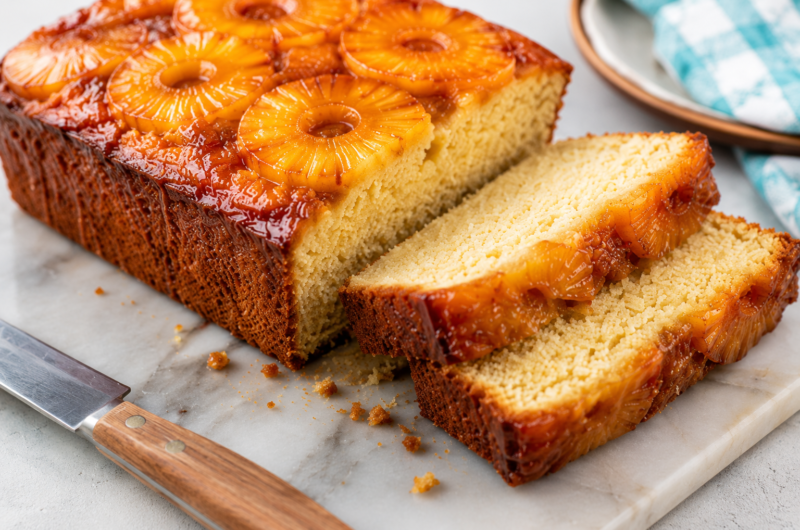
Buttery Pineapple Upside Down Loaf Cake with Caramelized Fruit
Difficulty: Easy10
Slices15
minutes55
minutes1
hour10
minutesA moist and buttery loaf cake topped with sweet caramelized pineapple for a simple tropical dessert everyone will love.
Ingredients
- For the Topping:
6 pineapple rings
¼ cup brown sugar
3 tbsp unsalted butter, melted
6 maraschino cherries (optional)
- For the Cake:
1½ cups all-purpose flour
1½ tsp baking powder
¼ tsp salt
½ cup unsalted butter, softened
¾ cup granulated sugar
2 large eggs
1 tsp vanilla extract
⅓ cup pineapple juice
¼ cup sour cream or milk
Directions
- Preheat oven to 350°F (175°C) and grease a 9×5-inch loaf pan.
- Pour melted butter into the pan, sprinkle with brown sugar, and arrange pineapple rings and cherries on top.
- Whisk together flour, baking powder, and salt in a bowl.
- In a separate bowl, beat butter and sugar until creamy, then mix in eggs and vanilla.
- Alternate adding the dry ingredients with the pineapple juice and sour cream, mixing just until combined.
- Spread the batter evenly over the pineapple layer.
- Bake for 50–60 minutes or until a toothpick inserted in the center comes out clean.
- Cool for 10–15 minutes, then carefully invert onto a serving plate.
- Let cool slightly before slicing and serving.
Notes
- Pat the pineapple dry before arranging it in the pan for better caramelization.
- Do not overmix the batter to keep the loaf soft and tender.
- Invert the cake while still slightly warm to prevent sticking.
- Store leftovers in an airtight container for up to 5 days in the refrigerator.


Hi, I’m Sorenna Blythe, the baker and writer behind Mix Whisk Bake. I share simple, reliable recipes and honest kitchen moments to help home bakers bake with confidence and joy. When I’m not testing new treats, you’ll find me sipping coffee and dreaming up my next bake.