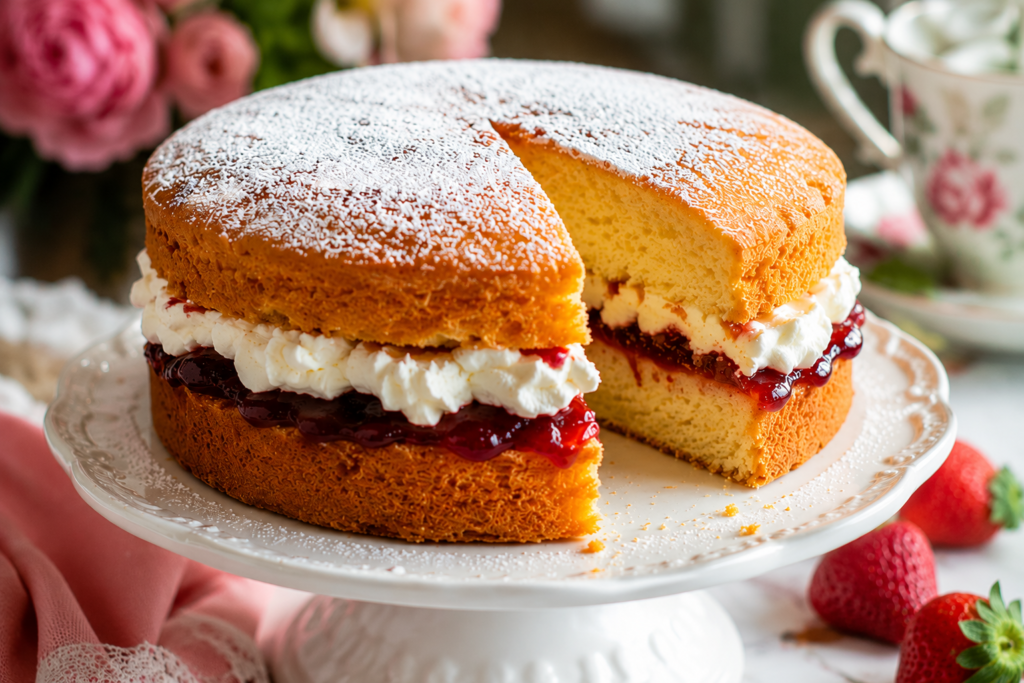
Victoria Sponge Cake is a timeless British dessert loved for its light, fluffy layers and simple yet delicious filling of jam and cream.
Named after Queen Victoria, who enjoyed a slice with her afternoon tea, this classic cake has remained a favorite for generations.
The best part? It looks impressive but is surprisingly easy to make at home.
If you’re new to baking, don’t worry.
I’ll guide you through each step so you can bake with confidence and enjoy a beautiful homemade cake from the very first try.
Why You’ll Love This Victoria Sponge Cake
- Light, Fluffy, and Buttery Texture – Every bite is soft, airy, and rich with classic buttery flavor.
- Simple Pantry Ingredients – Made with everyday baking staples you likely already have on hand.
- Easy Recipe Suitable for Beginners – Straightforward steps make this cake approachable, even if you’re new to baking.
- Classic Flavor That Never Goes Out of Style – The combination of sponge cake, jam, and cream is a timeless favorite loved by all ages.
What Is a Victoria Sponge Cake?
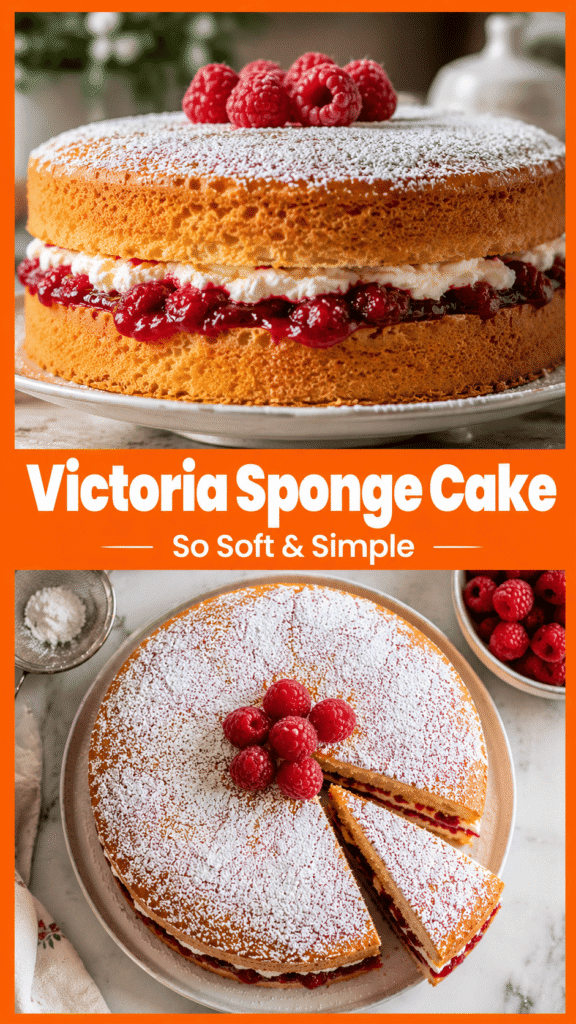
Victoria Sponge Cake is a classic British cake made with two light sponge layers sandwiched together with jam and cream.
It is known for its simple ingredients, delicate texture, and elegant appearance.
Unlike heavily frosted cakes, a Victoria Sponge relies on the quality of the sponge itself to deliver its flavor and texture.
The result is a cake that feels special without being complicated.
Its balance of sweetness, richness, and lightness has made it one of the most popular homemade cakes in the United Kingdom.
Today, it remains a favorite for birthdays, afternoon tea, family gatherings, and everyday baking.
The History of Victoria Sponge Cake
The Victoria Sponge dates back to the 19th century during the Victorian era.
As baking powder became more widely available, home bakers were able to create lighter cakes than ever before.
This new style of sponge cake quickly gained popularity because of its soft texture and simple preparation.
Over time, the recipe became a staple in British households and tea rooms.
Its lasting appeal comes from the fact that it feels both comforting and elegant at the same time.
Connection to Queen Victoria
The cake is named after Queen Victoria, who ruled Britain from 1837 to 1901.
According to popular tradition, she enjoyed a slice of sponge cake with her afternoon tea.
This daily tea ritual helped make the cake famous throughout the country.
As more people adopted the tradition of afternoon tea, the Victoria Sponge became closely associated with it.
Even today, the cake carries a sense of classic British charm because of its connection to the queen who inspired its name.
Traditional British Tea-Time Treat
Afternoon tea has long been an important part of British culture.
A Victoria Sponge fits perfectly into this tradition because it is light enough to enjoy with a cup of tea while still feeling satisfying.
The simple combination of sponge, jam, and cream creates a dessert that is both comforting and refined.
Many tea rooms across Britain continue to serve Victoria Sponge as one of their signature cakes.
Its timeless appeal makes it just as popular today as it was generations ago.
What Makes It Unique?
One reason Victoria Sponge Cake stands out is its simplicity.
It does not depend on elaborate decorations or complicated techniques.
Instead, every ingredient works together to create a cake that is soft, flavorful, and beautifully balanced.
The classic recipe proves that a few quality ingredients can create something truly memorable.
Equal Parts Butter, Sugar, Eggs, and Flour
Traditional Victoria Sponge recipes are often based on equal amounts of butter, sugar, eggs, and flour.
This simple ratio makes the recipe easy to remember and helps create a well-balanced cake.
The butter adds richness.
The sugar provides sweetness and helps create a tender crumb.
The eggs add structure and moisture.
The flour brings everything together into a soft and stable sponge.
When combined correctly, these ingredients produce a cake that is light while still feeling rich and satisfying.
Layered with Jam and Cream
One of the most recognizable features of a Victoria Sponge is its filling.
A generous layer of fruit jam is spread between the sponge layers, adding sweetness and a burst of fruity flavor.
Many versions also include freshly whipped cream for extra richness.
The combination creates a delicious contrast between the soft cake and creamy filling.
Strawberry and raspberry jam are the most common choices, but you can easily use your favorite flavor.
Light and Airy Sponge Texture
The texture is what truly makes a Victoria Sponge special.
The sponge should feel soft, fluffy, and light enough to almost melt in your mouth.
Proper mixing helps incorporate air into the batter, which gives the cake its delicate crumb.
A well-baked Victoria Sponge should rise evenly and remain tender from edge to center.
Even though the cake feels light, it still delivers plenty of flavor in every bite.
That balance is one of the reasons this classic recipe has remained a favorite for so many years.
Ingredients You’ll Need
For the Sponge Cake
- 1 cup (227g) unsalted butter, softened – Creates a rich flavor and tender crumb.
- 1 cup (200g) granulated sugar – Sweetens the cake and helps produce a light texture.
- 4 large eggs, room temperature – Add structure, moisture, and richness.
- 2 cups (250g) self-rising flour – Gives the sponge its signature light and fluffy texture.
- 1 teaspoon vanilla extract – Adds a subtle, warm flavor that complements the cake.
- 1 teaspoon baking powder (optional) – Provides extra lift for an even lighter sponge.
For the Filling
- ⅓ cup (110g) strawberry or raspberry jam – Adds a sweet, fruity layer between the cakes.
- 1 cup (240ml) heavy whipping cream, whipped or 1 cup buttercream frosting – Creates a creamy and delicious filling.
- 1 tablespoon powdered sugar – Lightly dusted over the top for a classic finishing touch.
Kitchen Equipment Needed
- Mixing Bowls – You’ll need at least one large bowl for preparing the cake batter and another for whipping the cream if using fresh cream for the filling.
- Electric Mixer – Helps cream the butter and sugar together until light and fluffy, which is important for a soft sponge texture.
- Two 8-Inch Round Cake Pans – Allow the batter to be baked into even layers that can be filled with jam and cream.
- Cooling Rack – Helps the cakes cool evenly and prevents the bottoms from becoming soggy after baking.
- Spatula – Useful for scraping down the sides of the bowl, folding ingredients together, and spreading the filling between the cake layers.
How to Make Victoria Sponge Cake
Step 1: Prepare the Cake Pans
Preheat your oven to 350°F (175°C) so it reaches the correct temperature before the cakes go in.
Grease two 8-inch round cake pans with a thin layer of butter or nonstick spray.
Line the bottoms with parchment paper to make removing the cakes easier after baking.
Taking a few extra minutes to prepare the pans properly helps prevent sticking and keeps the cake layers looking neat.
Step 2: Make the Cake Batter
Place the softened butter and granulated sugar in a large mixing bowl.
Beat them together with an electric mixer for about 3 to 4 minutes until the mixture looks pale, light, and fluffy.
This step adds air to the batter, which helps create a soft sponge.
Add the eggs one at a time, mixing well after each addition.
Pour in the vanilla extract and mix until combined.
Gradually add the self-rising flour and optional baking powder.
Mix on low speed just until no dry streaks remain.
Avoid overmixing at this stage because it can make the sponge heavier than desired.
The finished batter should look smooth and thick.
Step 3: Divide and Bake
Divide the batter evenly between the prepared cake pans.
Use a spatula to gently smooth the tops.
Place the pans on the center oven rack.
Bake for 20 to 25 minutes, or until the cakes are golden and spring back lightly when touched in the center.
You can also insert a toothpick into the middle of a cake.
If it comes out clean, the cakes are ready.
Try not to open the oven door too often during baking, as sudden temperature changes can affect the rise.
Step 4: Cool the Cakes Completely
Remove the cakes from the oven and let them cool in the pans for about 10 minutes.
Carefully run a knife around the edges if needed.
Turn the cakes out onto a cooling rack.
Peel away the parchment paper and allow the cakes to cool completely.
This step is important because warm cakes can melt the filling and make assembly messy.
Patience here will give you much better results later.
Step 5: Prepare the Filling
If you are using whipped cream, beat the heavy cream until soft peaks form.
Soft peaks mean the cream holds its shape but still looks smooth and creamy.
Have your jam ready at room temperature so it spreads easily.
Preparing the filling before assembly makes the process simple and stress-free.
Step 6: Assemble the Cake
Place one cake layer on a serving plate or cake stand.
Spread the jam evenly across the top, leaving a small border around the edge.
Gently spread or pipe the whipped cream or buttercream over the jam layer.
Carefully place the second sponge layer on top.
Press down very lightly to secure everything in place.
Take your time during this step to keep the layers even and attractive.
Step 7: Dust and Serve
Lightly dust the top of the cake with powdered sugar.
This simple finishing touch gives the cake its traditional appearance.
Slice with a sharp knife and serve immediately.
The soft sponge, sweet jam, and creamy filling create a classic combination that is hard to resist.
Enjoy your homemade Victoria Sponge Cake with a cup of tea, coffee, or a cold glass of milk.
Tips for the Perfect Victoria Sponge Cake
Use Room Temperature Ingredients
Allow the butter, eggs, and any dairy ingredients to sit at room temperature before you begin.
Room temperature ingredients combine more easily and create a smoother batter.
Cold butter can be difficult to cream properly with sugar.
Cold eggs can also cause the batter to look curdled or uneven.
When all the ingredients are at a similar temperature, they blend together more evenly.
This helps create a lighter sponge with a softer texture.
If you forget to take your eggs out ahead of time, place them in a bowl of warm water for a few minutes to help bring them closer to room temperature.
Avoid Overmixing the Batter
Mixing is important, but too much mixing can work against you.
Once the flour is added, mix only until the ingredients are combined.
Overmixing can develop too much gluten, which may result in a cake that feels dense or slightly tough.
A Victoria Sponge should be light and delicate.
Using a low mixer speed or gently folding the flour into the batter can help prevent overmixing.
If you no longer see streaks of flour, the batter is ready.
A few extra seconds of mixing may not seem like much, but stopping at the right time helps preserve the cake’s soft texture.
Measure Ingredients Accurately
Accurate measurements help create consistent baking results.
Even small differences in ingredient amounts can affect the texture, rise, and overall appearance of the cake.
Too much flour can make the sponge dry.
Too little flour can make it weak and difficult to support the filling.
Using a kitchen scale is the most reliable option when available.
If measuring with cups, spoon the flour into the measuring cup and level it off with a straight edge instead of scooping directly from the container.
Taking care with measurements helps ensure your sponge turns out as intended.
Cool Completely Before Filling
It can be tempting to assemble the cake while it is still slightly warm.
However, waiting until the layers have cooled completely is worth it.
Warm cake can cause whipped cream or buttercream to melt and become unstable.
The jam may also slide around, making the layers difficult to stack neatly.
Allowing the cakes to cool fully helps the filling stay in place and creates cleaner slices.
A little patience at this stage can make the finished cake look more polished and professional.
Once the layers are completely cool, you can assemble the cake with confidence and enjoy the best possible texture and presentation.
Common Mistakes to Avoid
- Dense or Heavy Sponge – This usually happens when the batter is overmixed or the ingredients are not measured accurately.
- Uneven Cake Layers – Unevenly divided batter can cause one layer to bake thicker than the other, making assembly more difficult.
- Overbaking – Leaving the cakes in the oven too long can dry out the sponge and reduce its soft, tender texture.
- Filling Sliding Out of the Cake – Assembling the cake before the layers have cooled completely can cause the jam and cream to shift and spill out.
Victoria Sponge Cake Variations
- Fresh Berry Victoria Sponge – Add sliced strawberries, raspberries, or mixed berries between the layers for extra freshness and flavor.
- Lemon Victoria Sponge – Mix lemon zest into the batter and use lemon curd as part of the filling for a bright citrus twist.
- Chocolate Victoria Sponge – Replace a portion of the flour with cocoa powder to create a rich chocolate version of the classic cake.
- Buttercream-Filled Victoria Sponge – Swap the whipped cream for a smooth vanilla buttercream for a sweeter and more stable filling.
How to Store Victoria Sponge Cake
Proper storage helps keep your Victoria Sponge Cake soft, fresh, and delicious for as long as possible.
Room Temperature Storage
If your Victoria Sponge is filled with jam and does not contain fresh cream, it can usually be stored at room temperature.
Place the cake in an airtight container or cover it well with plastic wrap to prevent it from drying out.
Store it in a cool, dry place away from direct sunlight and heat sources.
When stored properly, the cake will stay fresh for up to 2 days.
An airtight container is especially helpful because sponge cake can lose moisture quickly when exposed to air.
If the weather is particularly warm, moving the cake to the refrigerator may be a better option.
Refrigerator Storage
If your cake contains whipped cream, fresh fruit, or any dairy-based filling, it should be refrigerated.
Place the cake in a covered container to protect it from absorbing odors from other foods in the refrigerator.
Properly stored, a cream-filled Victoria Sponge can stay fresh for up to 3 days.
Keep in mind that refrigeration may slightly firm up the sponge.
For the best texture, allow the cake to sit at room temperature for about 15 to 20 minutes before serving.
This short resting time helps soften the sponge and allows the flavors to shine.
Freezing Instructions
Victoria Sponge Cake can be frozen if you would like to prepare it ahead of time.
For the best results, freeze the sponge layers before adding the filling.
Allow the cakes to cool completely after baking.
Wrap each layer tightly in plastic wrap.
Add a layer of aluminum foil or place the wrapped cakes in a freezer-safe container for extra protection.
The sponge layers can be frozen for up to 3 months.
When you’re ready to use them, transfer the cakes to the refrigerator overnight or let them thaw at room temperature.
Once fully thawed, fill and assemble the cake as usual.
If you need to freeze a fully assembled cake, choose a version filled with buttercream rather than whipped cream whenever possible.
This helps maintain a better texture after thawing.
What to Serve with Victoria Sponge Cake
- English Tea – A hot cup of tea pairs beautifully with the light sponge and sweet jam filling, making it a classic choice.
- Coffee – The rich flavor of coffee complements the cake’s buttery texture and fruity filling.
- Fresh Berries – Strawberries, raspberries, or blueberries add freshness and a burst of natural sweetness to each serving.
- Whipped Cream – A dollop of lightly sweetened whipped cream makes the cake even more indulgent and creamy.
Final Thoughts
Victoria Sponge Cake has remained a favorite for generations because it combines simple ingredients with a light, delicious texture that never goes out of style.
Don’t be afraid to make it your own by trying different jams, fresh berries, or your favorite filling.
With a little care and the steps in this recipe, you’ll have a beautiful cake that’s sure to impress and bring smiles to the table.
FAQs
Can I Make Victoria Sponge Cake Ahead of Time?
Yes, you can bake the sponge layers 1 to 2 days in advance and assemble the cake just before serving for the freshest results.
What Jam Is Traditionally Used?
Strawberry jam is the traditional choice, although raspberry jam is also very popular.
Can I Use All-Purpose Flour Instead of Self-Rising Flour?
Yes, simply add 2 teaspoons of baking powder to every 2 cups of all-purpose flour to achieve a similar rise.
Why Did My Sponge Cake Sink?
A sponge cake may sink if the oven door is opened too early, the batter is overmixed, or the cake is underbaked.
Can I Freeze Victoria Sponge Cake?
Yes, the sponge layers freeze well for up to 3 months when wrapped tightly and stored in a freezer-safe container.
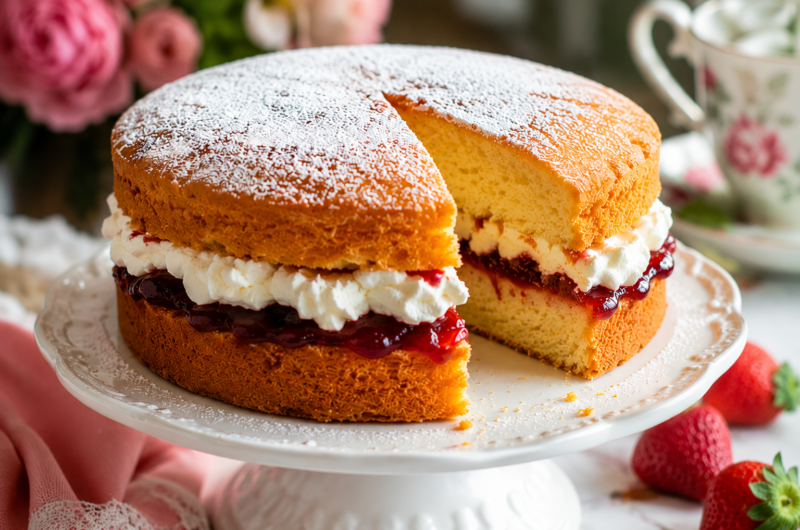
Classic Victoria Sponge Cake Recipe Everyone Will Love
Difficulty: Easy8
Slices20
minutes25
minutes45
minutesA classic British Victoria Sponge Cake made with soft, fluffy sponge layers filled with sweet strawberry jam and whipped cream.
Ingredients
1 cup (227g) unsalted butter, softened
1 cup (200g) granulated sugar
4 large eggs
2 cups (250g) self-rising flour
1 tsp vanilla extract
1 tsp baking powder (optional)
⅓ cup (110g) strawberry jam
1 cup (240ml) heavy cream, whipped
1 tbsp powdered sugar, for dusting
Directions
- Preheat oven to 350°F (175°C) and grease two 8-inch cake pans.
- Beat butter and sugar until light and fluffy.
- Add eggs one at a time, then mix in vanilla.
- Fold in the flour and baking powder until combined.
- Divide batter between pans and bake for 20–25 minutes.
- Cool completely on a wire rack.
- Spread jam and whipped cream over one cake layer.
- Top with the second layer and dust with powdered sugar.
- Slice and serve.
Notes
- Use room-temperature ingredients for the best texture.
- Allow the cakes to cool fully before adding the filling.
- Strawberry or raspberry jam both work well in this recipe.

Hi, I’m Sorenna Blythe, the baker and writer behind Mix Whisk Bake. I share simple, reliable recipes and honest kitchen moments to help home bakers bake with confidence and joy. When I’m not testing new treats, you’ll find me sipping coffee and dreaming up my next bake.