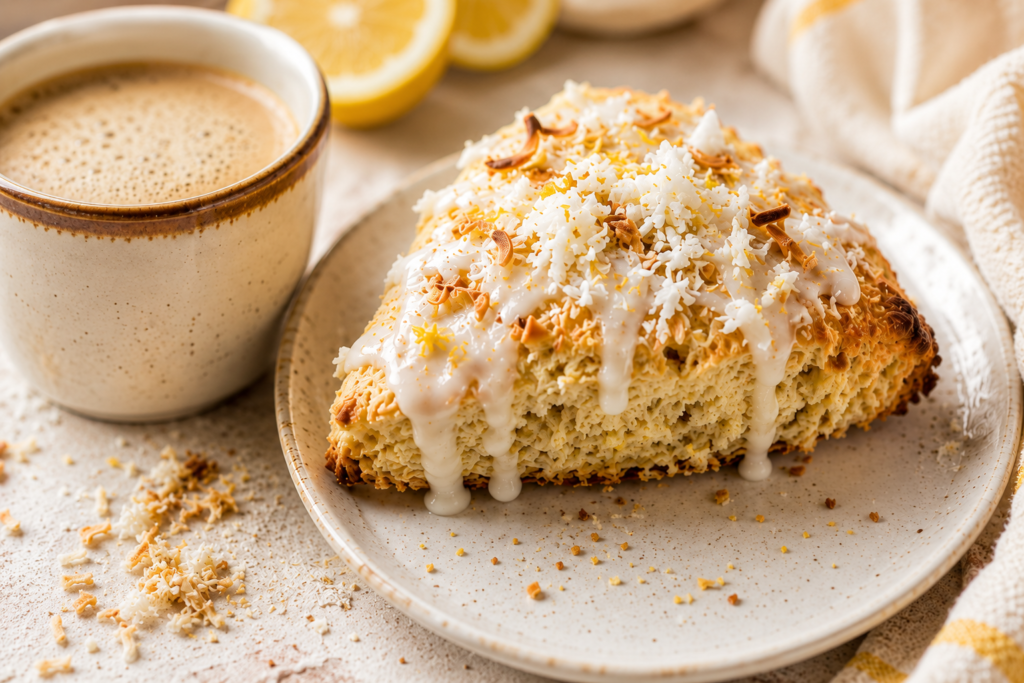
These lemon coconut scones are soft, buttery, and packed with bright citrus flavor in every bite.
The fresh lemon adds a light tangy taste, while the coconut brings a sweet tropical twist that makes these scones feel extra special without being complicated.
They’re perfect for slow breakfasts, weekend brunches, afternoon tea, or sunny spring and summer gatherings.
Even better, you only need simple pantry ingredients and a few easy steps to make them from scratch.
Why You’ll Love These Lemon Coconut Scones
- Soft, flaky bakery-style texture – These scones bake up tender, buttery, and lightly crisp on the edges for the perfect bite.
- Fresh citrus flavor from real lemons – Fresh lemon juice and zest give every scone a bright, refreshing flavor.
- Sweet coconut adds tropical richness – Shredded coconut brings a subtle sweetness and delicious texture to each bite.
- Quick and easy to make – The recipe comes together in under 40 minutes with simple everyday ingredients.
- Perfect make-ahead breakfast treat – These scones store well, making them great for busy mornings or weekend brunch prep.
- Delicious with tea, coffee, or iced drinks – Their light lemon flavor pairs perfectly with both hot and cold beverages.

What Are Lemon Coconut Scones?
Lemon coconut scones are tender baked pastries made with flour, butter, and cream, giving them a soft, flaky texture that feels rich without being too heavy.
They are similar to biscuits but slightly sweeter and more buttery, with crisp golden edges and a soft center that practically melts in your mouth when served warm.
American-style scones are usually richer, sweeter, and more crumbly than traditional British scones, which tend to be lighter, less sweet, and often served with jam and cream.
This recipe follows the American-style version, which makes it perfect for adding bold flavors like fresh lemon zest and sweet shredded coconut.
The lemon brings a bright citrus flavor that keeps the scones tasting fresh and light instead of overly rich.
The coconut adds a subtle tropical sweetness and a little texture, making every bite feel cozy and special at the same time.
Together, the lemon and coconut turn a classic scone into something vibrant, sunny, and perfect for breakfast, brunch, or an afternoon treat with coffee or tea.
These scones are only lightly sweet, so they never feel overpowering, and the balance of buttery dough, tangy lemon, and sweet coconut gives them a flavor that feels fresh and comforting all at once.
Ingredients You’ll Need
For the Scones
- 2 cups all-purpose flour – Gives the scones structure while keeping them soft and tender.
- 1/3 cup granulated sugar – Adds just enough sweetness without overpowering the lemon flavor.
- 1 tablespoon baking powder – Helps the scones rise and bake up light and fluffy.
- 1/2 teaspoon salt – Balances the sweetness and enhances the overall flavor.
- 1/2 cup unsalted butter, cold and cubed – Creates flaky layers and a rich buttery texture.
- 1/2 cup heavy cream or whole milk – Adds moisture and helps bring the dough together.
- 1 large egg – Gives the scones richness and helps create a soft texture.
- 1 tablespoon fresh lemon zest – Adds bright citrus flavor throughout the dough.
- 2 tablespoons fresh lemon juice – Brings a fresh tangy flavor that pairs perfectly with coconut.
- 3/4 cup sweetened shredded coconut – Adds sweetness, texture, and tropical flavor.
- 1 teaspoon vanilla extract – Adds warmth and rounds out the citrus flavor beautifully.
Optional Lemon Glaze
- 1 cup powdered sugar – Creates a smooth sweet glaze for drizzling.
- 2–3 tablespoons fresh lemon juice – Thins the glaze while adding extra lemon flavor.
- 1 teaspoon lemon zest – Adds fresh citrus flavor and a bright finishing touch.
Ingredient Notes & Substitutions
Fresh Lemon Juice vs Bottled
Fresh lemon juice gives these scones a brighter and more natural citrus flavor that really stands out once baked.
Fresh lemon zest is just as important because it contains natural oils that add a strong lemon flavor without making the dough too wet.
Bottled lemon juice can work in a pinch, but the flavor is usually sharper and less fresh than using real lemons.
If possible, use both fresh lemon juice and zest for the best flavor and aroma.
Sweetened vs Unsweetened Coconut
Sweetened shredded coconut adds a little extra moisture and sweetness, which works beautifully in these soft buttery scones.
Unsweetened coconut can also be used if you prefer a less sweet flavor or want the lemon taste to stand out more.
If using unsweetened coconut, you may want to add an extra tablespoon of sugar to balance the flavors.
For even more texture, lightly toast the coconut before adding it to the dough.
How to Use Coconut Cream for Extra Richness
Coconut cream is a great way to make the scones taste even richer and more tropical.
You can replace part of the heavy cream or milk with coconut cream for a softer texture and deeper coconut flavor.
A mix of half coconut cream and half heavy cream works especially well because it keeps the dough rich without becoming too heavy.
If your coconut cream is very thick, stir it well before measuring so it blends smoothly into the dough.
Dairy-Free Substitutions
These scones are easy to make dairy-free with a few simple swaps.
Use a plant-based butter substitute instead of regular butter and keep it cold just like you would with traditional butter.
Replace the heavy cream or milk with full-fat coconut milk, almond milk, or oat milk.
Coconut milk gives the richest texture and pairs especially well with the lemon and coconut flavors in this recipe.
Tips for Using Cold Butter
Cold butter is one of the most important parts of making flaky scones.
When small pieces of cold butter melt in the oven, they create steam pockets that help form soft layers inside the scones.
If the butter becomes too warm before baking, the scones can turn dense instead of light and tender.
Cut the butter into small cubes and keep it chilled until you are ready to mix the dough.
If your kitchen is warm, you can place the shaped scones in the fridge for 10 to 15 minutes before baking to help them hold their shape and bake up beautifully flaky.
Kitchen Tools Needed
- Mixing bowls – You’ll need a few bowls for mixing the dry ingredients, wet ingredients, and glaze.
- Pastry cutter or fork – Helps cut the cold butter into the flour to create flaky scones.
- Baking sheet – Gives the scones enough space to bake evenly and turn golden brown.
- Parchment paper – Prevents sticking and makes cleanup quick and easy.
- Zester or microplane – Removes the flavorful outer layer of the lemon without the bitter white peel underneath.
How to Make Lemon Coconut Scones
Step 1: Prepare the Dough
Start by preheating your oven to 400°F and lining a baking sheet with parchment paper so the scones bake evenly and lift easily from the pan.
In a large mixing bowl, whisk together the flour, sugar, baking powder, and salt until everything is evenly combined.
Adding the dry ingredients together first helps distribute the baking powder properly, which gives the scones a lighter texture.
Next, add the cold cubed butter to the bowl and use a pastry cutter or fork to work it into the flour mixture.
Keep mixing until the butter pieces are about the size of small crumbs or peas.
Those little pockets of butter are what create soft flaky layers once the scones bake, so don’t worry if the mixture looks a bit crumbly.
Try not to overwork the dough during this step because warm butter can make the scones dense instead of tender.
Step 2: Add Wet Ingredients
In a separate bowl, whisk together the heavy cream, egg, vanilla extract, fresh lemon juice, and lemon zest until smooth.
The lemon zest adds bright citrus flavor throughout the dough, while the juice gives the scones a fresh tangy finish.
Pour the wet ingredients into the flour mixture and gently stir everything together with a spoon or spatula.
Once the dough starts coming together, fold in the shredded coconut.
Mix only until no dry flour remains because overmixing can make the scones tough instead of soft.
The dough should look slightly shaggy and a little sticky, which is completely normal.
If the dough feels too dry, add a small splash of cream or milk one teaspoon at a time until it holds together.
Step 3: Shape the Scones
Lightly flour your countertop or work surface and gently turn the dough out onto it.
Use your hands to press the dough into a thick circle about 1 inch tall.
Avoid kneading the dough too much because keeping it light helps create a softer texture after baking.
For classic triangle-shaped scones, cut the circle into 8 equal wedges using a sharp knife or bench scraper.
You can also use a round biscuit cutter if you prefer a more traditional bakery-style look.
Place the shaped scones onto the prepared baking sheet, leaving a little space between each one.
If the dough feels warm or soft, place the tray in the fridge for 10 minutes before baking to help the scones keep their shape.
Step 4: Bake
Bake the scones for 18 to 22 minutes, or until the tops are lightly golden and the edges look set.
Your kitchen will smell buttery, bright, and citrusy as they bake, which is one of the best parts of this recipe.
Check the bottoms of the scones to make sure they are lightly golden, which helps confirm they are fully baked inside.
Once baked, remove the tray from the oven and let the scones cool for about 10 minutes.
Letting them cool slightly keeps the glaze from melting completely off the warm scones.
Step 5: Add Lemon Glaze
While the scones cool, whisk together the powdered sugar, lemon juice, and lemon zest until smooth.
The glaze should be thick enough to drizzle but still pour easily from a spoon.
Drizzle the glaze over the slightly cooled scones for an extra layer of sweet citrus flavor.
For a beautiful finishing touch, sprinkle extra shredded coconut or fresh lemon zest over the top.
These scones are especially delicious while still slightly warm, with a cup of coffee, tea, or even a cold glass of milk.
Tips for Perfect Scones
Keep Ingredients Cold
Cold ingredients are one of the biggest secrets to soft, flaky scones.
Cold butter creates little steam pockets in the oven, which helps form tender layers inside the dough.
If the butter melts before baking, the scones can spread too much and lose their flaky texture.
Keep your butter chilled right up until you mix the dough, and use cold cream, milk, and eggs whenever possible.
If your kitchen is warm, you can even place the flour in the fridge for a few minutes before starting.
Avoid Overmixing the Dough
When making scones, less mixing is always better.
Overworking the dough develops too much gluten, which can make the scones tough and heavy instead of soft and light.
Stir the dough only until the ingredients come together, and no large patches of dry flour remain.
It’s completely fine if the dough looks a little rough or uneven because that texture actually helps create tender scones.
Gentle handling makes a big difference in the final result.
Chill Dough Before Baking if Needed
If the dough starts feeling soft, sticky, or warm while shaping the scones, a quick chill in the fridge can help.
Place the shaped scones on the baking sheet and chill them for about 10 to 15 minutes before baking.
This helps the butter firm back up, which keeps the scones from spreading too much in the oven.
Chilled dough also helps create taller scones with cleaner edges and a better texture.
This small extra step is especially helpful during warmer months.
Use Fresh Lemon Zest for Stronger Flavor
Fresh lemon zest gives these scones their bright and vibrant citrus flavor.
The zest contains natural oils that bring much more flavor than lemon juice alone.
Use a zester or microplane to remove only the yellow outer layer of the lemon because the white part underneath can taste bitter.
Zest the lemons right before adding them to the dough for the freshest flavor possible.
Even a small amount of fresh zest can completely transform the taste of the scones.
Toast Coconut for Extra Depth
Toasting the coconut adds a deeper flavor and a little extra crunch to the finished scones.
As the coconut toasts, it develops a warm nutty taste that pairs beautifully with the bright lemon flavor.
Simply spread the shredded coconut on a baking sheet and bake it for a few minutes until lightly golden.
Keep an eye on it while it bakes because coconut can brown quickly.
You can mix toasted coconut into the dough or sprinkle it over the glaze for extra texture and flavor.
Flavor Variations
- Lemon coconut blueberry scones – Add fresh or frozen blueberries for bursts of juicy sweetness in every bite.
- Coconut poppy seed scones – Mix in poppy seeds for a light crunch and classic bakery-style flavor.
- White chocolate lemon coconut scones – Fold in white chocolate chips for a richer and sweeter dessert-style scone.
- Lime coconut version – Swap the lemon juice and zest for lime for a brighter tropical twist.
- Almond coconut lemon scones – Add sliced almonds and a splash of almond extract for extra nutty flavor and texture.
What to Serve with Lemon Coconut Scones
- Hot tea – A warm cup of tea pairs perfectly with the bright lemon flavor and buttery texture of the scones.
- Coffee or lattes – The light citrus and coconut flavors taste especially delicious alongside rich coffee drinks.
- Fresh fruit – Serve with berries, pineapple, or sliced melon for a fresh and colorful breakfast or brunch spread.
- Lemon curd – Adds an extra layer of sweet tangy citrus flavor that complements the scones beautifully.
- Coconut whipped cream – A light fluffy topping that brings even more tropical flavor to each bite.
How to Store & Freeze Scones
Storing
Lemon coconut scones are best enjoyed fresh, but they also store very well if you have leftovers.
Once the scones have completely cooled, place them in an airtight container to help keep them soft and prevent them from drying out.
At room temperature, the scones will stay fresh for about 2 days.
Keep the container in a cool dry place away from direct sunlight or heat.
If your kitchen is warm or humid, the refrigerator is a better option for keeping them fresh longer.
Room Temperature Storage Tips
To help the scones stay soft, place a paper towel inside the container to absorb any extra moisture.
Too much trapped moisture can make the tops sticky and soften the edges.
If the scones are glazed, allow the glaze to fully set before stacking them to prevent sticking.
For the best texture, avoid leaving the scones uncovered because they can dry out quickly.
A quick warm-up before serving can help bring back their fresh-baked texture.
Refrigeration Instructions
If you want to keep the scones for a few extra days, store them in the refrigerator in a sealed container.
They will stay fresh for up to 5 days when chilled properly.
Cold scones can feel slightly firm straight from the fridge, which is completely normal.
Let them sit at room temperature for a few minutes or warm them gently before serving for the best texture.
If possible, store the glaze separately and drizzle it on after reheating for the freshest flavor.
Freezing
These scones freeze beautifully, which makes them perfect for meal prep or make-ahead baking.
You can freeze both baked and unbaked scones, depending on what works best for you.
For baked scones, let them cool completely before wrapping them tightly or placing them in a freezer-safe container.
They can be frozen for up to 3 months without losing much texture or flavor.
For unbaked scones, shape and cut the dough first, then place the pieces on a baking sheet and freeze until firm.
Once frozen, transfer the dough pieces to a freezer bag or container.
Freezing them individually first helps prevent the scones from sticking together.
Freeze Baked or Unbaked Scones
Baked scones are great for quick breakfasts because they only need a short reheating time before serving.
Unbaked frozen scones are perfect when you want freshly baked scones without making the dough from scratch again.
You can bake frozen unbaked scones straight from the freezer without thawing them first.
Simply add a few extra minutes to the baking time until the tops are golden and fully baked.
This method helps the scones stay flaky and fresh.
Best Reheating Methods
For the best texture, warm the scones in the oven at 300°F for about 5 to 10 minutes.
This helps bring back the crisp edges while keeping the centers soft and tender.
You can also microwave a scone for about 10 to 15 seconds if you want a quick option.
If reheating glazed scones, warm them gently so the glaze does not completely melt away.
Serving the scones slightly warm makes the lemon flavor brighter and the buttery texture even more delicious.
Final Thoughts
These lemon coconut scones are bright, buttery, and filled with the perfect mix of fresh citrus and sweet tropical coconut flavor.
They’re simple enough for a cozy weekend breakfast but special enough for brunch, dessert, or sharing with family and friends.
FAQs
Can I make these scones ahead of time?
Yes, you can prepare the dough ahead of time and keep it covered in the fridge overnight before baking.
Can I freeze the dough?
Absolutely. Shape the scones first, freeze them on a tray until firm, then store them in a freezer-safe bag for up to 3 months.
Why are my scones dry?
Dry scones are usually caused by overmixing the dough or adding too much flour, so mix gently and measure carefully.
Can I use unsweetened coconut?
Yes, unsweetened coconut works well if you prefer a less sweet scone with a stronger lemon flavor.
How do I get flaky scones?
Use very cold butter, avoid overworking the dough, and chill the shaped scones before baking if the dough feels warm.

Lemon Coconut Scones – Buttery, Bright & Bakery Style
Difficulty: Easy8
Scones15
minutes20
minutes35
minutesSoft, buttery lemon coconut scones topped with sweet lemon glaze and toasted coconut for a bright and cozy homemade treat.
Ingredients
2 cups all-purpose flour
1/3 cup granulated sugar
1 tablespoon baking powder
1/2 teaspoon salt
1/2 cup cold unsalted butter, cubed
1/2 cup heavy cream
1 large egg
1 tablespoon lemon zest
2 tablespoons lemon juice
3/4 cup sweetened shredded coconut
1 teaspoon vanilla extract
- For the Glaze:
1 cup powdered sugar
2–3 tablespoons lemon juice
Extra coconut and lemon zest for topping
Directions
- Preheat oven to 400°F and line a baking sheet with parchment paper.
- Mix flour, sugar, baking powder, and salt in a bowl. Cut in cold butter until crumbly.
- Stir in cream, egg, lemon zest, lemon juice, vanilla, and coconut until a dough forms.
- Shape the dough into a circle and cut it into 8 wedges.
- Bake for 18–22 minutes until golden brown.
- Cool slightly, then drizzle with lemon glaze and top with extra coconut and zest.
Notes
- Use cold butter for flaky scones.
- Fresh lemon zest gives the best flavor.
- Chill the dough for 10 minutes before baking if your kitchen is warm.


Hi, I’m Sorenna Blythe, the baker and writer behind Mix Whisk Bake. I share simple, reliable recipes and honest kitchen moments to help home bakers bake with confidence and joy. When I’m not testing new treats, you’ll find me sipping coffee and dreaming up my next bake.