Passionfruit brings a bright, sweet-tangy flavor that instantly makes any dessert feel fresh and tropical.
It cuts through rich, creamy ingredients beautifully, giving you that perfect balance in every bite.
In this post, you’ll find five easy passionfruit desserts that are simple to make and full of bold flavor.
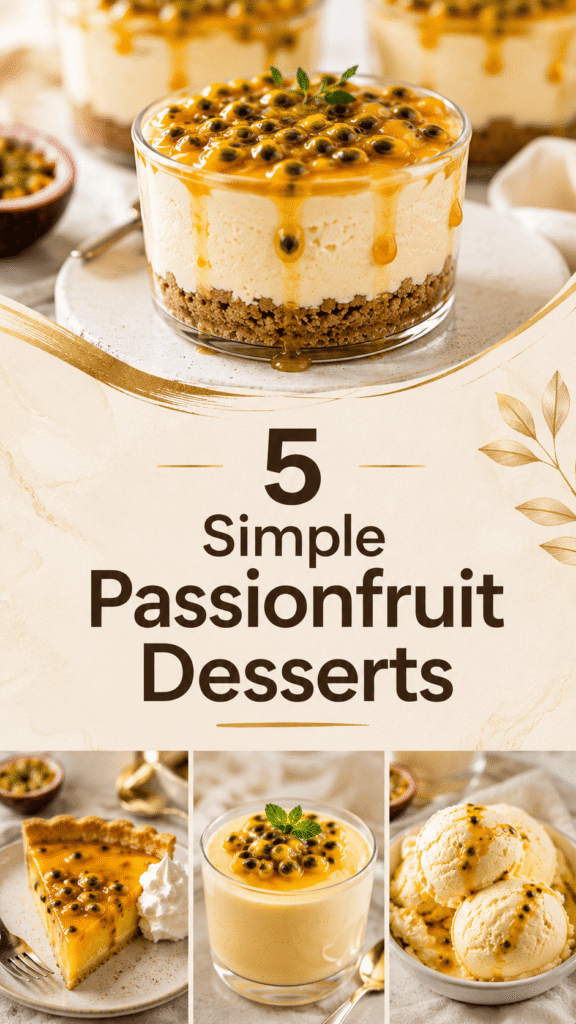
1. Passionfruit Cheesecake Cups
These cheesecake cups are a great place to start if you want something simple but impressive.
There’s no baking, no complicated steps, and very little cleanup.
You’ll get a creamy filling, a buttery base, and that fresh passionfruit flavor in every spoonful.
They’re also easy to portion, which makes them perfect for sharing or prepping ahead.
If you’re new to desserts, this recipe will give you a lot of confidence.
Creamy, tangy, and perfectly portioned, these no-bake cheesecake cups are light yet indulgent.
The passionfruit adds a bright, slightly tart contrast that keeps the dessert from feeling too heavy.
Ingredients
- 1 cup crushed biscuits (digestive biscuits work best)
- 4 tbsp melted butter
- 1 cup cream cheese (softened at room temperature)
- ½ cup whipped cream (freshly whipped or store-bought)
- ⅓ cup condensed milk
- ½ cup passionfruit pulp (fresh or canned)
Instructions
- Make the base
In a bowl, mix the crushed biscuits with melted butter until the texture feels like wet sand. Spoon this into your serving cups and press it down gently using the back of a spoon. This creates a firm, even layer. - Prepare the cream cheese mixture
In a separate bowl, beat the softened cream cheese until smooth. Take your time here—this step helps avoid lumps later. - Add richness and lightness
Fold in the whipped cream and condensed milk. Mix gently until everything is combined and silky. Try not to overmix so the mixture stays light. - Add the passionfruit
Stir in the passionfruit pulp. You can leave the seeds in for texture or strain them out if you prefer a smoother finish. - Assemble the cups
Spoon the filling over the biscuit base. Smooth the tops lightly so they look neat. - Chill to set
Place the cups in the fridge for at least 2–3 hours. This helps the filling firm up and develop flavor. - Finish and serve
Just before serving, add a little extra passionfruit pulp on top for a fresh, glossy finish.
Helpful Tips
- Softened cream cheese matters
If it’s too cold, your mixture may turn lumpy. Let it sit out for about 20–30 minutes before using. - Press the base firmly, but not too hard
You want it to hold together, not become dense or difficult to scoop. - Taste before chilling
If you like it sweeter, you can add a bit more condensed milk. If you prefer more tang, add extra passionfruit. - Chill longer for best results
If you have time, letting them set for 4 hours gives an even better texture. - Make it your own
You can layer extra whipped cream, add crushed cookies on top, or even drizzle a little honey for variation.
2. Passionfruit Curd Tart
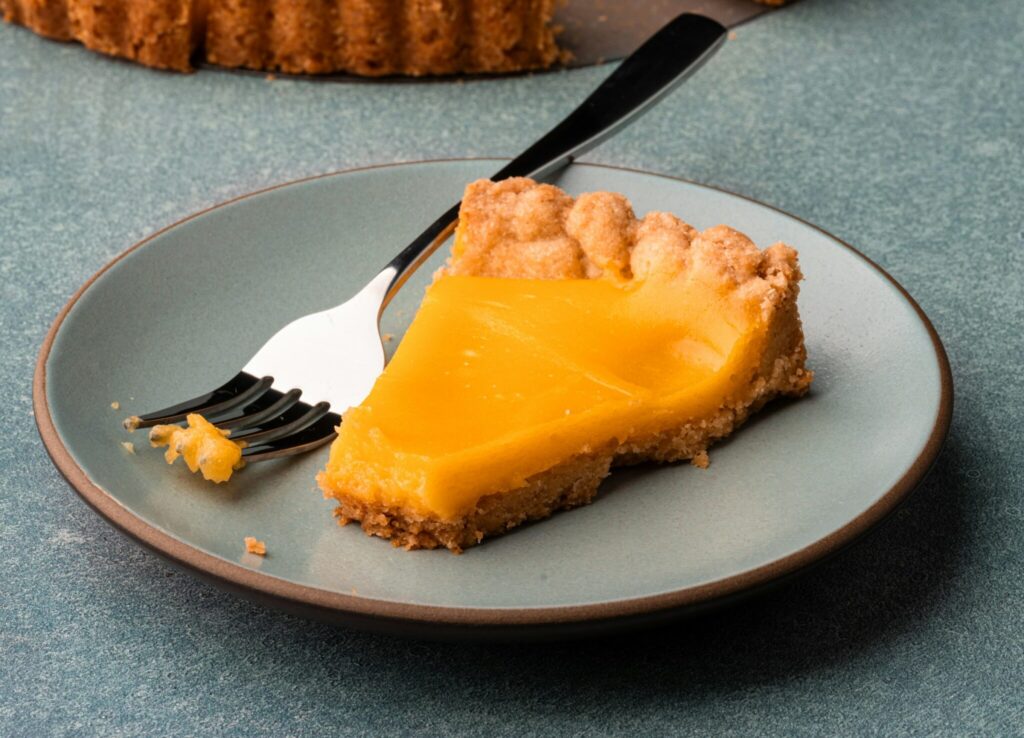
This tart is all about balance. You get a crisp, buttery base with a smooth, tangy filling that melts on your tongue.
The passionfruit curd is the star here—bright in color, fresh in flavor, and surprisingly easy to make.
It may look like a bakery-style dessert, but the steps are simple and very doable at home.
Once you learn how to make curd, you’ll want to use it in everything.
The filling is smooth and rich, with just enough sharpness from the passionfruit to keep each bite light and refreshing.
Ingredients
- 1 tart shell (store-bought or homemade, fully baked and cooled)
- 3 egg yolks
- ½ cup sugar
- ½ cup passionfruit juice or pulp (strained for a smooth texture, optional)
- 4 tbsp butter (cut into small pieces)
Instructions
- Start with the base
Make sure your tart shell is fully baked and cooled before adding the filling. A warm shell can melt the curd and affect the texture. - Whisk the eggs and sugar
In a saucepan (off the heat), whisk the egg yolks and sugar together until the mixture looks slightly pale and smooth. This helps create a creamy curd later. - Add the passionfruit
Pour in the passionfruit juice or pulp and whisk to combine. If you prefer a smooth finish, strain out the seeds beforehand. - Cook gently
Place the saucepan over low heat. Stir constantly using a spatula or wooden spoon. Keep the heat low—this is important so the eggs don’t scramble. - Watch for thickening
After a few minutes, the mixture will start to thicken. You’ll know it’s ready when it coats the back of your spoon, and you can draw a line through it with your finger. - Add the butter
Remove from heat and stir in the butter pieces one at a time. This gives the curd a glossy finish and a smooth, rich texture. - Fill and chill
Pour the curd into the tart shell and spread it evenly. Place it in the fridge for at least 2–3 hours, or until fully set. - Garnish before serving
Top with fresh passionfruit pulp, berries, or even a light dusting of powdered sugar.
Helpful Tips
- Keep the heat low and steady
High heat can scramble the eggs. If you see small lumps forming, remove from the heat immediately and whisk. - Stir constantly
This keeps the curd smooth and prevents it from sticking or cooking unevenly. - Strain for extra smoothness
If your curd has any lumps or you want a silky finish, pass it through a sieve before pouring it into the tart shell. - Let it chill properly
The tart needs time to set. Cutting too early will make the filling too soft. - Make it ahead
This tart holds well in the fridge, making it perfect for preparing a day in advance.
3. Passionfruit Ice Cream (No-Churn)
This is one of the easiest desserts you can make, and it delivers every time.
No machine, no complicated steps, but just a few ingredients and a bit of patience while it freezes.
The result is a soft, creamy ice cream with a fresh passionfruit flavor that stands out.
It’s light enough to enjoy on a warm day, but still rich enough to feel like a proper treat.
Smooth, creamy, and bursting with tropical flavor, this no-churn ice cream is simple, refreshing, and incredibly satisfying.
Ingredients
- 2 cups whipped cream (cold, for best results)
- 1 can (395g) condensed milk
- ½ cup passionfruit pulp (fresh or canned)
Instructions
- Whip the cream
In a large bowl, whip the cream until soft peaks form. This means the cream holds its shape but still has a slight curl at the tip when you lift the whisk. - Add the condensed milk
Gently fold the condensed milk into the whipped cream. Use a spatula and slow movements to keep the mixture light and airy. - Mix in the passionfruit
Add the passionfruit pulp and fold it through. You can fully mix it in or leave light swirls for a marbled look. - Transfer to a container
Pour the mixture into a freezer-safe container. Smooth the top so it freezes evenly. - Freeze until firm
Cover and freeze for at least 6–8 hours, or overnight for the best texture. - Scoop and serve
Let the ice cream sit at room temperature for a few minutes before scooping. This makes it softer and easier to serve.
Helpful Tips
- Start with cold cream
Cold cream whips faster and gives you better volume. - Don’t overwhip
Stop at soft peaks. Overwhipping can make the texture slightly grainy. - Fold gently
This keeps the mixture light and prevents it from becoming dense. - Adjust the flavor
Taste before freezing. Add more passionfruit for extra tang or a little extra condensed milk if you prefer it sweeter. - Prevent ice crystals
Keep the container tightly sealed to maintain a smooth texture. - Serve it your way
Try it with fresh fruit, a drizzle of honey, or even crushed biscuits for added texture.
4. Passionfruit Pavlova
Pavlova is one of those desserts that feels special but is very doable once you understand the basics.
It’s a baked meringue with a crisp outer shell and a soft, marshmallow-like center.
Paired with whipped cream and passionfruit, it becomes light, fresh, and full of contrast.
You get crunch, creaminess, and a bright tang all in one bite.
Crispy on the outside, soft inside, topped with cream and vibrant passionfruit.
It’s delicate, slightly sweet, and perfectly balanced with the fruit on top.
Ingredients
- 4 egg whites (room temperature works best)
- 1 cup sugar (fine sugar dissolves more easily)
- 1 tsp vinegar
- 1 tbsp cornstarch
- 1 cup whipped cream
- ½ cup passionfruit pulp
Instructions
- Prepare your oven and tray
Preheat your oven to 120°C. Line a baking tray with parchment paper. You can draw a circle as a guide if you want an even shape. - Beat the egg whites
In a clean, dry bowl, beat the egg whites until soft peaks form. The mixture should look white and foamy, holding gentle peaks. - Add sugar slowly
Gradually add the sugar, a little at a time, while continuing to beat. This helps it dissolve properly. Keep mixing until the meringue looks thick and glossy. - Check the texture
Rub a small amount between your fingers. If it feels smooth (not grainy), it’s ready. - Fold in vinegar and cornstarch
Gently fold these in. They help create that soft center while keeping the outside crisp. - Shape the pavlova
Spoon the mixture onto your prepared tray. Shape it into a round with slightly raised edges and a shallow center for the toppings. - Bake low and slow
Bake for 60–75 minutes. The outside should feel dry to the touch. Turn off the oven and let it cool inside with the door slightly open. - Add toppings
Once completely cool, top with whipped cream and spoon over the passionfruit pulp.
Helpful Tips
- Keep everything clean and dry
Any grease or water in your bowl can stop the egg whites from whipping properly. - Add sugar slowly
This step makes a big difference. It helps create a stable, glossy meringue. - Don’t rush the baking
Low heat is key. High heat can cause cracks or browning. - Cool it gently
Sudden temperature changes can cause the pavlova to collapse or crack too much. - Assemble just before serving
This keeps the base crisp and prevents it from becoming soggy. - Embrace small cracks
Pavlova is meant to look slightly rustic. Those cracks are part of its charm.
5. Passionfruit Mousse
This mousse is one of the quickest desserts you can make, but it still feels thoughtful and complete.
It comes together in minutes, then the fridge does the rest of the work.
The texture is soft and airy, almost like a cloud, with a bright passionfruit flavor running through it.
It’s a great option when you want something light after a meal or a simple dessert to share.
Light, airy, and refreshing, this mousse is perfect for a quick tropical treat.
It’s smooth, gently sweet, and balanced with the natural tang of passionfruit.
Ingredients
- 1 cup passionfruit pulp (fresh or canned)
- ½ cup condensed milk
- 1 cup whipped cream (soft peaks)
Instructions
- Mix the base
In a bowl, combine the passionfruit pulp and condensed milk. Stir until smooth and evenly blended. - Fold in the whipped cream
Add the whipped cream and gently fold it into the mixture using a spatula. Use slow, sweeping motions to keep the texture light. - Check the consistency
The mixture should look smooth and slightly fluffy. Avoid overmixing, as this can make it dense. - Portion into glasses
Spoon the mousse into serving glasses or small bowls. Smooth the tops if you want a neat finish. - Chill to set
Place in the fridge for 2–3 hours. This helps the mousse firm up while keeping its airy texture. - Serve and enjoy
Serve chilled. You can add a little extra passionfruit pulp on top for color and a fresh finish.
Helpful Tips
- Use softly whipped cream
Soft peaks are ideal. This keeps the mousse light and easy to fold. - Fold, don’t stir
Gentle folding keeps air in the mixture, which gives the mousse its signature texture. - Adjust the flavor
Taste before chilling. Add more passionfruit for extra tang or a bit more condensed milk if you prefer it sweeter. - Strain if needed
If you want a completely smooth mousse, strain the pulp to remove seeds. - Chill properly
Give it enough time to set so it holds its shape when scooped. - Serve it simply or dress it up
Add fresh fruit, a mint leaf, or even a sprinkle of crushed biscuits for a bit of texture.
Tips for Working with Passionfruit
How to Choose Ripe Passionfruit
When picking passionfruit, don’t go for perfectly smooth skin.
The best ones often look a little wrinkled on the outside.
That wrinkling is a good sign because it means the fruit is ripe and naturally sweeter inside.
If the skin is very smooth and firm, the fruit may still be a bit underripe and more tart.
You can leave it at room temperature for a few days until it softens slightly and develops that wrinkled look.
A ripe passionfruit should also feel a little heavy for its size.
That usually means it’s full of juicy pulp.
Understanding the Seeds
Inside the fruit, you’ll find golden pulp filled with small black seeds.
These seeds are completely edible and add a light crunch that works really well in creamy desserts.
If you enjoy texture, keep them in.
They add a nice contrast, especially in smooth recipes like mousse or cheesecake.
If you prefer a silky finish, you can strain the pulp through a sieve to remove the seeds.
This is helpful for curds, sauces, or when you want a very smooth texture.
Balancing the Flavor
Passionfruit has a strong, tangy flavor, which is what makes it so refreshing.
But on its own, it can be quite sharp. The key is to balance it with something sweet or creamy.
Pairing it with ingredients like cream, condensed milk, or sugar helps soften that tang and create a more rounded flavor.
This is why it works so well in desserts like cheesecake, mousse, and ice cream.
Meringue is another great match.
Its light sweetness balances the acidity without overpowering the fruit.
If your dessert tastes too tart, you can:
- Add a little more sugar or condensed milk
- Mix in extra cream to mellow the flavor
If it feels too sweet, a bit more passionfruit pulp can bring back that fresh, bright edge.
Final Thoughts
These recipes give you a little bit of everything—creamy cheesecake cups, a smooth tart, refreshing ice cream, a light pavlova, and an airy mousse.
Each one brings out the bright, tangy flavor of passionfruit in a simple, approachable way.
Pick one to start, or try them all as you go.


Hi, I’m Sorenna Blythe, the baker and writer behind Mix Whisk Bake. I share simple, reliable recipes and honest kitchen moments to help home bakers bake with confidence and joy. When I’m not testing new treats, you’ll find me sipping coffee and dreaming up my next bake.